

Body Type Dressing Guide for Women Over 40 — You pull a jacket off the rack and it looks perfect on the hanger. Then you try it on: the shoulders pinch, the hem lands in an odd spot, and you wonder whether the problem is you or the jacket. It's the jacket. This body type dressing guide for women over 40 is built to end that guessing.
What you need isn't a label to live inside. You need a way to read your own proportions and a short list of cuts that work with them: where a seam sits, how a neckline directs the eye, where a hem should land.
I've broken it into seven steps, from reading your proportions to tailoring. Take what fits your frame and leave the rest.
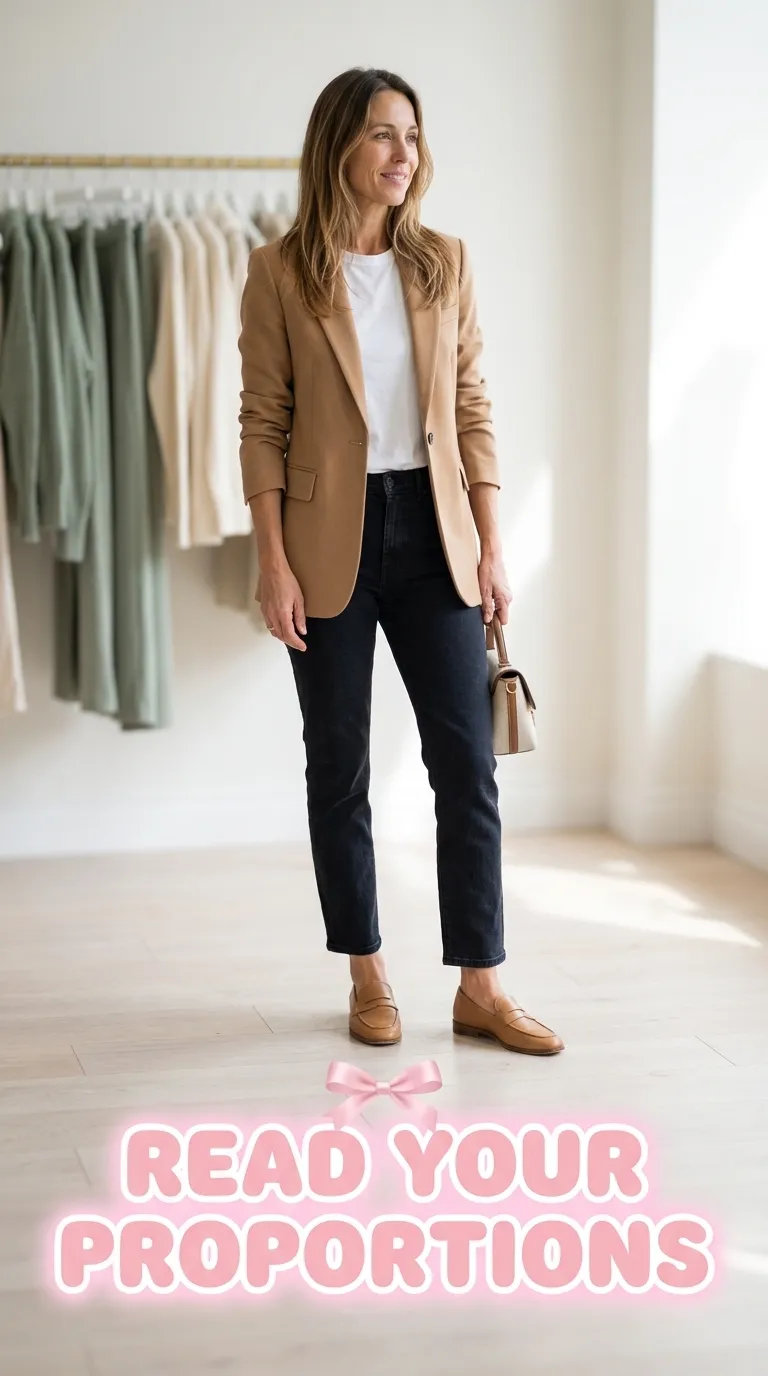
1. Start With Proportion, Not a Label
Shape names like apple, pear, and hourglass are handy shortcuts, but most of us are a blend. The more useful question is how your shoulders, waist, hips, and legs sit in relation to each other.
Spend five minutes on this before you shop. It makes every other step in this guide easier.
How to Do It
- Stand in front of a full-length mirror in close-fitting basics, such as a fitted tee and leggings.
- Compare your shoulder width to your hip width: wider, narrower, or about the same.
- Find your waist, the place where your torso narrows most, even if it narrows gently.
- Notice where your torso ends and your legs begin, since a longer or shorter torso changes where waistbands and hems land.
- Write down two or three observations, not a verdict.
Why It Works
Clothing patterns assume a certain balance between shoulders, waist, and hips. When you know where yours differs, you can pick cuts that meet your frame instead of fighting it. It also keeps the focus on description, not judgment.
What to Look For
Use this table as a fit check in the fitting room.
| Area | What a Good Fit Looks Like | Sign It's Off |
|---|---|---|
| Shoulders | Seam sits at the shoulder edge | Seam droops or pinches |
| Bust | Lies flat, no pulling | Buttons gape or strain |
| Waist | Fabric skims or follows the curve | Pulling or horizontal creases |
| Hips | Drapes without clinging | Pockets flare, fabric strains |
| Length | Hem lands on purpose | Hem stops at an awkward point |
Common Mistakes to Avoid
- Sizing every piece to one measurement
- Following a shape label that doesn't match the mirror
- Judging fit in harsh store lighting
Best For
- Planning a wardrobe refresh
- Shopping for a new silhouette
- Deciding which pieces to tailor
A Simple Rule to Remember
Describe your proportions, don't judge them.
2. Dress an Apple Shape With Structure on Top and Ease Below
An apple shape tends to carry more fullness through the bust and midsection, with arms and legs that read narrower by comparison. Not every apple shape looks the same, so treat this as a starting point.
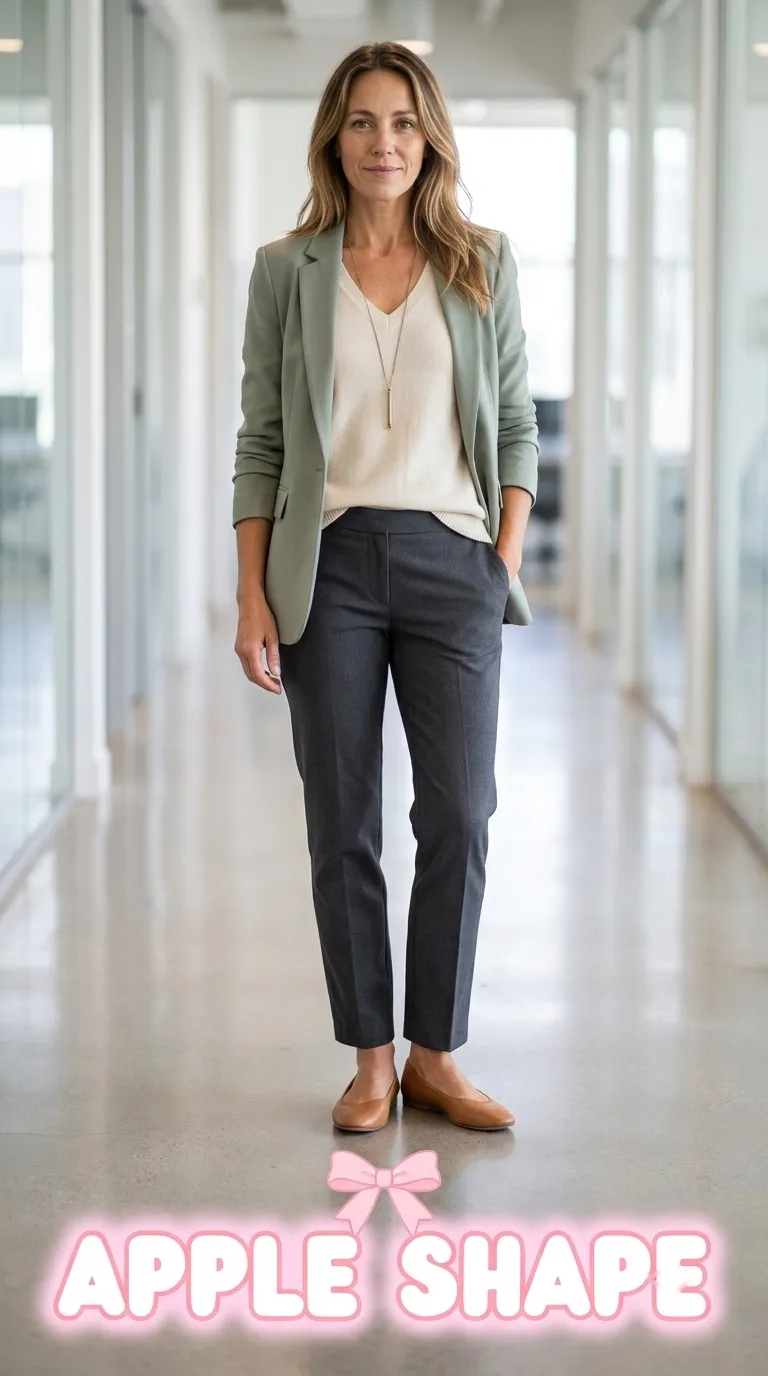
The idea is to give the garment something to hang from, like a shoulder line or an open neckline, so fabric falls away from the midsection instead of clinging to it. The trade-off is that structure only works when it's tailored well: a stiff, boxy jacket that stands away from the body adds bulk instead.
How to Put It Into Practice
- Start with a V-neck or open collar to draw the eye in a vertical line.
- Choose a top that skims the midsection and ends at the hip or just below.
- Add a lightly structured blazer for a clear shoulder line.
- Pair with straight or bootcut pants in a stretch fabric and a soft, flat waistband.
- Finish with a long pendant necklace or an open layer to extend the vertical line.
Why It Works
A V-neck and an open layer create long vertical lines, structure at the shoulder gives the outfit a defined top edge, and fabric that skims instead of clinging moves comfortably. A rise that sits at or just above the navel also keeps the waistband from digging in when you sit.
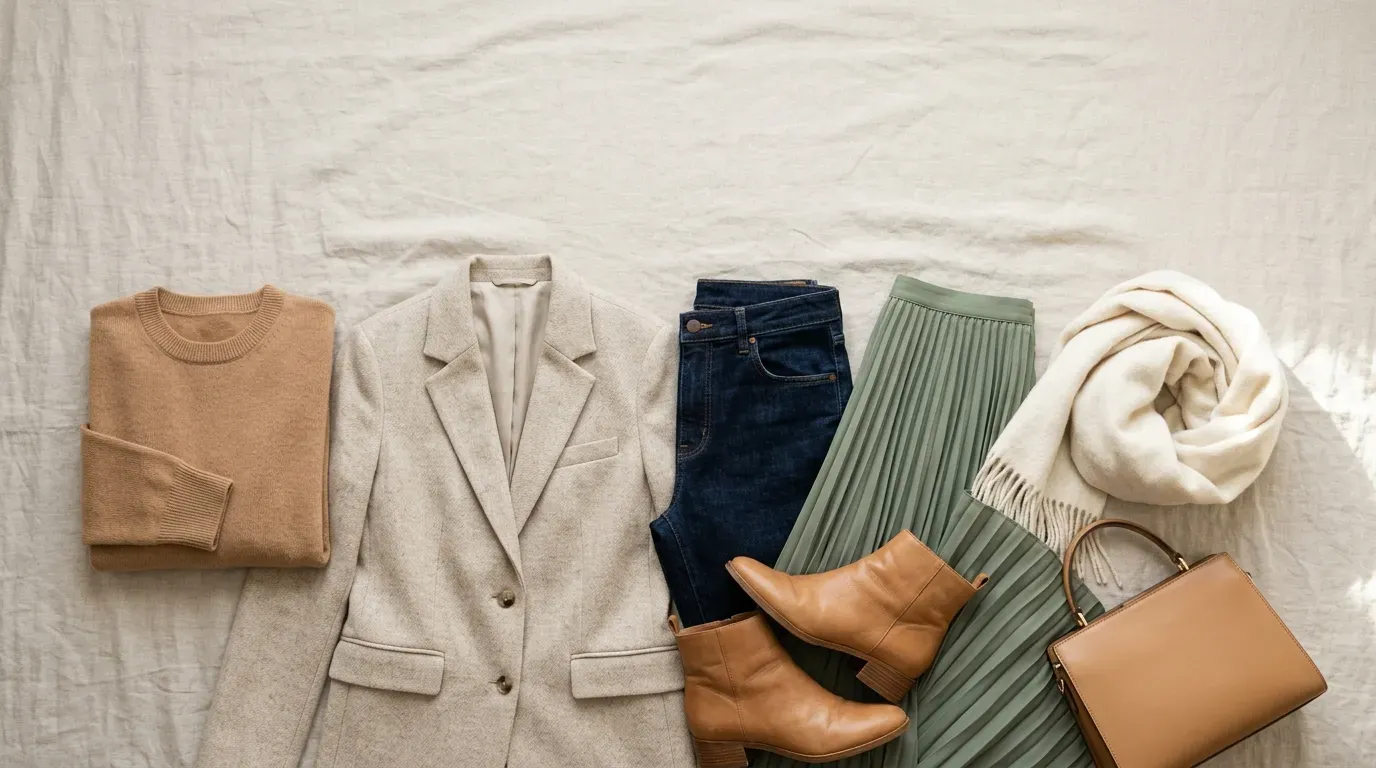
What to Look For
- Fluid fabrics with drape, such as crepe or viscose
- Empire or A-line dresses that release below the bust
- Wrap tops with an adjustable V
- Flat-front pants with a smooth or partly elasticized waistband
- Stretch fabric with good recovery
Common Mistakes to Avoid
- Stiff, boxy tops that stand away from the body
- Belts cinched at the fullest point instead of the narrowest
- Thin, clingy knits with no structure
Best For
- Long workdays spent sitting
- Dinners and weddings in an A-line dress
- Travel days in stretch pants
3. Dress a Pear Shape by Adding Interest Above the Hip
A pear shape carries more fullness through the hips and thighs, with shoulders and bust that are narrower by comparison. Many women over 40 find this changes gradually, so check your proportions again every few years.
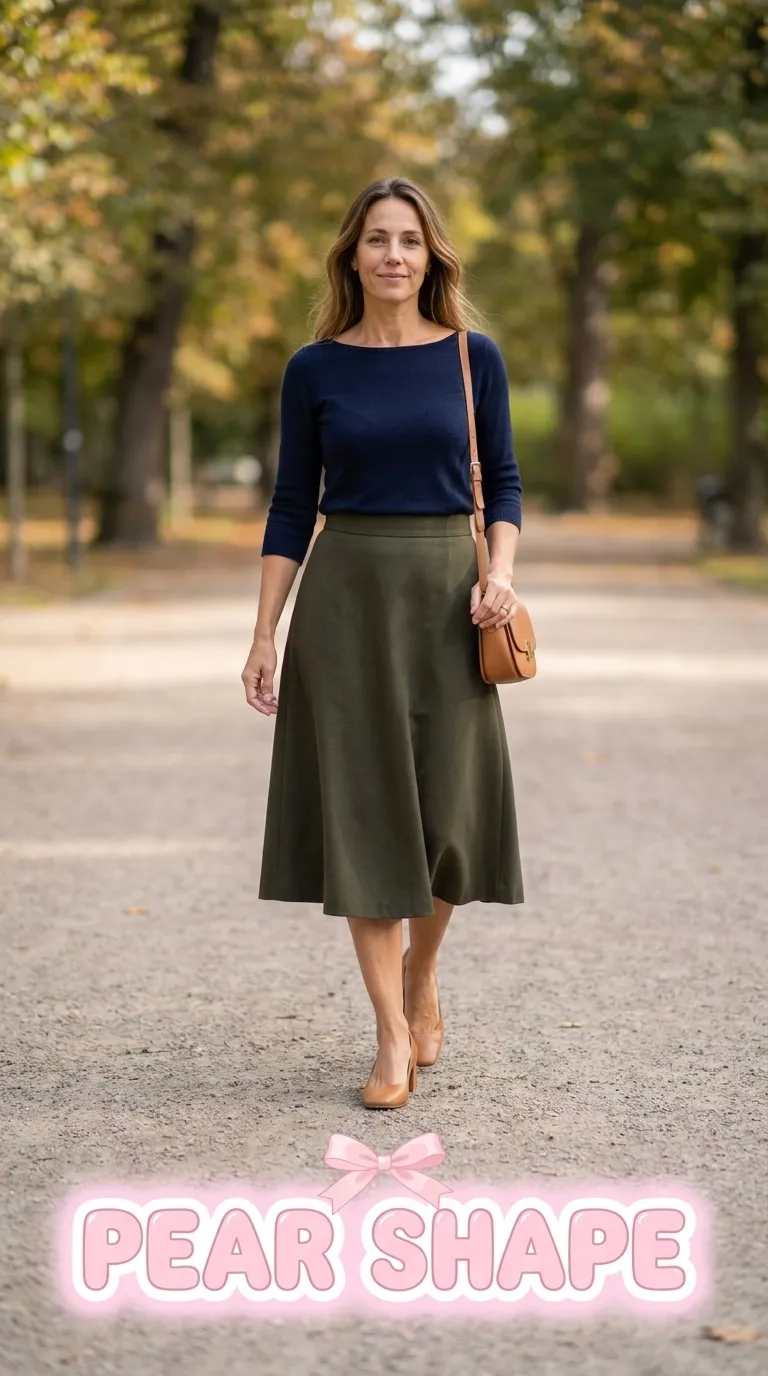
The approach is to bring detail and structure to the upper body, then let the bottom half drape. It works best when the top has real presence; it falls flat if the detail is so heavy it restricts movement or feels stiff.
How to Do It
- Choose a top with detail at the neckline or shoulder, such as a boat neck, square neck, or soft ruffle.
- Pick a jacket with a defined shoulder that ends at the waist or below the widest part of the hip.
- Wear A-line skirts or wide-leg pants in a drapey fabric that skims the hip and thigh.
- Look for flat-front pants with a rise that sits comfortably at the waist.
- Add a scarf or statement earrings near the face to keep attention up high.
Why It Works
Detail near the neckline gives the upper body more visual weight, which balances the proportions between top and bottom. A skirt or pant that flows from the waist follows the body instead of gripping it, and a wide leg adds swing to every step.
What to Look For
- Stretch denim with a contoured waistband
- Ponte or crepe that holds its shape
- Pockets that lie flat against the hip
- Seamed A-line skirts with a smooth fall
Common Mistakes to Avoid
- Tight tapered legs that cling to the thigh
- Jackets that end exactly at the widest point of the hip
- Shoulder pads so large they dominate the outfit
Best For
- Office days in a skirt and knit top
- Weekend outings in wide-leg pants
- Dinner out in a structured top and flowing skirt
4. Dress an Hourglass Shape by Following the Waist
An hourglass shape has shoulders and hips that are close in width, with a clearly narrower waist between them. The aim is to let clothes follow that line instead of boxing it in.
This approach asks for precise fit. A boxy top loses the waist completely, and a stiff fabric can't follow a curve. It also doesn't mean everything has to be fitted: one relaxed piece per outfit keeps it comfortable.
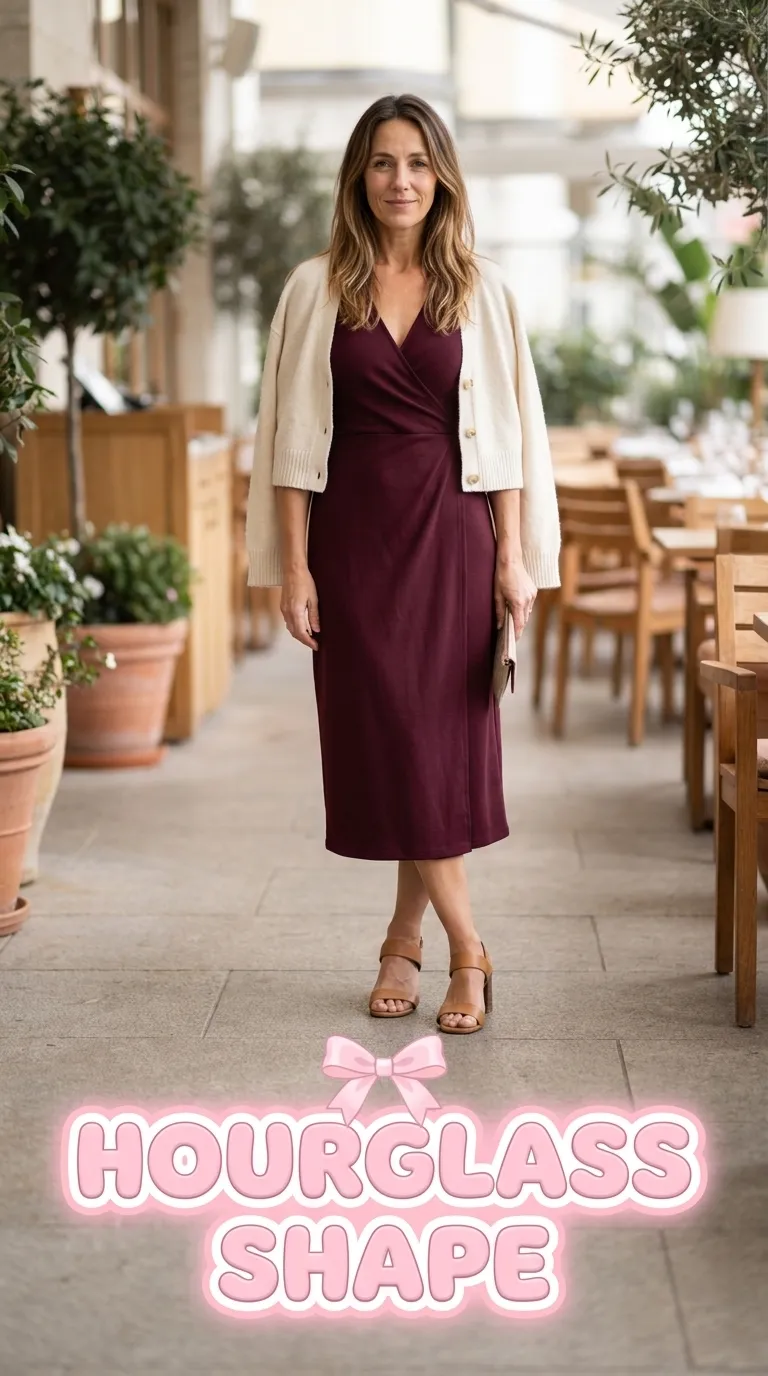
How to Wear It
- Start with pieces that mark the waist, such as wrap dresses, belted shirt dresses, and tucked-in tops.
- Choose fabric with stretch or drape that follows curves without straining.
- Pick a V-neck or scoop neckline so the fabric lies smooth across the bust.
- Wear high-rise pants or skirts that sit at your narrowest point, with a waistband that doesn't pinch.
- Belt jackets and cardigans that would otherwise hang straight.
Why It Works
Marking the waist keeps the balance between shoulders and hips, so neither one takes over the outfit. Fabric that travels along the body's line, instead of stopping at the widest point, also looks intentional and moves with you.
What to Look For
- Wrap and fit-and-flare silhouettes
- Belts 1½ to 2 inches wide
- Jackets with darts or princess seams
- Weighty stretch fabrics that don't cling
- Button-ups with a bust dart or hidden stretch
Common Mistakes to Avoid
- Boxy, shapeless tops that skip the waist
- Waistbands tight enough to leave marks
- Button-ups that gap at the bust
Best For
- Dinners and date nights
- Office days in a belted sheath dress
- Weddings in a wrap dress
5. Dress a Rectangle Shape by Building Definition With Layers
A rectangle shape has shoulders, waist, and hips that are close in width, which gives a straight, balanced line. The upside is that almost any silhouette hangs cleanly on this frame.
Instead of expecting the body to define the outfit, you build definition with layers, texture, and waist details. The trade-off is bulk: too many layers get heavy, so in warm climates choose lightweight fabrics and keep it to two layers.
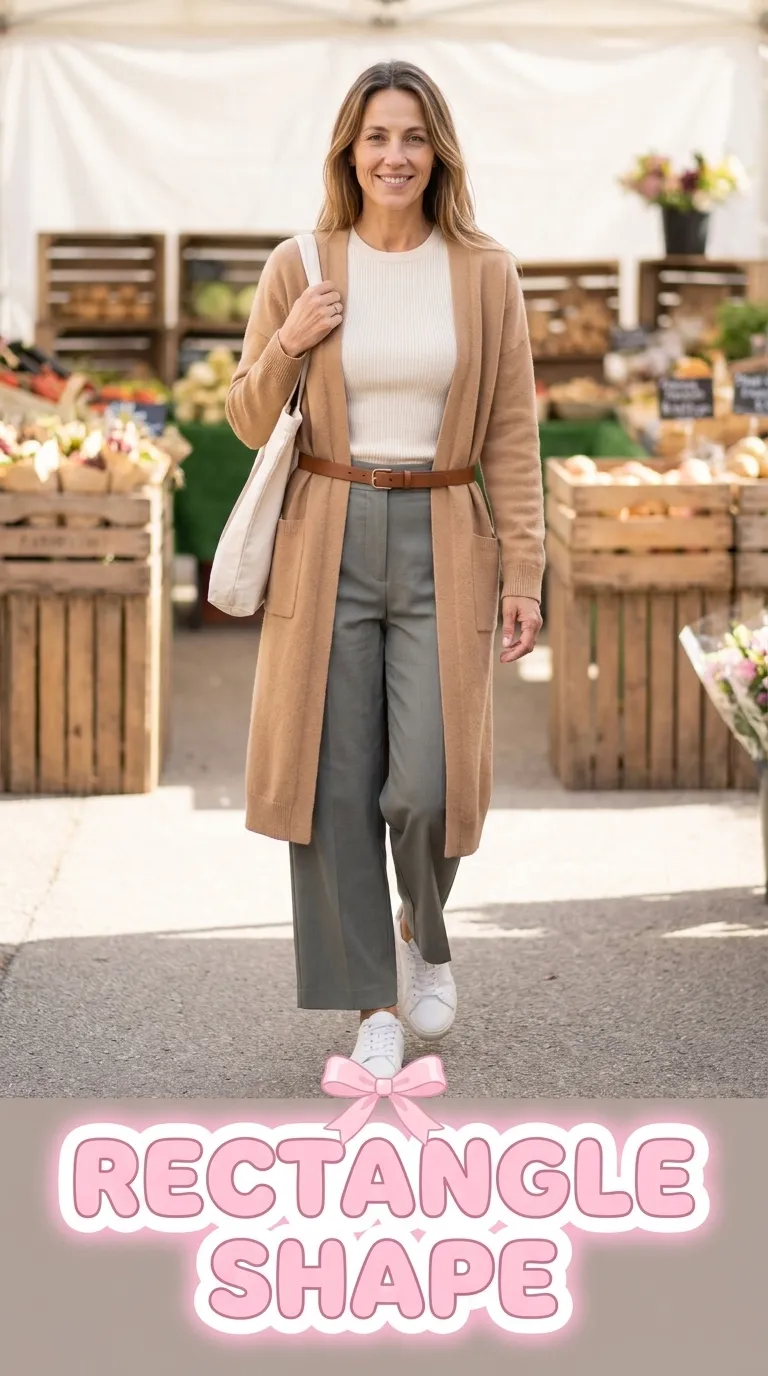
How to Do It
- Add a defined waist with a belt, a wrap, or a seam that nips in.
- Layer a long open cardigan or a cropped jacket over a fitted tee.
- Choose peplum, ruffle, tiered, or gathered details where you want extra volume.
- Mix textures, such as ribbed knit with satin or denim with silk.
- Try a high-rise or paperbag waist with a tucked-in top.
Why It Works
Layers and waist details create dimension and a visible waistline, and texture adds contrast without changing the cut. Because your proportions are balanced, you can place detail almost anywhere and it still reads as a choice.
What to Look For
- Belts in a contrasting tone
- Wrap dresses and tie-waist tops
- Tiered skirts and gathered waists
- Jackets cropped at the natural waist
- Textured fabrics such as tweed or ribbed knit
Common Mistakes to Avoid
- Straight column dresses with no waist detail
- Oversized layers on every part of the outfit
- Layers so thick they restrict movement
Best For
- Casual weekends in layered knits
- Office days in a belted blazer
- Cool-weather trips
6. Work With Your Height, Whether Petite or Tall
Height changes where hems, rises, and sleeves land more than any shape label does. Petite sizing is cut for shorter frames, and tall sizing is cut with longer sleeves and inseams, so a piece that's wrong in your regular size may simply be the wrong cut.
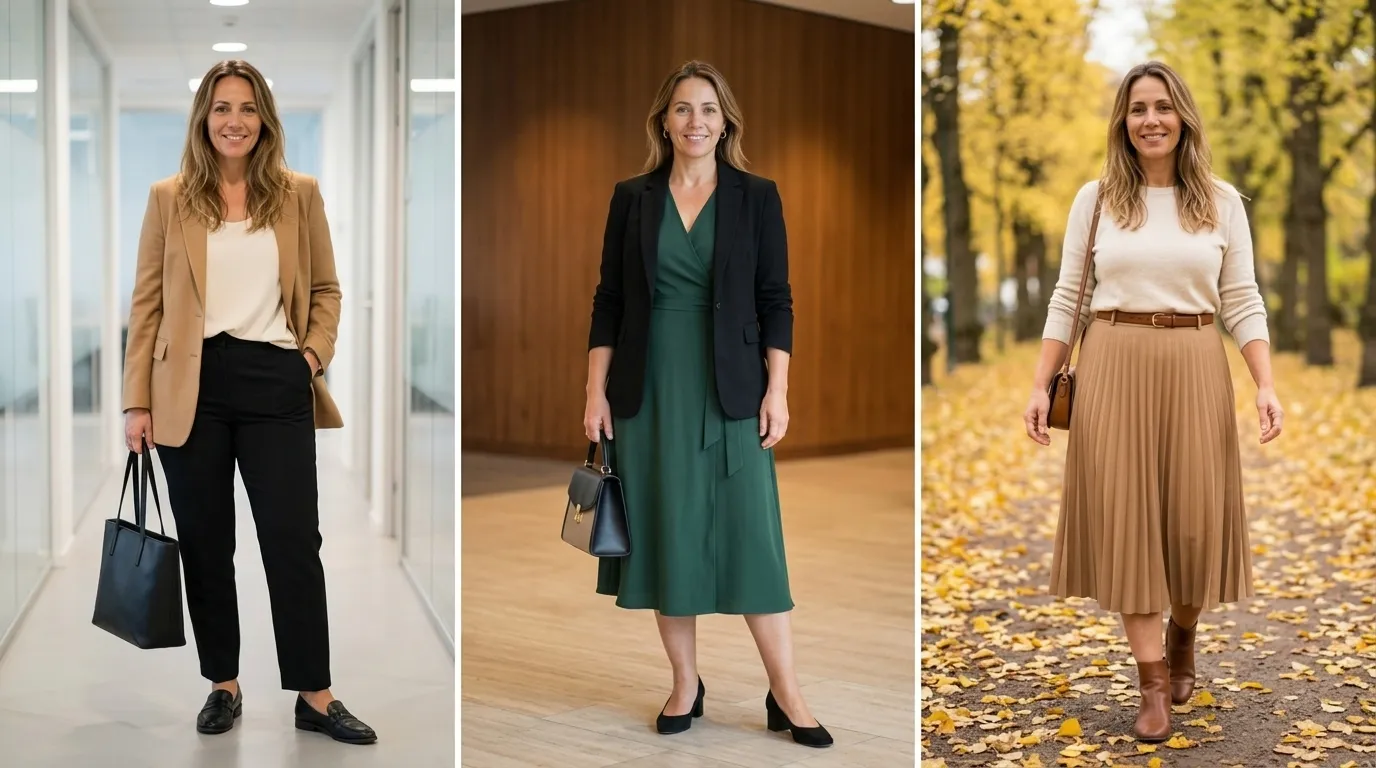
The principle is the same for both: scale and length lines should match your frame. Petite frames usually benefit from a continuous line, and tall frames can handle more breaks, such as wide belts and longer layers. The catch is that off-the-rack pieces rarely fit either perfectly, so budget for a little tailoring.
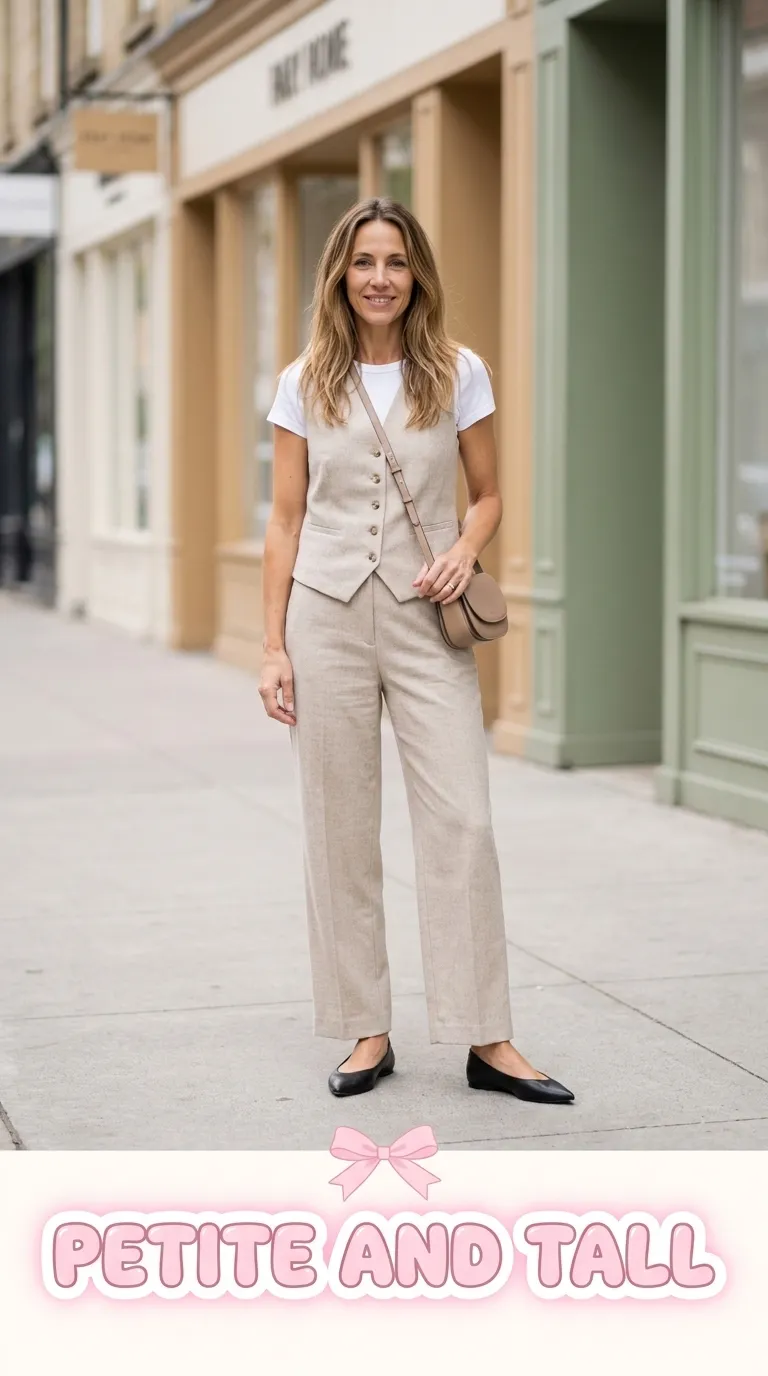
How to Do It
- Check sleeve length and shoulder seams first; they're the hardest to alter.
- Get the rise right: a high rise helps petite frames keep a long line, and tall frames may need a longer rise for comfort.
- Choose hems on purpose, such as just above the knee or at the ankle for petite and ankle to full length for tall.
- Scale prints and accessories to your frame, smaller for petite and larger for tall.
- Tailor what's off, whether that's a hem, a sleeve, or a waistband.
Why It Works
When pieces are proportioned for your height, seams and hems land where the designer intended. A continuous line keeps the eye moving on a petite frame, and a break such as a belt or color contrast adds interest on a tall one.
What to Look For
- Petite or tall lines in your usual size
- High-rise pants for balance
- Cropped or hip-length jackets for petite frames
- Longer jackets and wide belts for tall frames
- Prints scaled to your frame
Common Mistakes to Avoid
- Sleeves and hems that overwhelm the frame
- Mid-calf hems that cut across the widest part of the leg
- Pants that stop above the ankle by accident
Best For
- Workwear that needs tailoring
- Travel capsules
- Everyday jeans
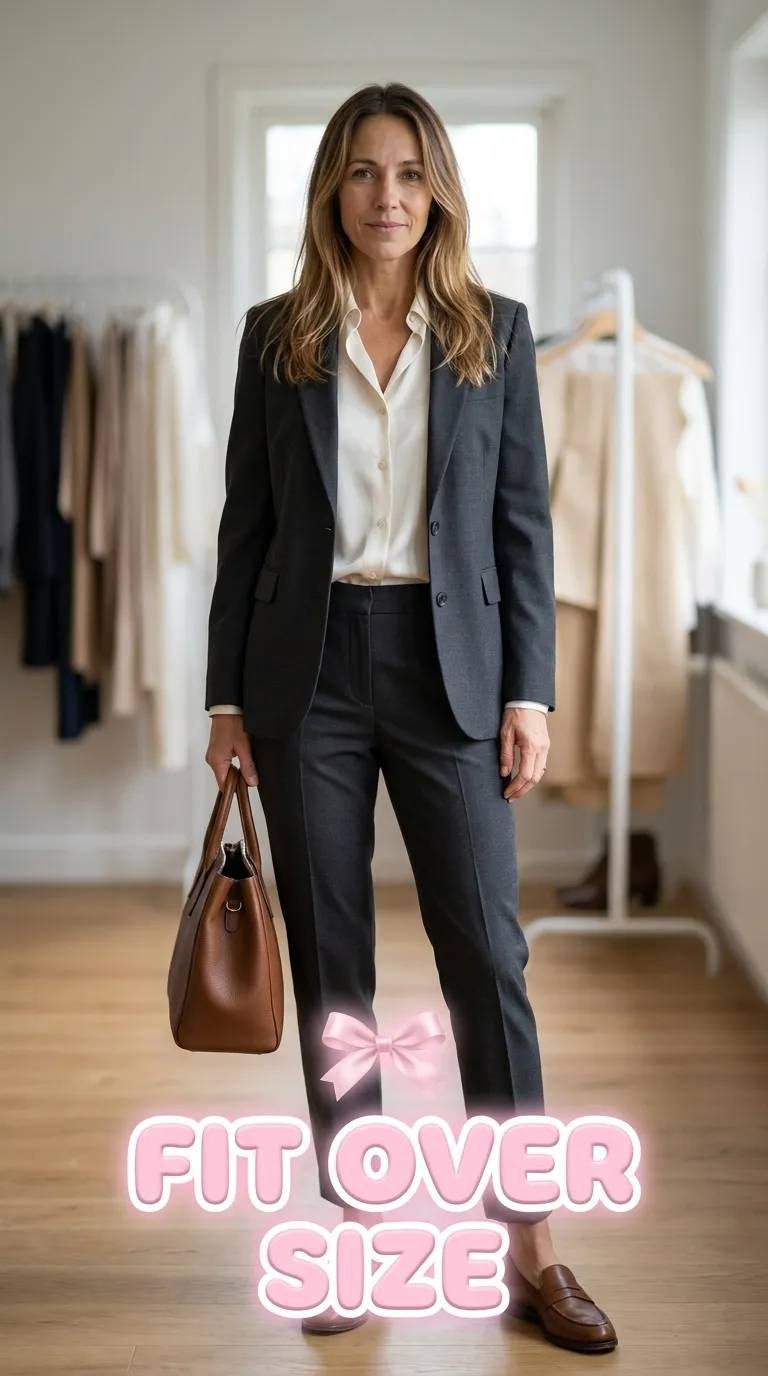
7. Let Fit Matter More Than Size
A size is a label. Fit is how a garment actually sits on your body, and it's the thing you feel all day. Sizing varies from brand to brand, so the number on the tag tells you very little.
The trade-off is that tailoring takes time and a small budget. It also has limits: fabric that's already tight in several places needs a different size, not a tailor.
How to Do It
- Identify the hardest area to alter, usually the shoulders or the widest part of the body.
- Buy the size that fits that area.
- Tailor the rest, such as the waist, hem, and sleeves.
- Test the fit while sitting, reaching, and walking.
- Note which brands and cuts fit you best.
Why It Works
Taking fabric in is far easier than letting it out, so fitting the hardest area first leaves room to adjust everything else. A fit-first approach also frees you from sizing numbers that change from brand to brand.
What to Look For
Run through this table before you buy or tailor a piece.
| Check | What to Look For | Quick Test |
|---|---|---|
| Shoulders | Seam sits at the shoulder edge | Reach forward, check for pulling |
| Bust and back | No gaping or strain lines | Cross your arms in front |
| Waist | Comfortable when seated | Sit and breathe normally |
| Hem and sleeve | Lands at an intentional point | Walk and raise your arms |
| Fabric | Lies smooth, no pulling at seams | Check seams in natural light |
Common Mistakes to Avoid
- Buying for the number on the tag
- Choosing pieces with no seam allowance to alter
- Skipping the seated test
Best For
- Blazers and coats worth investing in
- Wedding and event outfits
- Jeans and trousers that need hemming
Quick Dressing Cheat Sheet
| Rule | Why It Works | Quick Fix |
|---|---|---|
| Start with proportion, not a label | Fit follows your actual frame | Do the mirror check in fitted basics |
| Structure on top, ease below (apple) | Fabric falls away from the midsection | Add a V-neck and open blazer |
| Add interest above the hip (pear) | Balances top and bottom | Try a boat neck with an A-line skirt |
| Follow the waist (hourglass) | Keeps shoulders and hips balanced | Belt a straight jacket |
| Build definition with layers (rectangle) | Adds dimension and a visible waist | Belt a long cardigan |
| Match scale to your height | Hems and seams land where intended | Check petite or tall lines |
| Let fit matter more than size | The garment follows your body | Fit the widest area, tailor the rest |
The Principles Behind These Rules
Proportion Is About Balance
Every tip in this guide comes back to one idea: balance between your shoulders, waist, hips, and height. When one area carries more visual weight, you can echo it elsewhere or let it stand alone. Neither choice is wrong, and it depends on the look you want.
Fabric Drape Decides How a Cut Behaves
The same silhouette behaves very differently in crepe and in stiff cotton. Fluid fabrics follow the body, while structured ones hold their own shape. Pick the fabric that matches what the cut is supposed to do.
Necklines and Hemlines Direct the Eye
A V-neck draws the eye vertically, a boat neck widens the shoulder line, and a hem sets where the eye stops. Treat both as tools you can adjust, since a small change in neckline or hem length changes how the entire outfit reads.
Comfort and Movement Come First
If you can't sit, reach, or walk comfortably, the outfit won't get worn. Comfort and fit support each other, so test every piece with the movements your day requires.
Common Mistakes Worth Skipping
Shopping for a Label Instead of a Fit
Choosing a piece because it's "right for your shape" on paper doesn't guarantee that it fits. Use shape guidance to narrow your options, then let the mirror decide.
Skipping the Tailor
A hem that's an inch too long or a sleeve that falls past the wrist changes an entire outfit. A small alteration on a piece you'll wear often is usually worth it.
Wearing Everything Oversized or Everything Fitted
All-over volume can lose your proportions, while all-over fitted can feel restrictive. Pair one relaxed piece with one closer-fitting piece for balance.
Final Tips for Success
Try Pieces On With the Shoes You'll Wear
Shoes change where a hem lands and how trousers fall. Bring the pair you'll actually wear, or at least one with a similar heel height, to every fitting.
Keep a Tailor on Your Side
Find one tailor you trust and bring them the pieces you wear most. Even simple adjustments to hems, sleeves, and waistbands can change how a piece sits on you.
Wardrobe Basics Worth Owning
- A well-fitted blazer
- Straight-leg or bootcut pants in a stretch fabric
- A wrap or fit-and-flare dress
- Fine-knit tops in V-neck and boat-neck cuts
- A long open cardigan
- A belt in a neutral tone
- Comfortable flats or low block heels
Treat This Body Type Dressing Guide as a Starting Point
Use these steps to narrow your options, then trust the mirror. If a cut feels right and looks right on you, it's right, whatever any guide says.
Conclusion
Your body isn't a problem to solve. It's a set of proportions to work with, and the right cut simply meets them where they are.
Start with the mirror check, find the one or two steps that match your frame, and add tailoring where a piece is almost right. A good body type dressing guide should leave you with fewer rules, not more.
You already know what you like to wear. This is just a way to make it fit better.
Save this guide for the next time you're standing in a fitting room, wondering whether it's you or the jacket.
Comments
✎ Write a commentCommunity Guidelines
We love hearing what you think. Please keep comments about the article itself, stay kind and helpful to other readers, and leave out personal details or links. Every comment is checked before it appears.