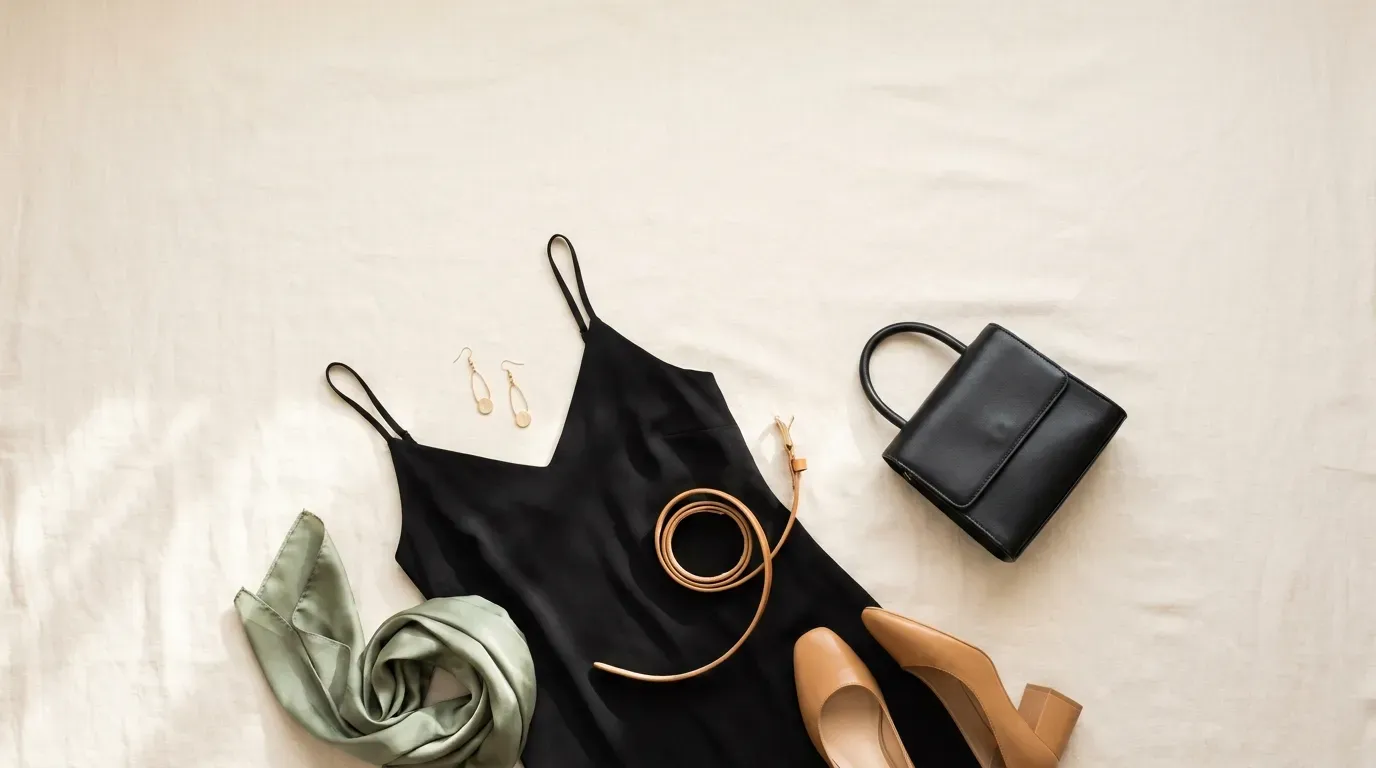

How to Accessorize a Black Dress for Women Over 40 — The black dress is on the bed, you have twenty minutes before you need to leave, and the jewelry drawer is open. Everything you pick up feels either too much or too little. Learning how to accessorize a black dress is less about owning more pieces and more about knowing which few to choose.
What you actually need is a short list of decisions you can repeat: what goes with the neckline, which metal to wear, where the one bold piece belongs, and which shoes suit the plan for the day. Once those are settled, the same dress can go to a dinner, an office, or a family event without feeling like a uniform.
Here are seven steps I'd walk a friend through, in the order I'd make the choices. Each one comes with what to do, why it works, and when it doesn't.
1. Start With Your Neckline, Not Your Jewelry Box
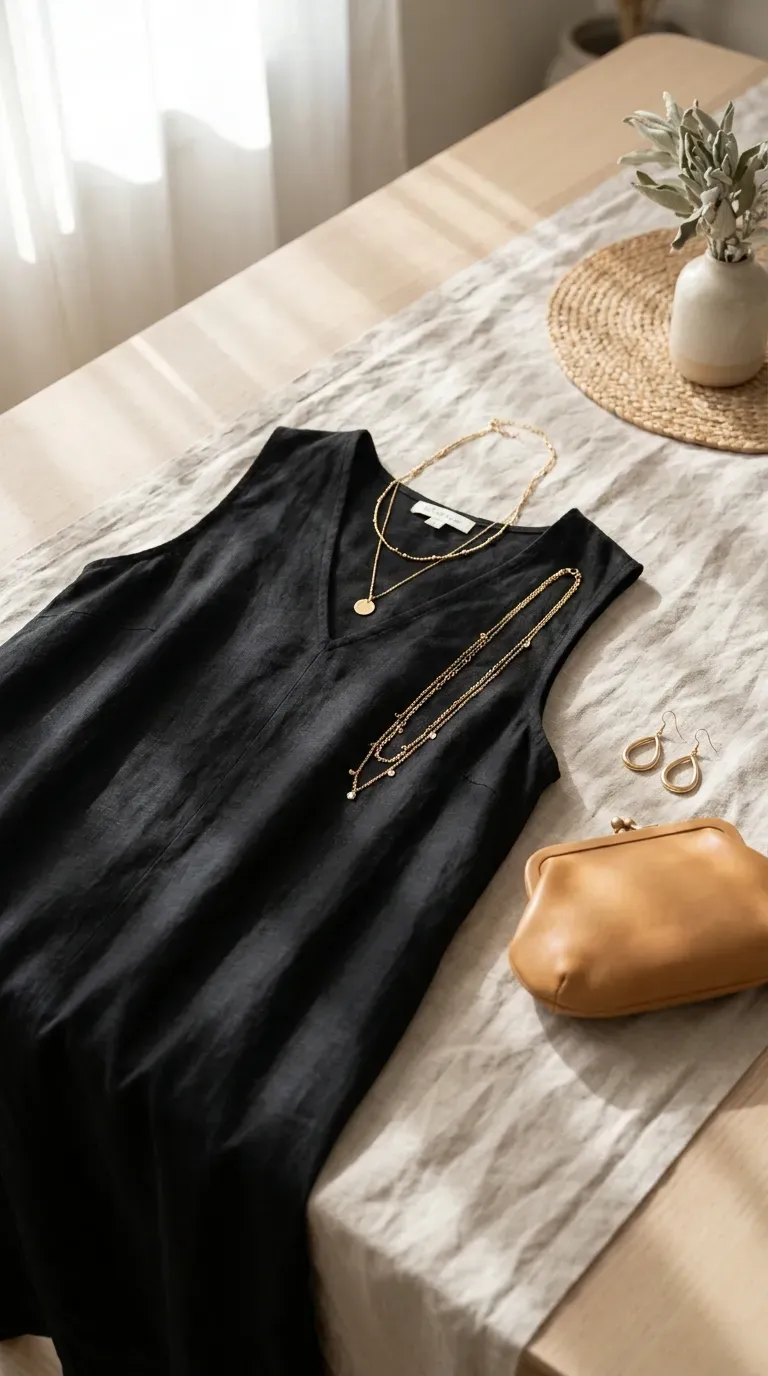
Every black dress has a neckline, and the neckline decides which jewelry has room to work. A necklace that fights the neckline will look crowded no matter how nice it is.
Look at where the fabric ends on your chest and neck, then choose jewelry that either echoes the shape or fills the open space. Earrings and a bracelet are the easy supporting pieces for almost any neckline.
How to Do It
- Put the dress on and stand in front of a mirror in natural light.
- Notice the shape of the neckline: a point, a curve, a straight line, or a high collar.
- Choose a necklace that repeats that shape or fills the bare area, or skip the necklace entirely.
- Add earrings last, and keep them in the same style family as the necklace.
Why It Works
Jewelry that follows the neckline looks planned instead of piled on. It also keeps the eye moving in one direction, which makes the whole outfit read as calm and put together.
What to Look For When You Accessorize a Black Dress
Use this table as a starting point, then trust the mirror.
| Neckline | Works Well With | Why |
|---|---|---|
| V-neck | Pendant on a short chain | Repeats the point of the V |
| Scoop | Collar-length necklace or studs | Follows the curve |
| Crew | Longer pendant or layered chains | Fills the space below the collar |
| Square | Short simple chain, bold earrings | Keeps straight lines uncluttered |
| Boat or high neck | Earrings and bracelets only | The neckline already frames the face |
Best For
- Dinners and date nights
- Office days with a blazer
- Weddings and formal events
2. Choose One Metal Tone and Repeat It
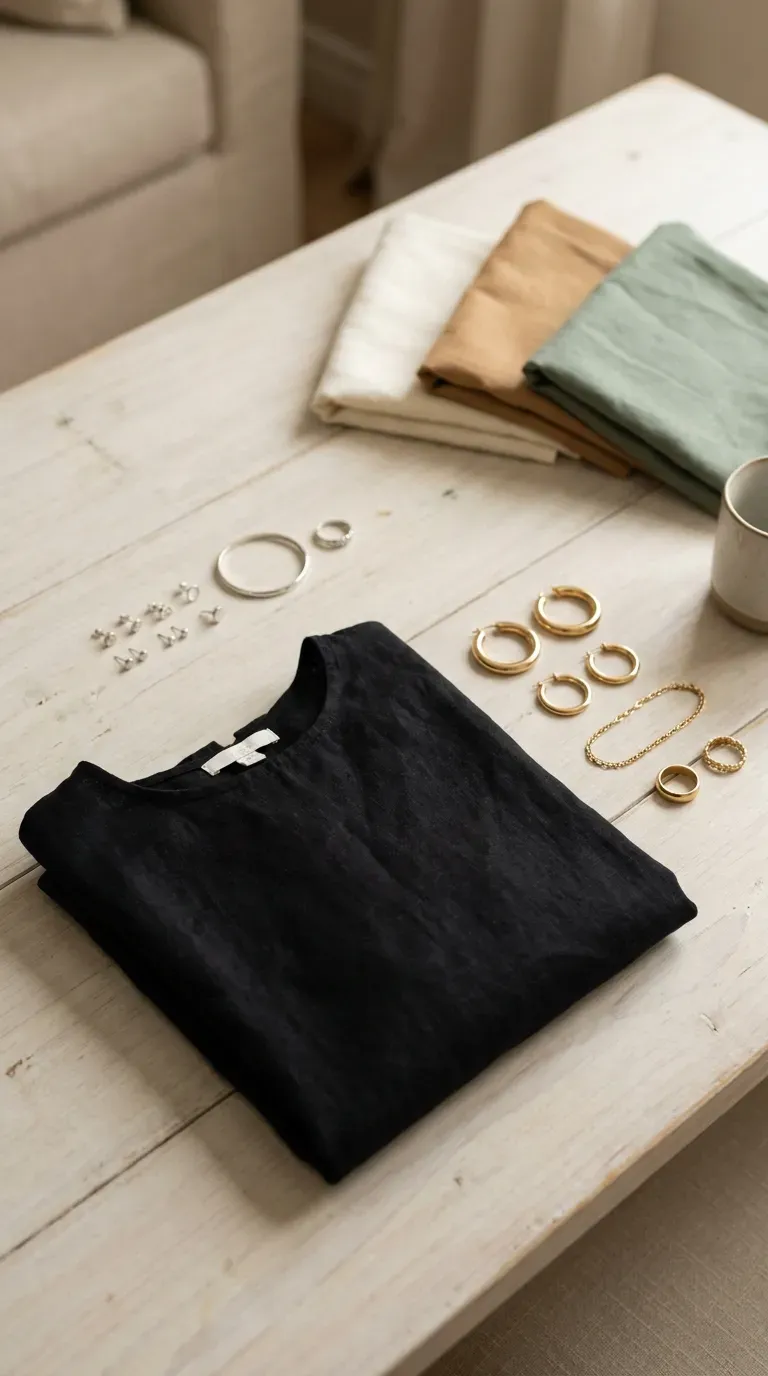
Gold, silver, and rose gold all work with black. The trick is picking one for the day and repeating it across your earrings, necklace, bracelet, and ring.
You don't need to match everything exactly. Two pieces in the same tone are enough to make the look feel intentional.
How to Do It
- Check which metal your watch, wedding band, or everyday rings already use.
- Build the rest of the outfit around that tone.
- Repeat it in at least two places, such as earrings and a bracelet.
- If you mix metals, wear one piece that combines both, like a two-tone bangle, so the mix looks deliberate.
Why It Works
Black is a strong neutral, so it gives metal a clean backdrop. A repeated tone ties the pieces together and keeps the outfit from looking random.
What to Look For
- Warm gold for a softer, richer look
- Silver or white metals for a crisp, modern feel
- Pieces with a similar finish, either polished or brushed
- Clasps and chains that sit flat and don't tangle
Common Mistakes to Avoid
- Wearing three different metals with no link between them
- Mixing a polished necklace with heavily textured earrings
- Choosing a metal because it's on sale, not because it suits the day
A good test: if you can name the metal in one word, you probably chose well.
3. Pick One Statement Piece, Not Three
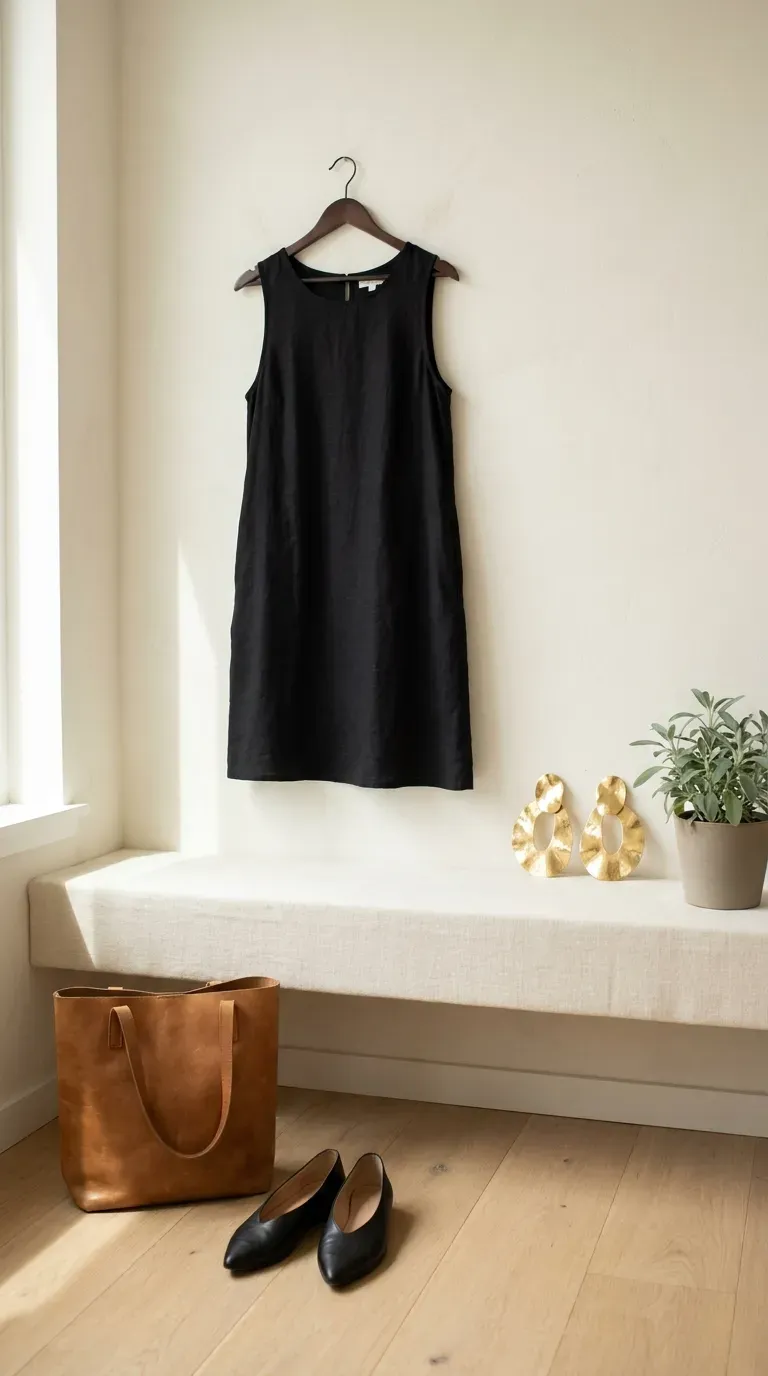
A black dress is a great setting for a single bold accessory. It could be large earrings, a sculptural necklace, a wide cuff, or a bright scarf. The key word is one.

When two or three pieces compete, none of them gets noticed. When one stands out and the rest stay quiet, the whole look has a clear focal point.
How to Do It
- Decide where you want the eye to land: ears, neck, wrist, or shoulders.
- Choose one bold piece for that spot.
- Keep everything else small, simple, and in the same metal tone.
- If you wear statement earrings, pull your hair back or wear it behind your ears so they can be seen.
Why It Works
One focal point gives the outfit direction. Quiet supporting pieces let the bold one do its job without making the look feel heavy.
Common Mistakes to Avoid
- Pairing large earrings with a chunky necklace
- Wearing a wide cuff and several stacked bangles together
- Choosing a bold piece that's uncomfortable to wear all evening
Best For
- Evenings out
- Cocktail parties and holiday events
- Plain dresses that need a point of interest
A simple rule to remember: if you're unsure, take one piece off before you leave the house.
4. Use a Belt or Jacket to Add Structure
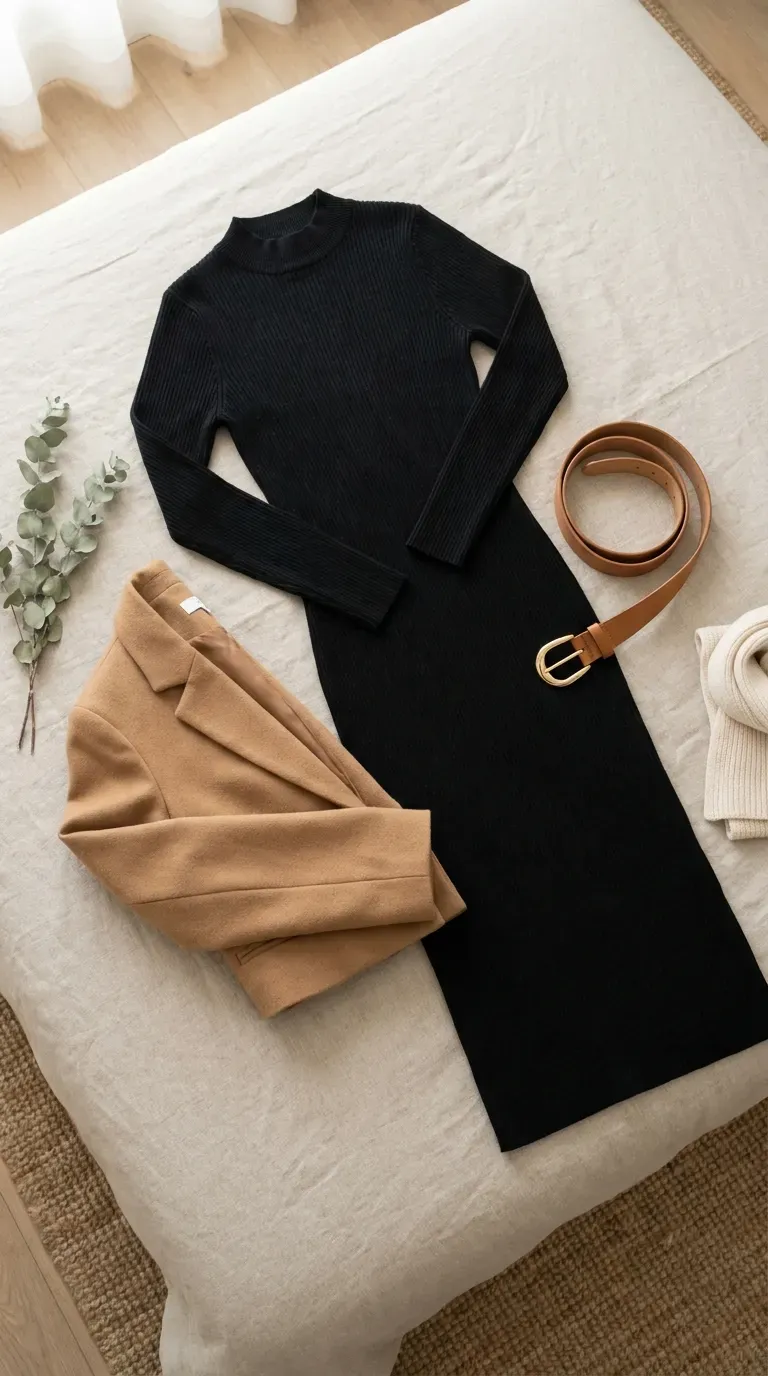
Many black dresses, especially knit, jersey, and wrap styles, hang straight from the shoulder. A belt or a tailored jacket gives the dress a shape of your own choosing and makes it feel finished.
This step is about proportion, not changing your body. You decide where the eye sees a line, and the accessory draws it.
How to Do It
- Decide where you want a line: at your natural waist, just above it, or at the hip.
- Choose a belt in a width that suits the dress, thin for lightweight fabrics and wider for heavier ones.
- Fasten it so it sits comfortably, not tightly, and tuck in any loose end.
- For a different option, add a cropped or tailored jacket that ends at the hip or waist.
Why It Works
A belt or jacket adds a clear horizontal or structural line to a plain column of black. It also gives you a place to add texture, such as leather, suede, or a fabric with a visible weave.
What to Look For
- A belt with a simple buckle in your chosen metal tone
- Leather or a firm fabric that holds its shape
- A jacket with defined shoulders and a clean hem
- Room to move, sit, and breathe without pulling
Common Mistakes to Avoid
- Cinching a belt so tightly that it digs in or bunches the fabric
- Choosing a belt that clashes with the dress's weight, like a thick one over a sheer knit
- Wearing a long jacket that ends at the same point as the dress hem
A Simple Rule to Remember
If the belt or jacket is comfortable enough to forget about, it's the right one for the day.
5. Bring In Color With a Scarf or Wrap
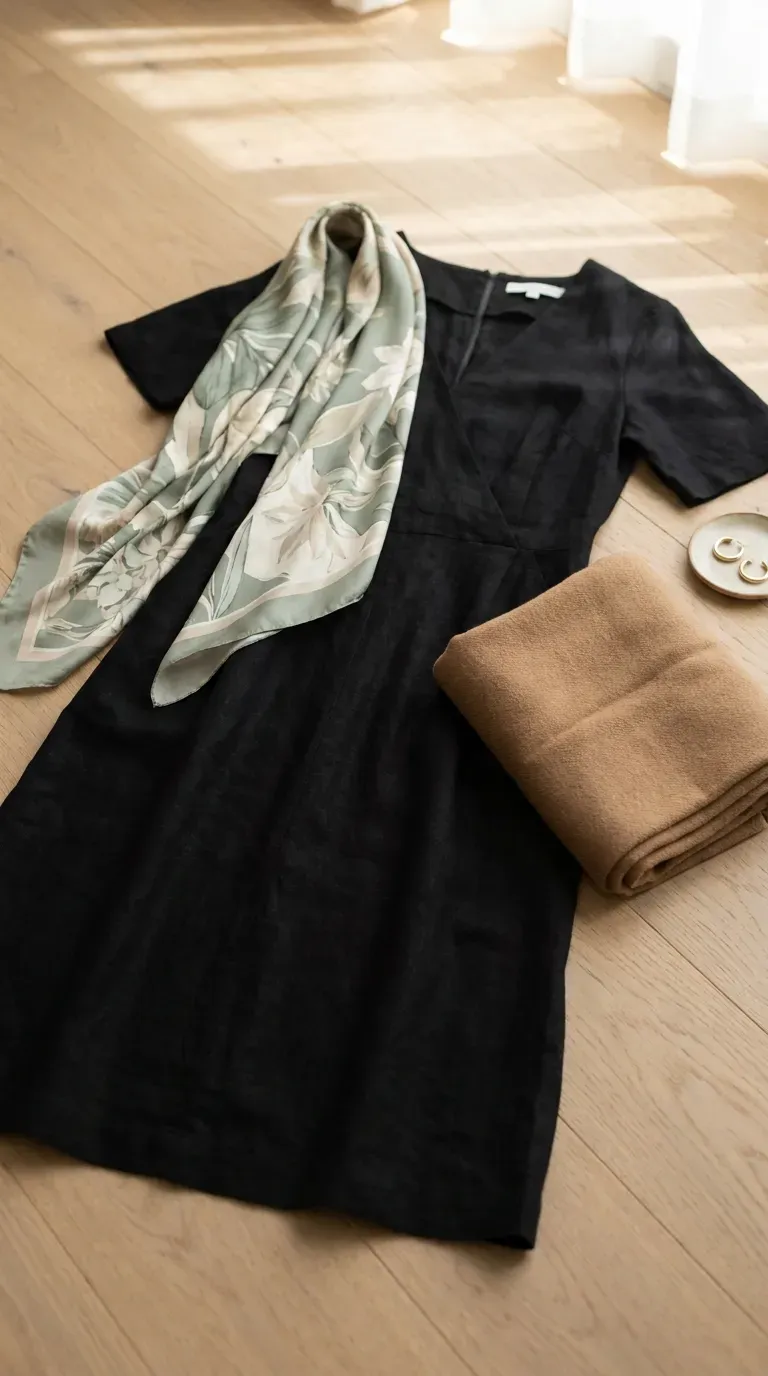
Black gives you a lot of room to add color in one controlled place. A scarf is the easiest way to do it, and it's also useful for warmth, for covering your shoulders at an event, or for changing the mood of a look.
You can wear it loosely around your neck, draped over your shoulders, or tied to a bag handle. The point is to add one note of color or pattern near your face or at your waist.
How to Do It
- Choose a color or print that appears somewhere else in your outfit, such as a bag, shoes, or lipstick.
- Pick a size that suits your plan: a long rectangle for draping, a square for knotting.
- Drape or tie it once, then check the mirror. Stop there if it looks balanced.
- Keep jewelry minimal near the scarf so the two aren't competing.
Why It Works
A scarf adds color without needing a new dress. It also lets you change the whole feel of the outfit, from sharp to soft, by changing the fabric and the way you tie it.
What to Look For
- A fabric that drapes well, like silk-blend, modal, or fine knit
- Colors that sit well next to your skin and hair
- Edges that lie flat instead of curling
- Fiber content you can care for easily, so check the care label
Best For
- Cool offices with strong air conditioning
- Religious services and events where you want your shoulders covered
- Travel days when one scarf has to do several jobs
6. Match Your Shoes and Bag to the Occasion
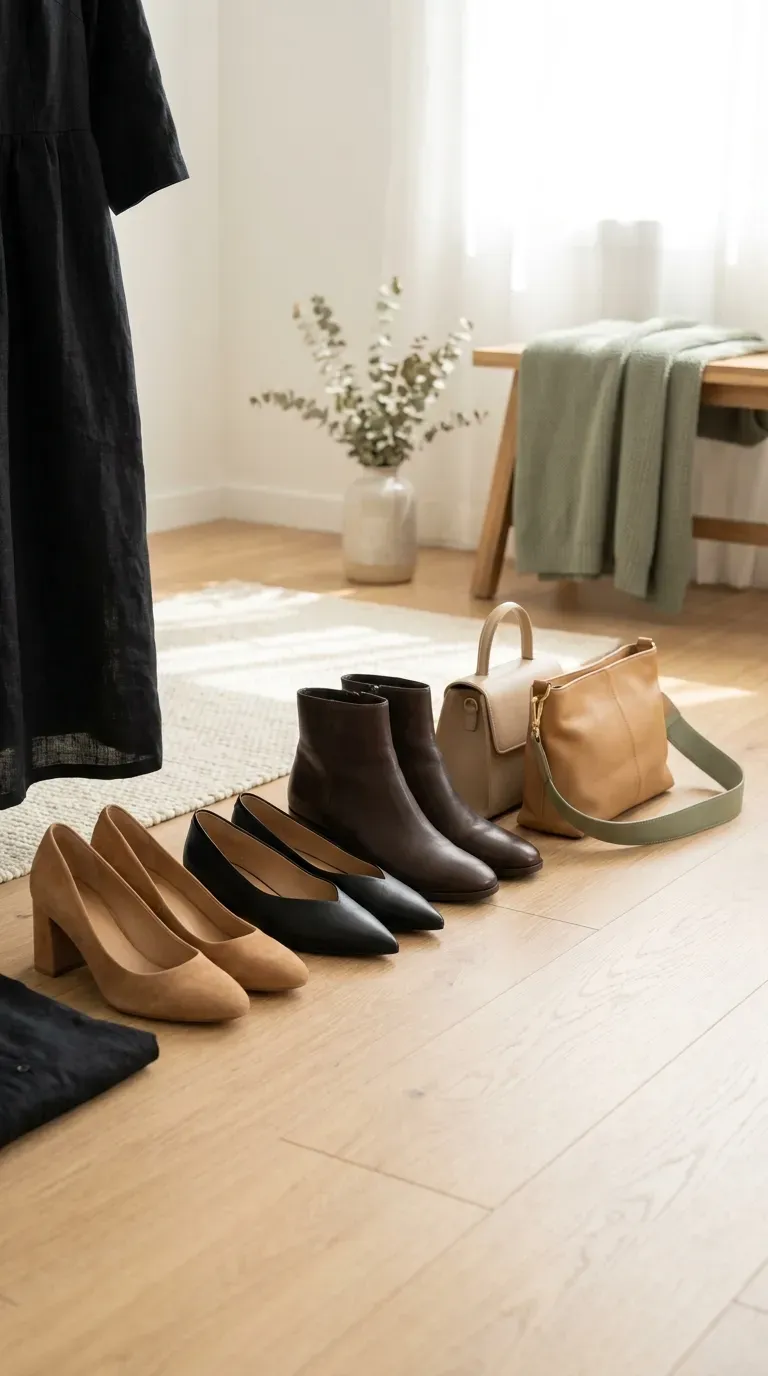
Shoes and a bag are what tell people whether a black dress is dressed up or dressed down. The same dress with block-heel pumps looks different from the same dress with white sneakers, and both can be right depending on the day.

Start with where you'll be and how long you'll be on your feet. Then choose the style that supports that plan.
How to Do It
- Ask yourself how much walking, standing, and sitting the day involves.
- Pick the shoe that fits that plan, then match the bag to the formality of the shoe.
- Choose a neutral or metallic shade that works with the metal tone you picked in step 2.
- Test the full outfit by walking across the room in it, and swap anything that feels awkward.
Why It Works
When shoes and bag match the formality of the day, the dress looks right for the occasion. Comfortable shoes also change how you stand and walk, which shows in the whole outfit.
What to Look For
Look for cushioning, a stable heel, and room in the toe box. If you have foot pain, check with your doctor or a podiatrist before choosing a new shoe style.
| Shoe | Best For | Heel or Sole Notes |
|---|---|---|
| Block-heel pump | Offices, dinners, weddings | 2 to 2½ inches, wide base |
| Pointed flat | Work, travel, long days | Cushioned insole and secure fit |
| Ankle boot | Cooler weather, casual evenings | Stable heel, up to 2 inches |
| Strappy sandal | Warm-weather events | Ankle strap adds stability |
| Clean white sneaker | Daytime errands, relaxed events | Supportive sole, plain design |
For bags, a small structured bag or clutch suits evening, a crossbody suits days with lots of walking, and a mid-size tote suits the office.
Best For
- Weddings, dinners, and holiday events
- Work days with commuting
- Weekend outings that need comfort first
7. Adjust for Season and Weather
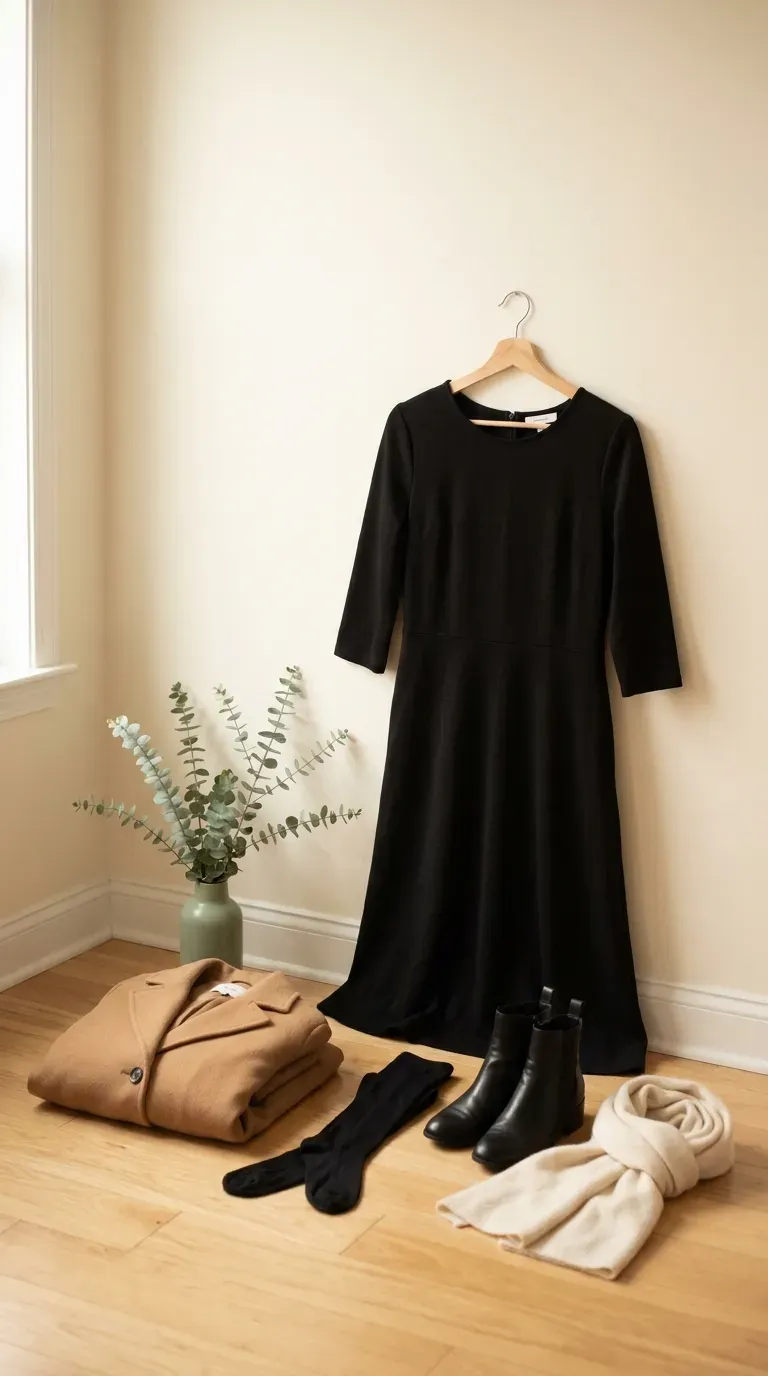
A black dress works all year, but the accessories around it should change with the weather. What feels right in a warm climate can feel wrong in a cold one, so this step depends on where you live and what the forecast says.
Think of it as swapping layers, not rebuilding the look. Your metal tone, statement piece, and shoe style can stay the same while the outer layers change.
How to Do It
- Check the forecast and the dress fabric first, since a lightweight jersey needs a different plan than a heavier crepe.
- In cold weather, add opaque or lightly textured tights, ankle or knee-high boots, and a coat that clears the hem.
- In mild weather, use a cardigan, a light jacket, or a wrap, and wear bare legs or sheer hosiery if you like.
- In hot weather, choose breathable layers, open shoes, and smaller jewelry that won't feel heavy against warm skin.
- Keep your metal tone and your one statement piece consistent across the seasons.
Why It Works
Adjusting only the outer layers keeps the look familiar while it responds to the weather. It also means you can wear the same dress in more places without repeating the exact same outfit.
Common Mistakes to Avoid
- Choosing a coat that's shorter than the dress, which can leave an awkward line
- Wearing sheer tights in cold weather without checking the temperature
- Packing on layers until the dress itself disappears
A Simple Rule to Remember
Change the outside layers first, and leave the rest of your accessories as they are.
Quick Accessorizing Cheat Sheet
| Item | Best For | Style It With |
|---|---|---|
| Neckline-matched jewelry | Any dress shape | Earrings in the same style |
| One metal tone | A cohesive look | Two or more repeated pieces |
| One statement piece | Evenings and events | Small, simple supporting pieces |
| Belt or jacket | Straight, unstructured dresses | Leather in your metal tone |
| Scarf or wrap | Cool rooms, covered shoulders | A shade from your bag or lipstick |
| Shoes and bag | Matching the day's formality | A neutral or metallic shade |
| Season layers | Changing weather | Tights, boots, or a longer coat |
The Principles Behind These Rules
Proportion Before Quantity
Most of the advice above comes down to balance. A few well-sized pieces look more finished than many small ones fighting for attention. Before you add anything, ask whether it helps the outfit or just fills space.
Contrast Between Fabric and Finish
Black can look flat on its own. Leather, suede, metal, silk, and wool each add a different texture, which gives the eye something to read. You don't need many of them, just two or three that feel different from the dress.
One Focal Point per Outfit
Whether it's earrings, a scarf, or a belt, give the outfit one place to look. Everything else supports that choice. This is also what makes the look easy to repeat, because you only need to decide once.
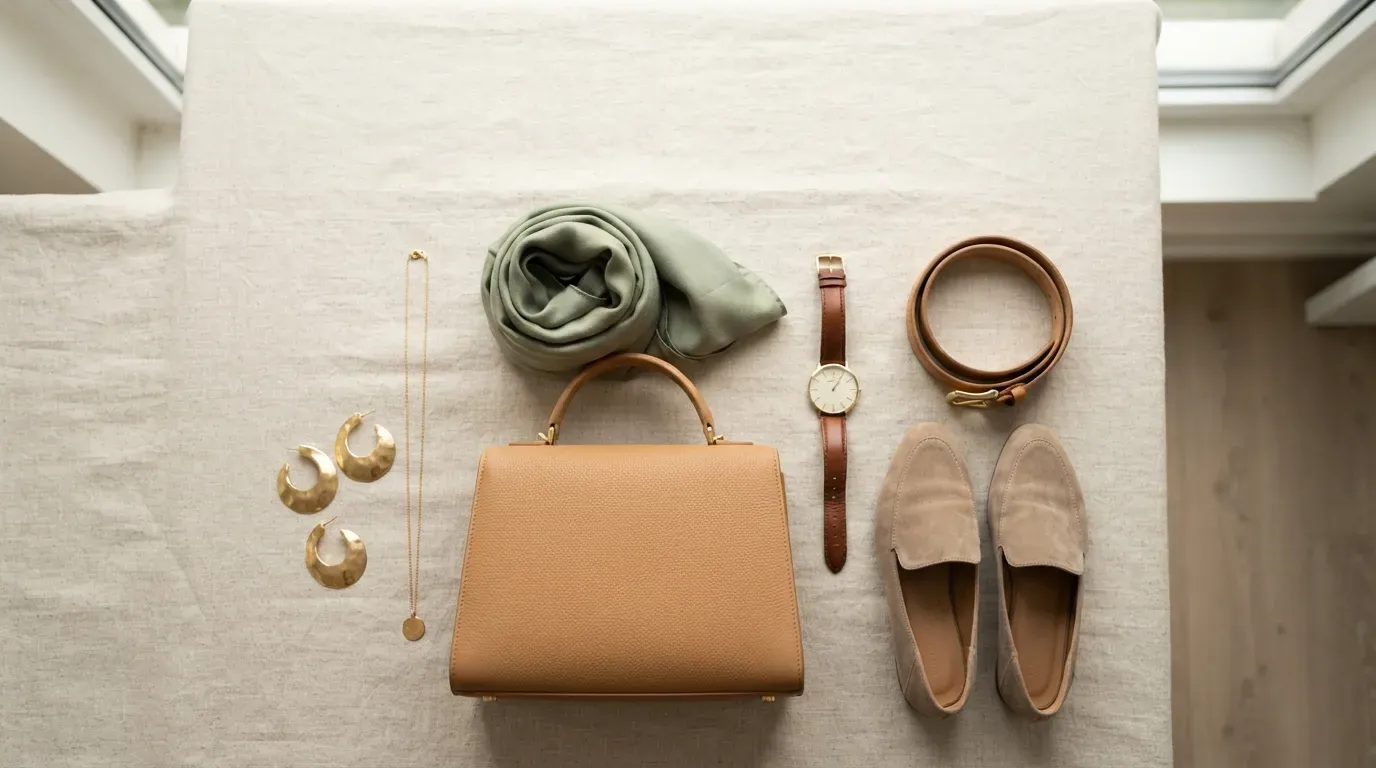
Comfort Is Part of the Look
A dress and accessories you're fidgeting with all night will show in how you stand and move. Choose pieces you can wear for the full event, and keep a backup, like flats in a bag, if the plan is long.
Common Mistakes Worth Skipping
Matching Every Accessory
Matching earrings, necklace, bracelet, belt, shoes, and bag can look rigid. Repeat a tone or a color instead of copying one exact piece across the outfit.
Wearing Jewelry That Competes With the Neckline
A heavy necklace on a high neckline or a long chain on a busy neckline can crowd the area. If the dress already has detail near the collar, let earrings do the work instead.
Choosing Shoes for the Photo Instead of the Day
A shoe that looks great but hurts by the second hour will change how you carry yourself. Pick the pair you'd be glad to wear from the start of the event to the end.
Final Tips for Success
Start With One Change
If you're new to this, change only one thing the next time you wear a black dress. Swap the earrings, add a belt, or try a scarf, and see how it feels. Small changes teach you faster than a full outfit overhaul.
Try the Look in Natural Light
Check your accessories by a window before you leave. Metal tones, colors, and fabric textures can look different under indoor lighting, and daylight shows you what other people will see.
Keep a Small Black Dress Kit
Set aside a few pieces that always work with your black dresses so you don't have to rethink everything. A small kit saves time on busy mornings and makes it easier to try new combinations.
Wardrobe Basics Worth Owning
- A pair of earrings in your main metal tone
- A thin belt in black or tan leather
- A tailored jacket or cropped blazer
- A scarf in one color you wear often
- Comfortable shoes in a neutral shade
- A small bag that works for evenings
Conclusion
You don't need a closet full of accessories to make a black dress feel finished. You need a few decisions, made in order: the neckline, the metal, the one bold piece, the line at the waist, the touch of color, the shoes, and the season.
Once you know how to accessorize a black dress this way, the same dress can work for a dinner, an office day, or a family event. Each time, you're only changing a piece or two, not starting over.
Try one step at a time, and notice which ones feel most like you. The best combinations are the ones you reach for again and again.
Save this guide for the next time a black dress is hanging on the door and you're not sure what to add.
Comments
✎ Write a commentCommunity Guidelines
We love hearing what you think. Please keep comments about the article itself, stay kind and helpful to other readers, and leave out personal details or links. Every comment is checked before it appears.