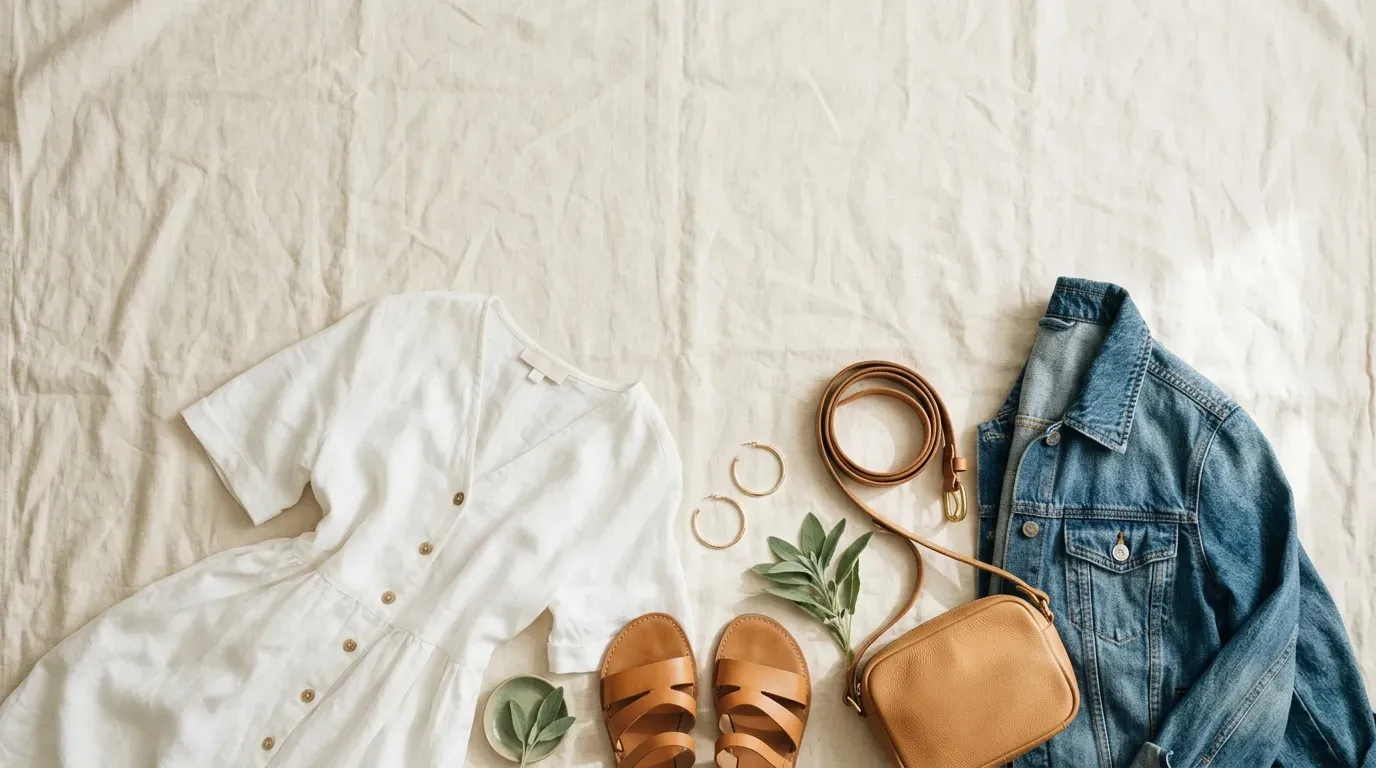

How to Accessorize a White Dress for Women Over 40 — You pull the white dress off the hanger and realize you've only decided half the outfit. The fit is right and the fabric feels good, but the jewelry, shoes, and bag are still a blank. Knowing how to accessorize a white dress is what turns a good dress into an outfit that feels finished.
White is a flexible base, which is exactly why it can feel intimidating. Every accessory shows up clearly against it, so a few deliberate choices work better than a handful of random ones. You don't need a big collection, just a simple order of decisions.
I've broken it into seven steps, starting with the mood of the day and ending with color and metal tone. Work through them in order, and you'll have a plan you can reuse every time you reach for white.
1. Decide the Mood Before You Add Anything
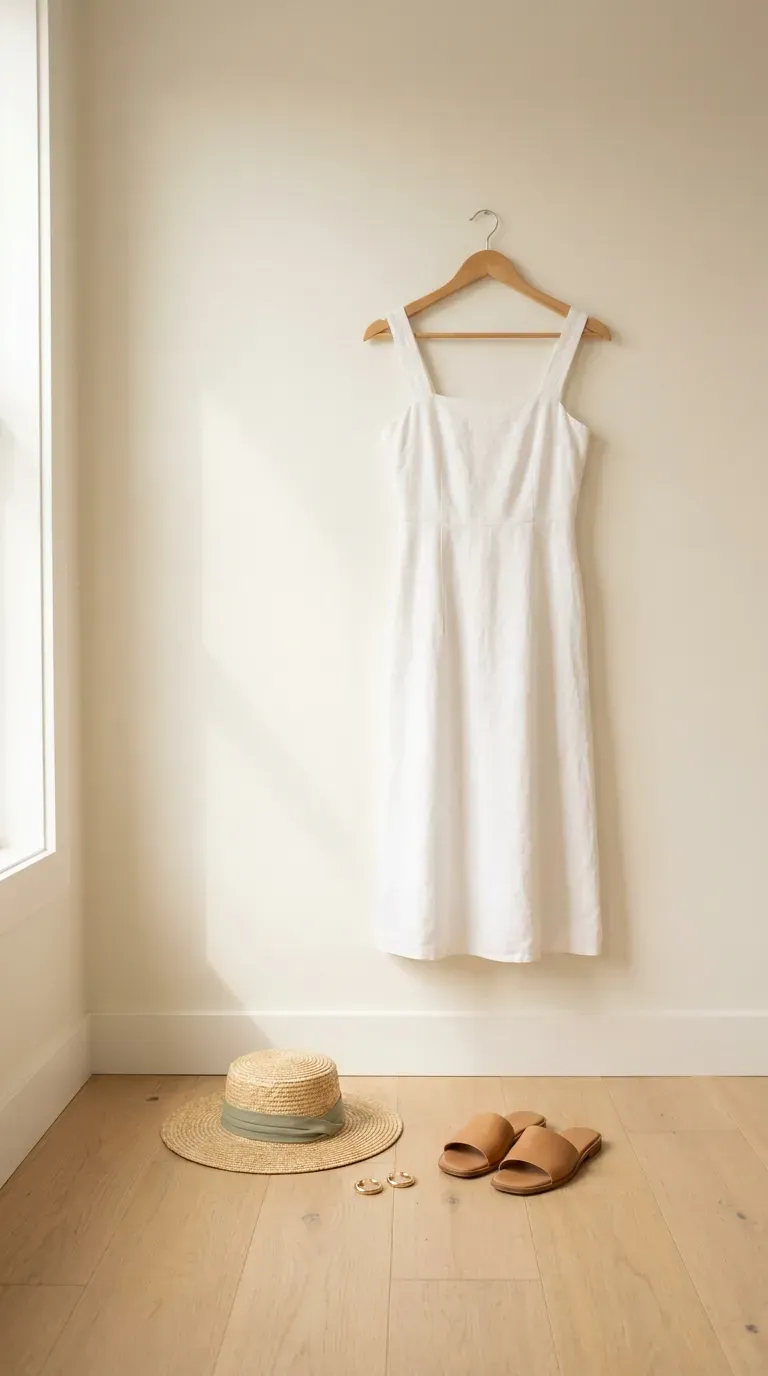
The same white dress can go to a picnic, a work lunch, or a wedding weekend, and the accessories decide which one it becomes. Before you pick a single piece, name the mood: relaxed, polished, or dressy.
That one word guides every choice that follows, from the height of your shoe to how much metal you wear.
How to Do It
- Name the occasion in one word: relaxed, polished, or dressy.
- Look at the dress itself, including its length, neckline, and fabric weight.
- Let the fabric set the starting point: crisp cotton leans relaxed, while satin or crepe leans dressy.
- Choose accessory materials that match the mood: straw and canvas for relaxed, smooth leather for polished, pearls or slim heels for dressy.
Why It Works
Accessories carry most of the formality in a white outfit. Woven sandals make a dress read relaxed, while slim heels and structured earrings push the same dress toward dressy. Deciding the mood first keeps you from sending mixed signals.
Common Mistakes to Avoid
- Dressy heels on a casual cotton dress
- Beach-style pieces at a formal event
- Picking accessories before checking the dress code
Best For
- Weddings and showers
- Garden parties
- Work lunches
- Weekend travel
2. Let One Piece of Jewelry Lead
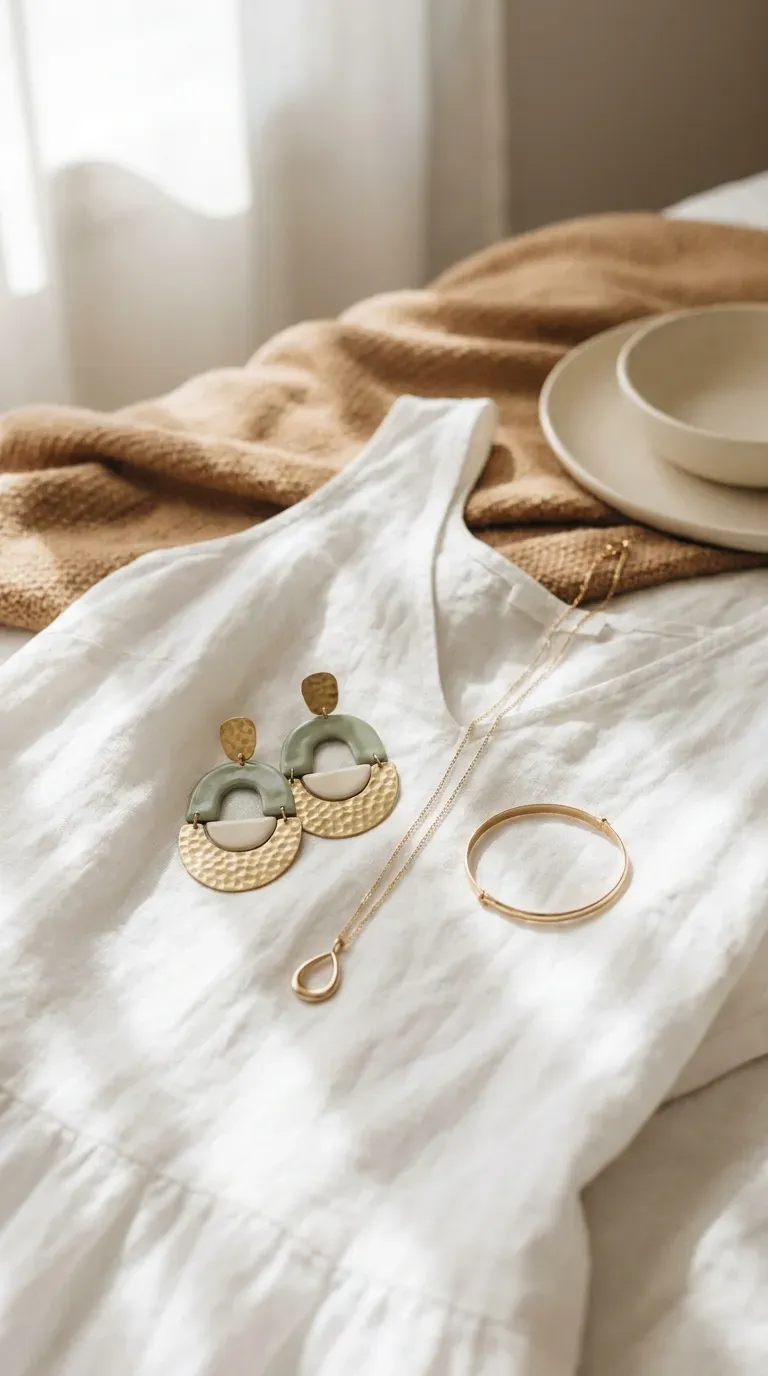
White gives jewelry plenty of room to show. Choose one focal point, whether that's earrings, a necklace, or a bracelet stack, and keep everything else quiet.
The trade-off is that some pieces stay in the box. That can feel odd at first, but the result looks clean and intentional.
How to Do It
- Look at the neckline first, because it decides where jewelry can sit.
- Match the focal point to the neckline: statement earrings for high or collared necklines, a pendant or short necklace for open ones.
- Keep the supporting pieces small, such as studs, a thin bracelet, or a single ring.
- Stick to one metal tone while you're deciding (more on that in step 7).
Why It Works
One focal point gives the eye a place to rest. Against white, even simple pieces read clearly, so you don't need volume to make a statement.
What to Look For
Use this quick guide to match the piece to the neckline.
| Accessory | Best For | How to Wear It |
|---|---|---|
| Statement earrings | High or collared necklines | Skip the necklace |
| Pendant necklace | V-necks and scoop necks | Keep earrings small |
| Short collar necklace | Strapless or square necklines | Pair with simple studs |
| Bracelet stack | Sleeveless or short sleeves | Keep neck and ears quiet |
If you choose larger earrings, check the weight. Lightweight styles are far easier to wear for a long event.
Best For
- Weddings and showers
- Dinner dates
- Work events
- Special-occasion brunches
3. Define the Waist With the Right Belt
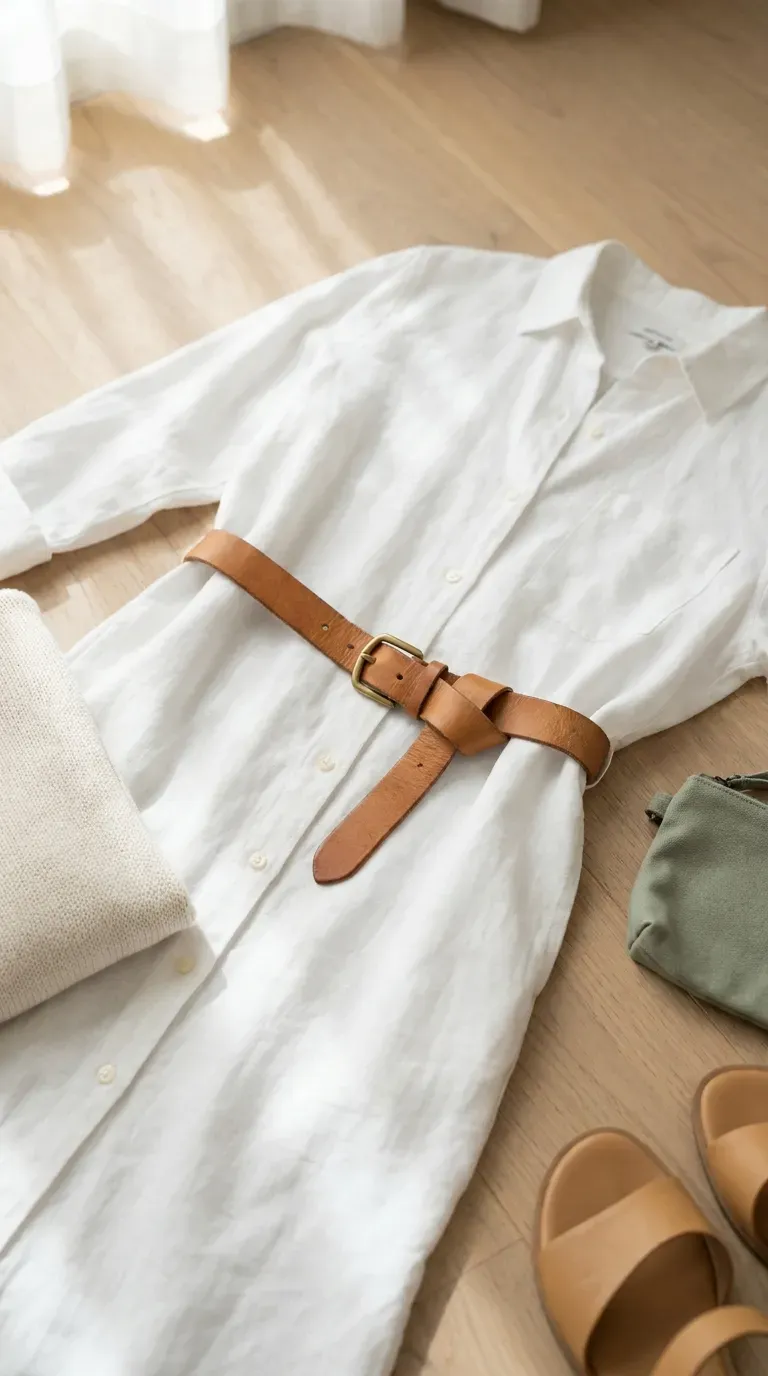
A belt marks where the dress changes shape. On a straight or loose white dress, it defines the waist and adds a clear line without changing the dress itself.
Not every dress needs one. If your dress already has a waist seam, gathering, or a built-in tie, leave the belt out.

How to Do It
- Find your natural waist, the spot where your torso bends when you lean to the side.
- Choose a width that suits the fabric: about ½ to 1 inch for lightweight dresses and 1½ to 2 inches for structured ones.
- Echo your bag or your shoes in the belt color, but not both.
- Fasten it so you can sit, breathe, and eat comfortably.
Why It Works
A belt breaks up a long column of white and shows where the waist sits. It also adds texture, since leather or suede reads differently from a cotton or linen dress.
What to Look For
- Smooth leather or soft suede
- A simple buckle in your chosen metal tone
- Adjustable holes or a small stretch panel
- A fabric belt in the dress's own shade for a tonal look
Common Mistakes to Avoid
- A belt so tight you can't sit comfortably
- A wide belt over bulky fabric
- Layering a belt over a dress that already has a defined waist
4. Match Your Shoes to the Hemline and the Occasion
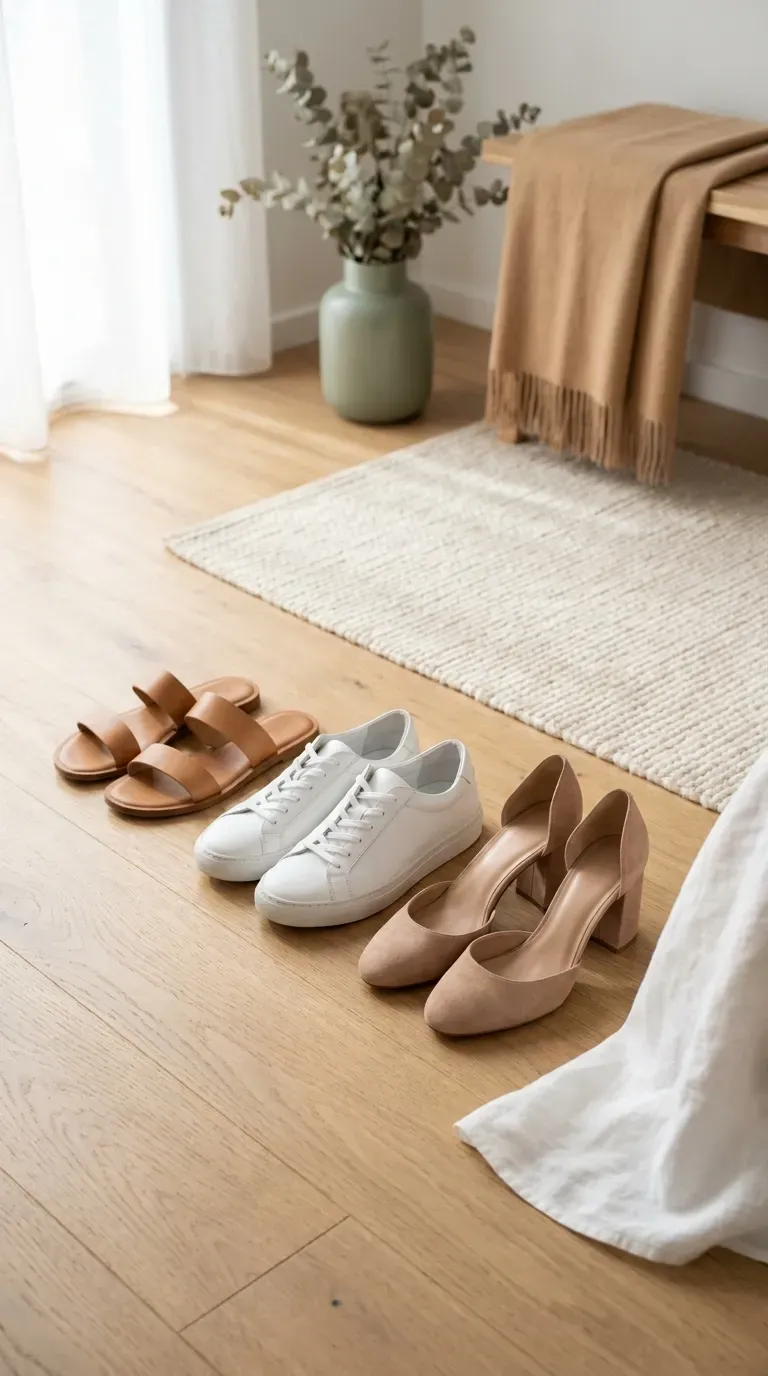
Shoes finish the outfit and set the pace for the whole day. The hemline matters here: a short hem shows more of the shoe, while a midi or maxi hem gives you more freedom.
Think about how long you'll be on your feet before you decide. Comfort comes first, because an outfit you're counting down to take off never looks relaxed.
How to Do It
- Check the hem: short and knee-length hems suit nearly any shoe, while midi hems look best with a visible ankle or a lower-cut shoe.
- Match the shoe to the mood you set in step 1.
- Choose a color that sits close to your skin tone or your bag for a longer, calmer line.
- Test the shoe with the dress on and walk across the room before the day itself.
Why It Works
The right shoe keeps the eye moving down the dress instead of stopping at the hem. A midi hem can look visually cut off by a bulky or high-cut ankle strap, so a softer line often looks better.
What to Look For
Use this table to match the shoe to the day.
| Shoe | Best For | Heel or Sole Notes |
|---|---|---|
| Flat sandal | Warm days, midi and maxi hems | Cushioned footbed, secure strap |
| Block heel | Weddings, dinners, long events | About 2 to 3 inches, stable base |
| Loafer or flat | Work lunches, travel | Cushioned sole, room in toe box |
| White sneaker | Weekends, casual cotton dresses | Clean, low-profile, minimal |
Look for cushioning, a stable heel, and room in the toe box. If you have foot pain, check with your doctor or a podiatrist before choosing a heel height.
Best For
- Weddings and showers
- Long travel days
- Work lunches
- Weekend errands
5. Choose a Bag That Adds Contrast
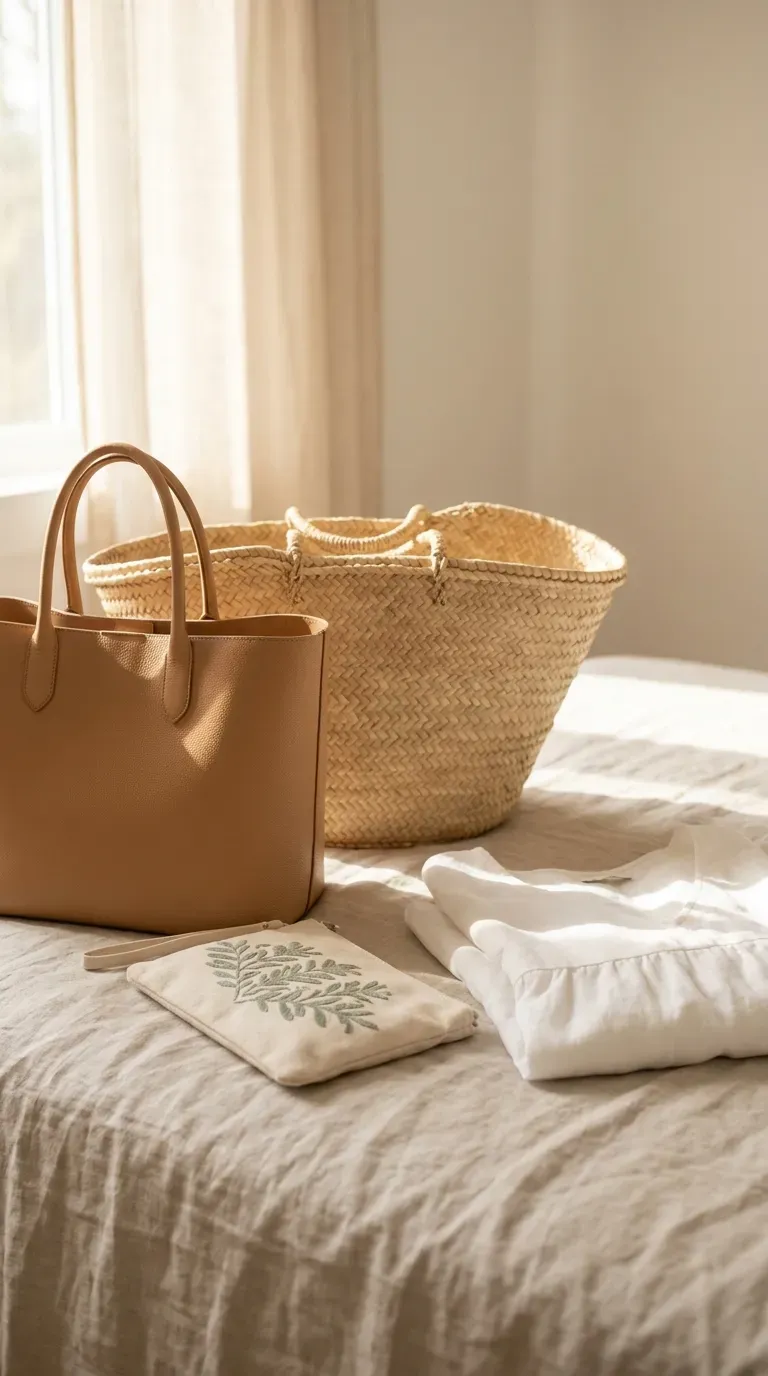
A white dress paired with a pale bag can blend together. A bag in a contrasting color or texture adds structure and gives the outfit a clear edge.
Size matters too. The bag should fit what you actually carry, because a bag you keep adjusting pulls attention away from the dress.
How to Do It
- Pick a contrast: tan, black, or a muted color against the white.
- Match the size to the event: a tote for daytime, a small crossbody for dinner, a clutch for dressy evenings.
- Check the strap length so the bag sits comfortably and doesn't crowd the waist or belt.
- Pick hardware that matches the metal tone in your jewelry.
Why It Works
Contrast frames the dress and adds texture. A structured bag adds shape next to a flowing fabric, while a woven bag adds a relaxed, warm note.
What to Look For
- A structured shape for polished looks
- Woven straw for warm-weather days
- Hardware that matches your jewelry
- A color that repeats your shoes or belt
Pale bags show marks easily, so save them for dry days and check the care label for cleaning.
Best For
- Work lunches
- Daytime weddings
- Garden parties
- Weekend travel
6. Add a Third Layer for Shape and Warmth
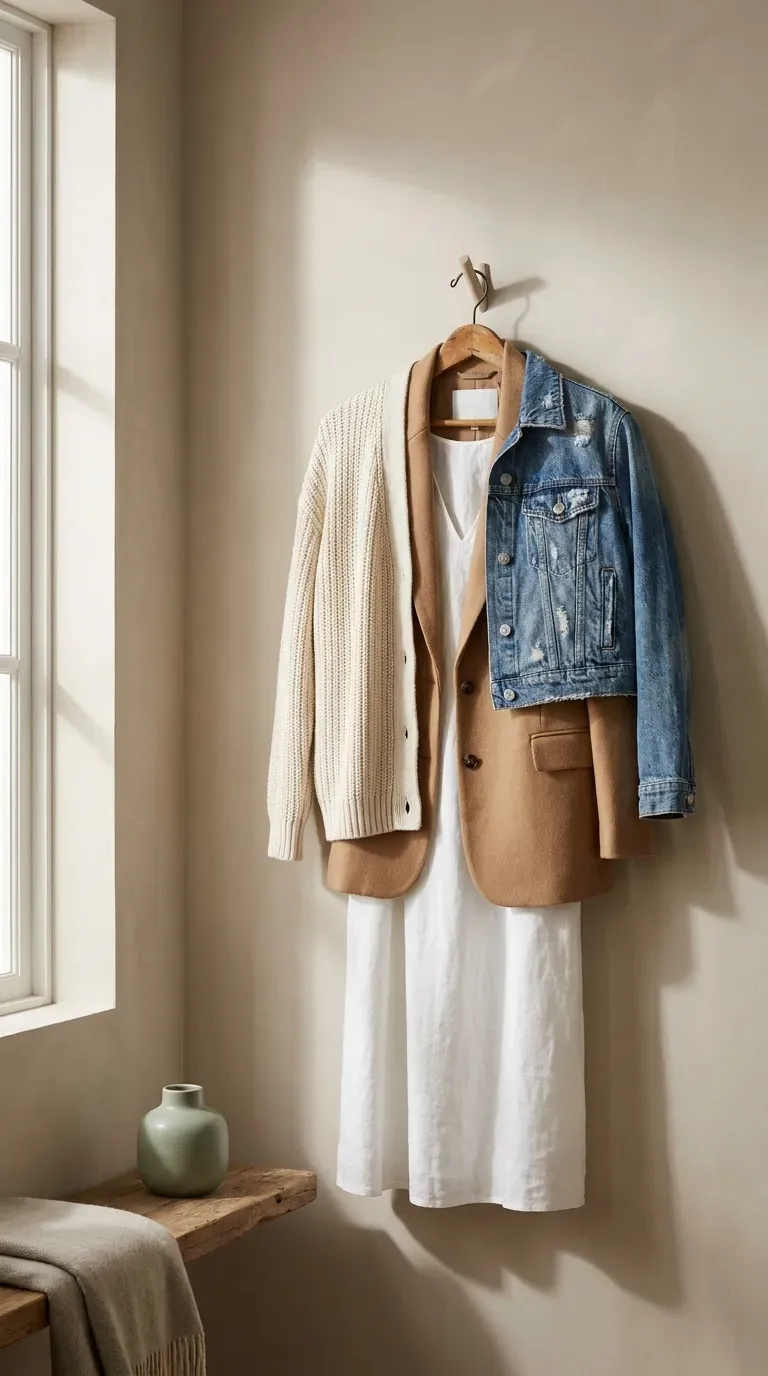
A layer such as a jacket, denim, or cardigan gives a white dress structure at the shoulder and makes it wearable across seasons. It also gives you something to reach for when the temperature drops.

This step depends on your climate. In warm regions a light layer may be enough, while cooler months call for something with more weight.
How to Do It
- Choose the layer for the weather first, then for the mood.
- Match the length to the dress: cropped layers suit longer hems, and longer layers suit shorter ones.
- Keep the color a step away from white, such as camel, denim blue, or soft gray.
- Check the sleeve length so your wrists and bracelets still show.
Why It Works
A third layer frames the dress and adds a different texture. Denim reads relaxed, a tailored blazer reads polished, and a soft cardigan adds warmth without formality.
What to Look For
- A denim jacket for relaxed outfits
- A tailored blazer for work or dressy events
- A lightweight cardigan for cool evenings
- A wrap or shawl for formal occasions
Common Mistakes to Avoid
- A bulky layer over a delicate fabric
- A layer that hits at an awkward point on the dress
- Layers in pure white that blur the dress's edges
A Simple Rule to Remember
Cropped layers go with longer dresses, and longer layers go with shorter ones.
7. Pick Your Colors and Metals on Purpose
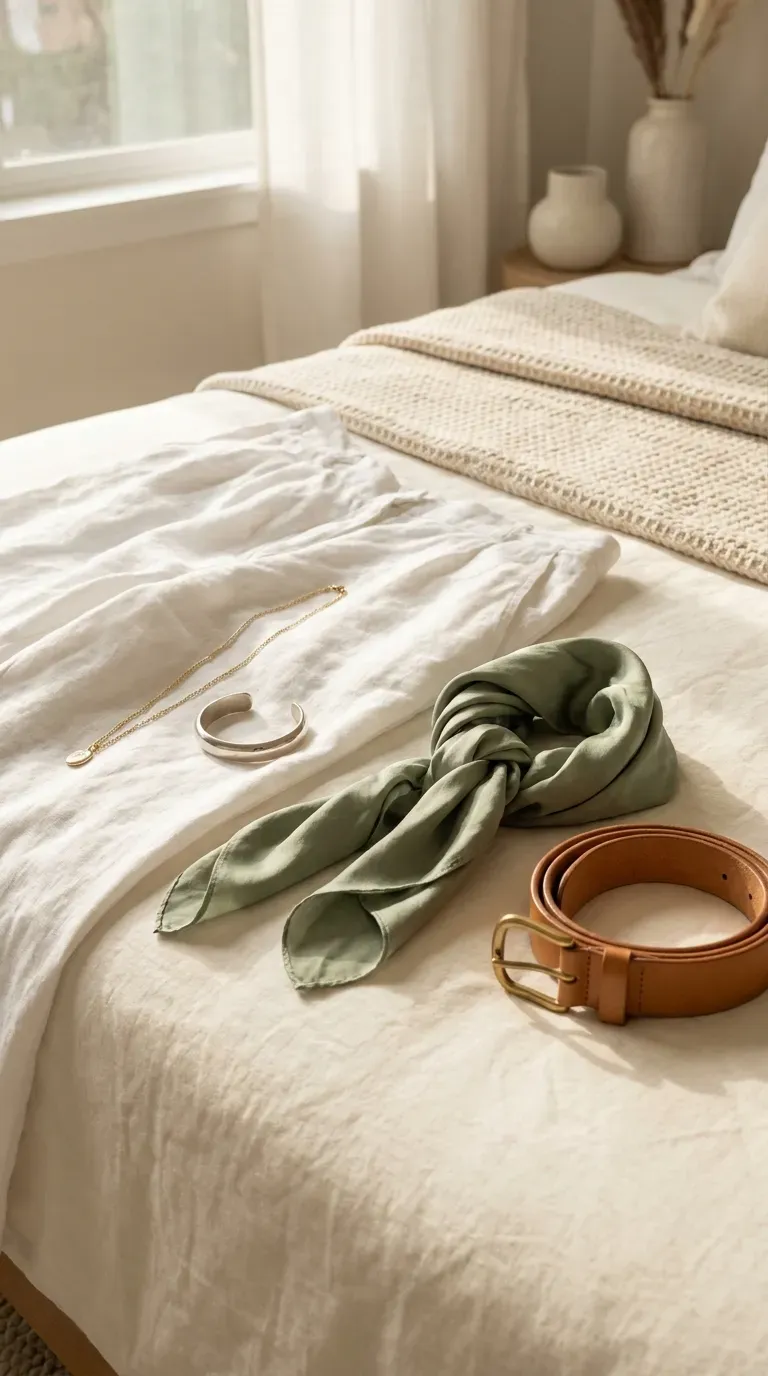
The last step ties everything together. Choose one metal tone and one accent color, then repeat each one a couple of times so the outfit feels planned rather than assembled.
You can mix metals, but it works best when one clearly leads and the other shows up in a small way.
How to Do It
- Choose a lead metal: gold, silver, or a soft mix with one clear leader.
- Choose one accent color or a neutral palette, such as tan, sage, or navy.
- Repeat the accent once or twice, for example in the belt and the bag.
- Hold the pieces near your face in natural light and keep the ones that look best on you.
Why It Works
Repetition makes an outfit look cohesive. When the same color or metal appears in two or three places, the eye reads the whole look as one idea instead of a list of separate items.
What to Look For
This table shows which colors pair well with which pieces.
| Color | Pairs Well With | Best For |
|---|---|---|
| Tan or camel | Gold jewelry, leather bags | Polished everyday looks |
| Sage green | Gold, wood, woven straw | Relaxed garden settings |
| Navy | Silver, pearls | Work and dressy events |
| Bright accent | Simple metals, neutral shoes | One piece, special occasions |
If you love a bold color, limit it to one piece so the white still reads as the base.
Best For
- Weddings and showers
- Garden parties
- Work events
- Dinner dates
Quick Accessorizing Cheat Sheet
| Rule | Why It Works | Quick Fix |
|---|---|---|
| Decide the mood first | Sets formality for every choice | Name it: relaxed, polished, or dressy |
| Let one jewelry piece lead | Gives the eye a place to rest | Remove one piece before leaving |
| Define the waist | Adds a clear line and texture | Use a ½ to 1 inch belt |
| Match shoes to hem and occasion | Balances line and comfort | Walk across the room first |
| Add a contrasting bag | Adds structure and edge | Swap a pale bag for tan |
| Add a third layer | Adds structure and season range | Pair cropped with long, long with short |
| Choose colors and metals on purpose | Keeps the look cohesive | Pick one metal and one accent |
The Principles Behind These Rules
Contrast Gives White Definition
White is a bright base, so anything beside it stands out. Tan, navy, or sage accessories create edges that make the dress look finished rather than flat.
One Focal Point at a Time
An outfit reads best when there's one thing to notice first. Earrings, a belt, or a bag can lead, but they shouldn't all compete at once.
Texture Keeps an All-White Outfit Interesting
Leather, straw, suede, and metal all add depth that color alone can't. A smooth dress next to a woven bag or a suede belt looks richer than the same dress with matching smooth accessories.
Proportion Follows the Hemline and Neckline
The neckline decides where jewelry sits, and the hem decides which shoes and layers balance the look. Check both before you pick pieces, and the rest tends to fall into place.
Common Mistakes Worth Skipping
Competing Statement Pieces
Bold earrings, a wide belt, and a bright bag all at once make the eye jump around. Pick one lead and let the others support it.
Matching Everything Too Closely
When the shoes, bag, belt, and jewelry are all the exact same shade, the outfit can look stiff. A little variation in tone or texture feels more natural.
Skipping the Comfort Check on Shoes and Bags
A heel that wobbles or a bag that digs in will show in how you stand and move. Check the fit and weight before the day, not during it.
Final Tips for Success
Rehearse How to Accessorize a White Dress Before the Day
Put the full outfit on, shoes included, at least a day before the event. You'll catch a pinching strap, a clashing tone, or a bag that's too small while there's still time to swap it.
Check the Dress in Natural Light
Light white fabrics can look different in daylight than they do indoors. If the dress is sheer, wear a slip or a layer close to your own skin tone underneath, and check the care label before cleaning.
Build a Small Accessory Kit
A short list of basics covers most white-dress outfits:
- A pair of simple gold or silver studs
- A statement earring or necklace
- A leather belt in tan or black
- A structured bag in a neutral shade
- A comfortable flat sandal or loafer
- A denim jacket or tailored blazer
Edit Once Before You Leave the House
Look in the mirror and take one thing off. If the outfit still feels complete, you've found the right balance.
Conclusion
A white dress is a simple base, and that's what makes the accessories matter. Start with the mood, choose one focal point, and add structure through the waist, shoes, bag, and a third layer.
Once you know how to accessorize a white dress, the steps become automatic. You'll know what to reach for, what to leave in the drawer, and how to adjust for the weather and the occasion.
The best outfits aren't the ones with the most pieces. They're the ones where each piece has a reason to be there.
Save this guide for the next time a white dress comes out of the closet, and you'll have a plan ready.
Comments
✎ Write a commentCommunity Guidelines
We love hearing what you think. Please keep comments about the article itself, stay kind and helpful to other readers, and leave out personal details or links. Every comment is checked before it appears.