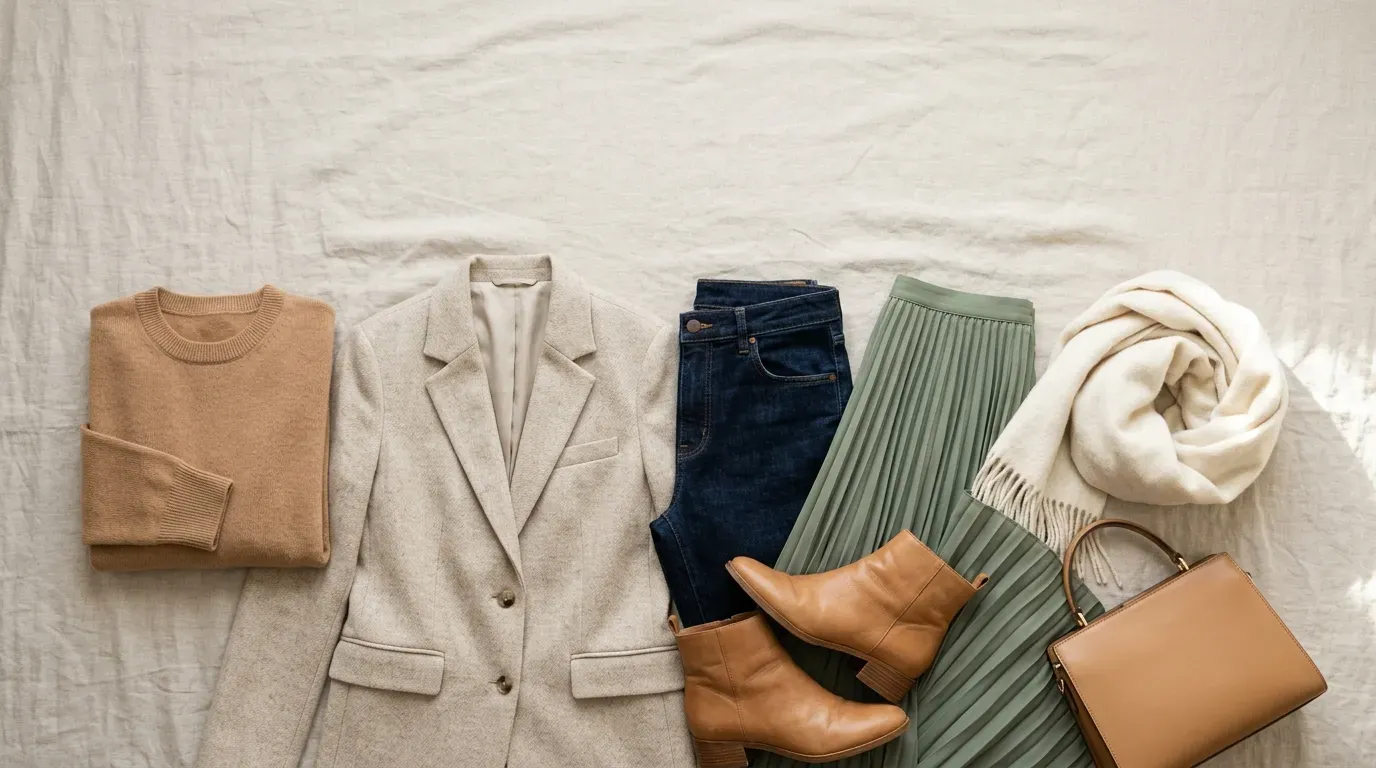

Fall Wardrobe Staples Worth Buying for Women Over 40 — The first properly cool morning arrives, you open the closet, and the summer pieces suddenly look wrong. Nothing fall-ready feels quite right either: the sweater pilled last year, the blazer never sat well, and the boots hurt by noon. This is usually the moment when choosing fall wardrobe staples for women over 40 starts to feel urgent.
What you need is not a brand-new closet. It is a small group of pieces that fit well, feel good all day, and mix with what you already own. Eight of them can cover work, weekends, dinners, and errands.
Here is how I would shop for each one, including what to check before you buy and when to walk away.
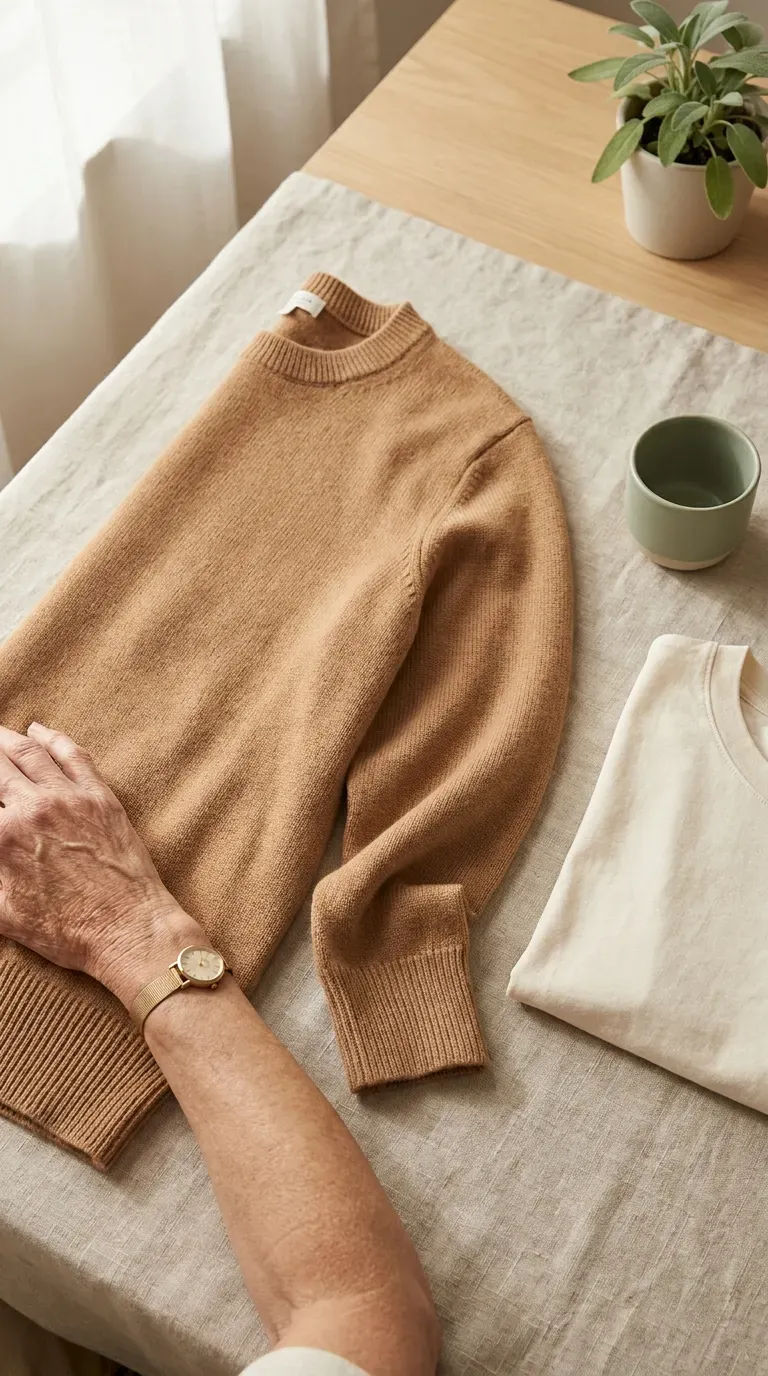
1. Buy One Knit Sweater You Will Reach for Every Week
A good knit is the piece you will wear more than almost anything else from September through March. It works on its own, under a blazer, or over a collared shirt, so it earns its place quickly.
Choose a neutral or deep color you already wear near your face. You can add a second one later; start with the one you would grab without thinking.
How to Do It
- Pick a crew neck, V-neck, or soft mock neck, whichever you already feel comfortable in.
- Check the sleeve: the cuff should reach the wrist bone, not cover your knuckles.
- Lift your arms and sit down. The hem should stay put and nothing should pull across the shoulders.
- Try it over a thin tee, since that is how you will usually wear it.
Why It Works
A knit with a little structure at the shoulder and a clean hem creates a defined line without clinging. It adds warmth without bulk, and because it is a single color, it pairs with almost everything you own.
What to Look For
- Merino, cotton, or a wool blend with a soft feel
- Midweight knit that holds its shape
- Ribbed cuffs and hem that sit flat
- Shoulder seams that lie smooth
- A hem that lands at or just below the hip
The trade-off: fine merino needs gentle care, so check the care label before you commit.
Common Mistakes to Avoid
- Shoulder seams that drop past your arm
- Very thin knit that clings and shows what is underneath
- Skipping the itch test at the neck and wrists
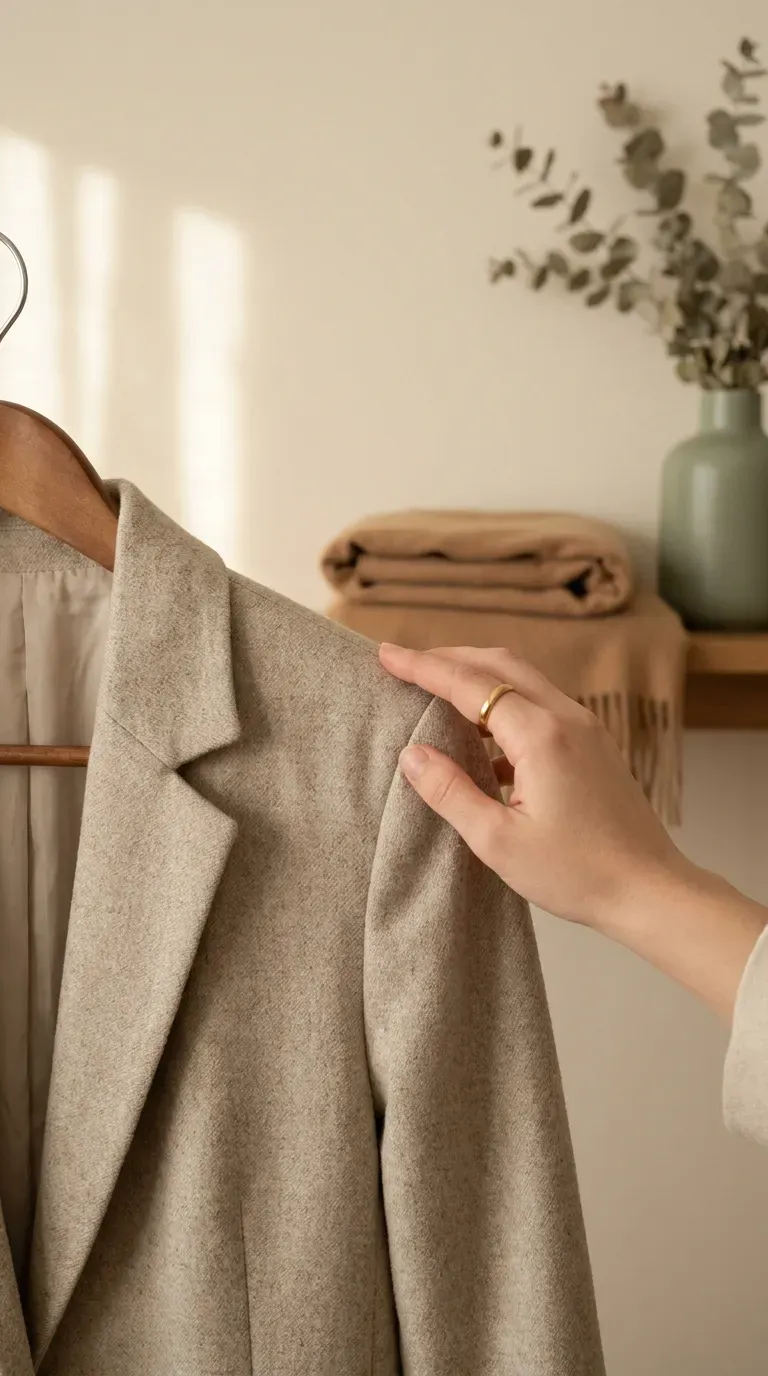
2. Choose a Blazer That Fits Through the Shoulder
A blazer is the fastest way to make jeans, a knit, or a simple dress look finished. It is also the piece most likely to sit wrong, so fit matters more here than almost anywhere else.
Start with the shoulder. A tailor can shorten sleeves and adjust a hem, but the shoulder is the hardest area to alter, so it needs to work off the rack.
How to Do It
- Try it on over the layer you wear most, such as a knit or tee.
- Check that the shoulder seam ends at the edge of your shoulder.
- Button it and sit down. It should close without pulling.
- Reach your arms forward as if driving. The back should not strain.
- Note what a tailor could fix, like sleeve length or hem, and what they could not.
Why It Works
A blazer adds structure at the shoulder and creates a vertical line down the front when worn open. That sharper edge makes soft pieces, like a knit or a flowy skirt, look intentional.
What to Look For
Use this quick table in the fitting room.
| Area | What a Good Fit Looks Like | Sign It's Off |
|---|---|---|
| Shoulder | Seam sits at the shoulder's edge | Seam droops or fabric dimples |
| Sleeve | Ends at the wrist bone | Covers knuckles or shows forearm |
| Button | Closes flat without pulling | X-shaped wrinkles at the button |
| Length | Lands near the hip bone | Hem looks boxy or oddly short |
Structured jackets can feel stiff, so look for a wool blend or stretch ponte with some give.
Best For
- Office days
- Dinners out
- Travel days
- Weekend jeans and a tee
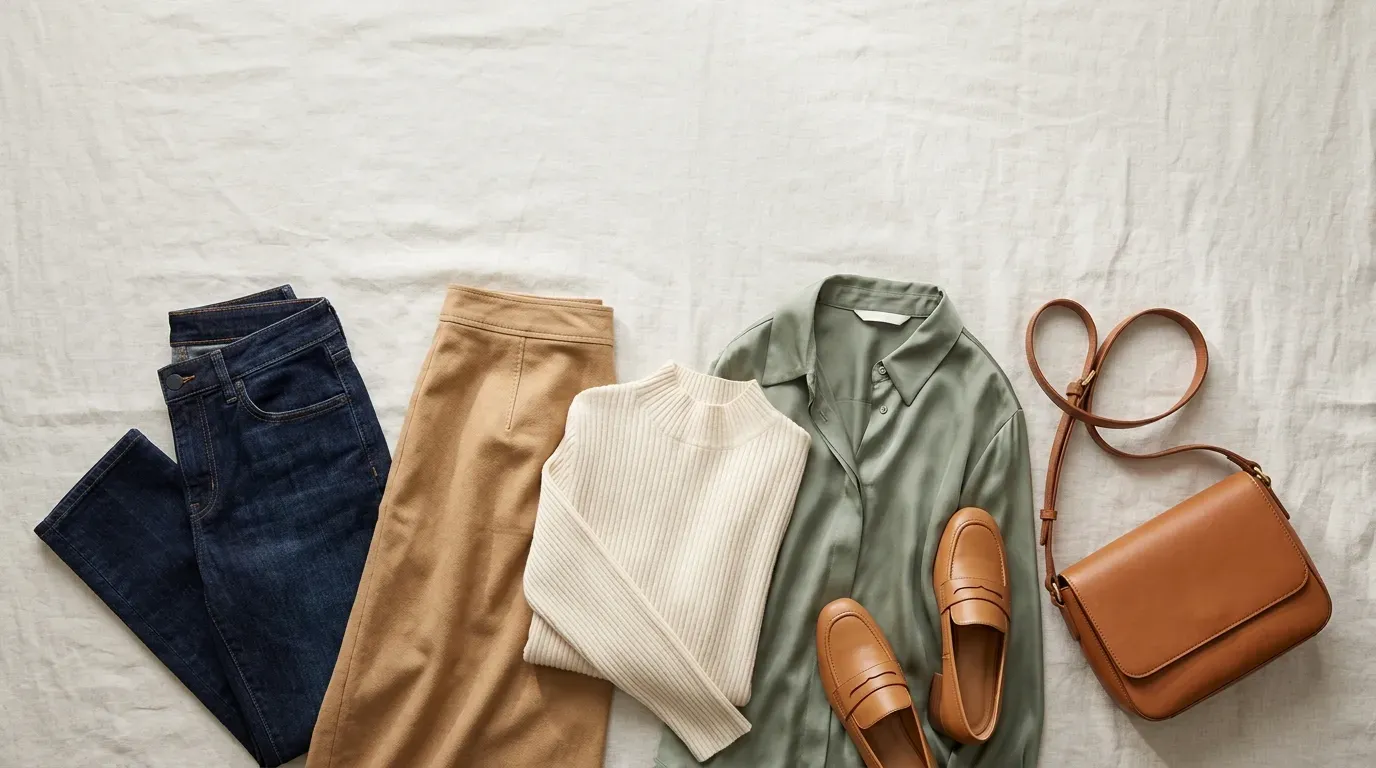
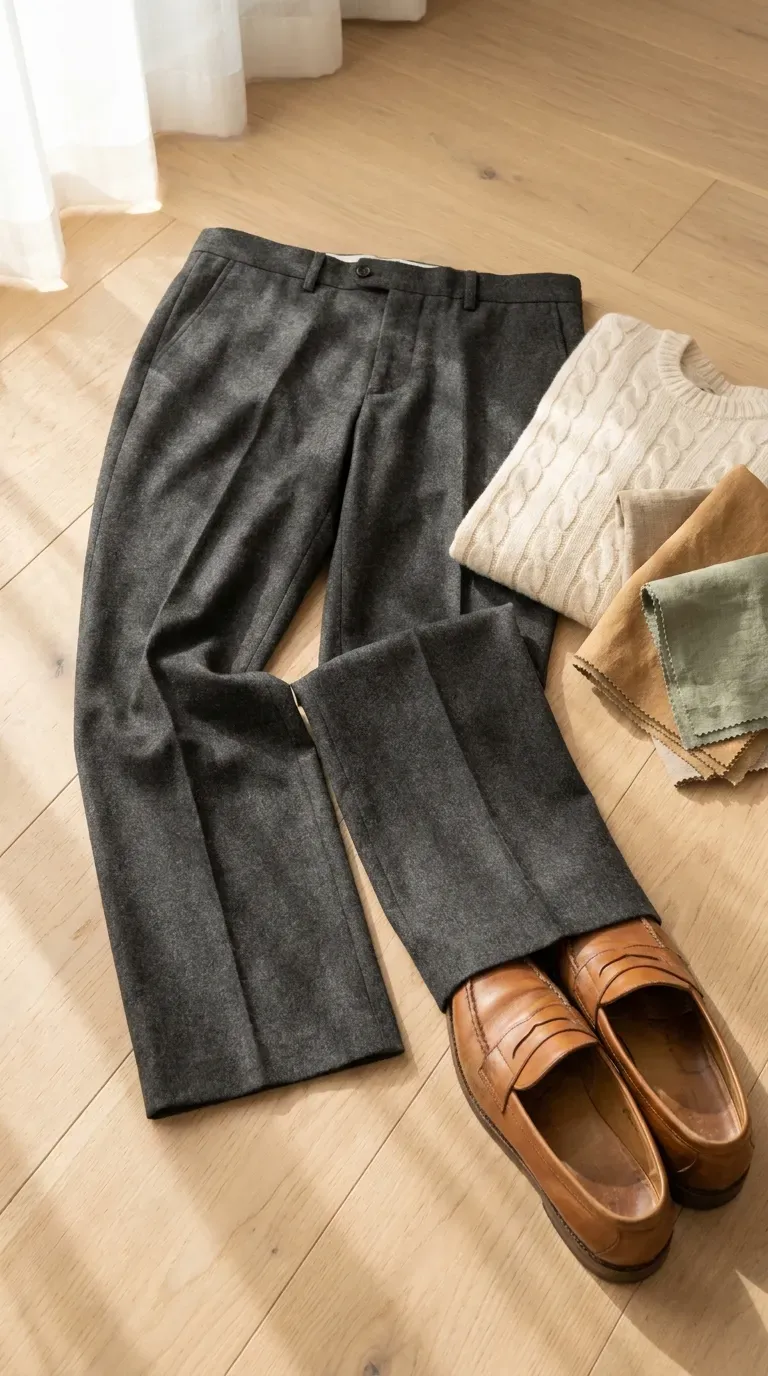
3. Invest in Trousers With a Comfortable, Stable Rise
Trousers do a lot of work in fall, covering the office, dinners, and long travel days. Comfort decides whether you actually wear them, and comfort starts at the waistband and the rise.
The rise is the distance from the crotch seam to the waistband. A mid or high rise that stays put when you sit, bend, and walk is worth more than any detail on the pockets.
How to Do It
- Pick a straight-leg or gently wide-leg shape with a clean line.
- Sit, bend, and walk the length of the store before deciding.
- Check that the waistband does not roll, gap, or dig in when you sit.
- Try them with the shoes you plan to wear, usually flats or a low heel.
- Hem them to just skim the top of the shoe.
Why It Works
A straight or wide leg creates one long line from hip to hem, which balances a sweater or blazer on top. A stable rise also keeps a tucked shirt in place, so you stop adjusting all day.
What to Look For
- Wool blend, crepe, or heavier ponte with a smooth drape
- Waistband with interior grip or a little stretch
- Fabric thick enough that it does not show lines underneath
- Pockets that lie flat
- A hem length you can adjust
Common Mistakes to Avoid
- Hems that drag on the floor or stop awkwardly above the shoe
- Waistbands that dig in when seated
- Fabric that creases badly after one sitting
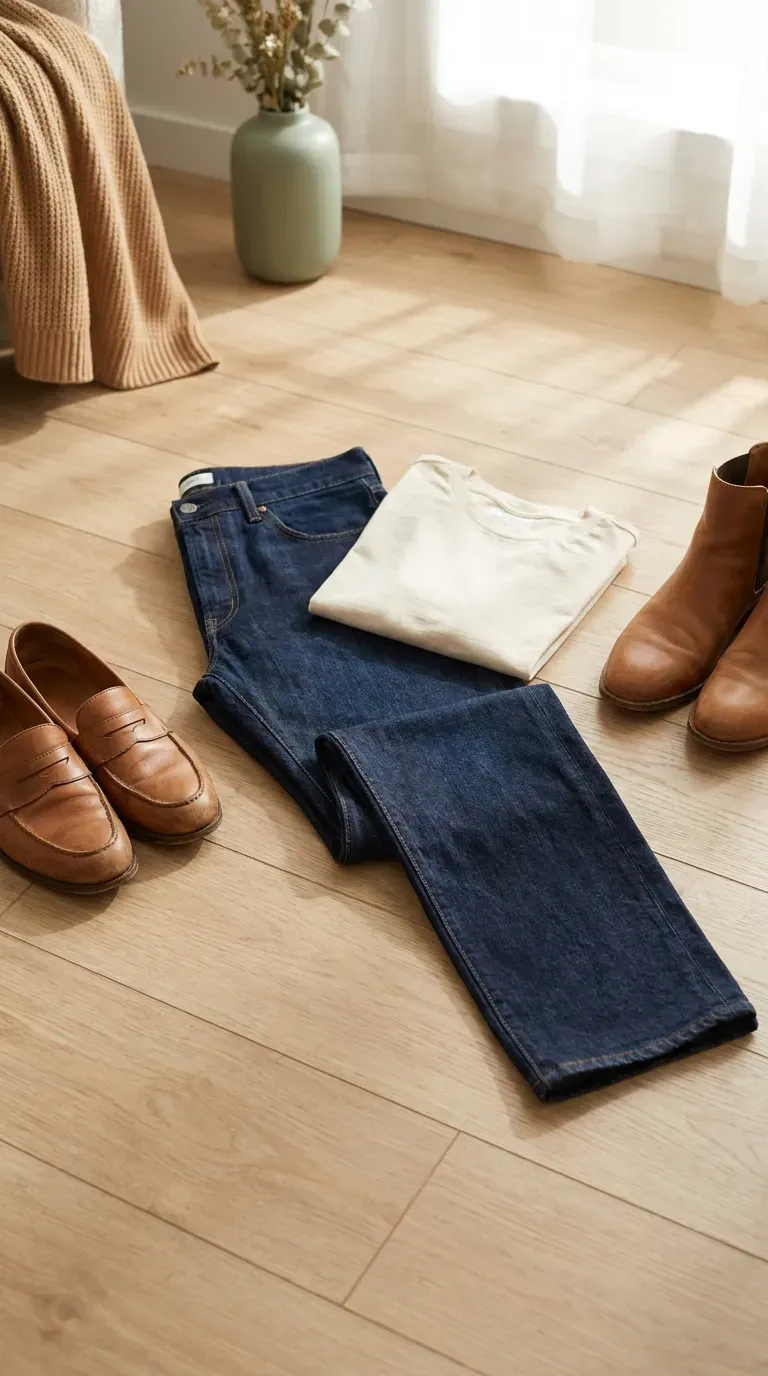
4. Keep One Pair of Dark Jeans That Works Dressed Up or Down
A dark pair of jeans is the quiet workhorse of fall. With a blazer and loafers it looks polished; with a knit and sneakers it looks easy. The goal is one pair that can do both.
What separates sharp jeans from tired ones is mostly wash and fabric, not shape. Choose deep indigo or black with an even color and no heavy fading, whiskering, or rips.
How to Do It
- Choose a straight or gently flared leg that works with both boots and loafers.
- Check that the rise sits comfortably and the waistband does not gap at the back.
- Look for denim with a small amount of stretch, so it recovers after sitting.
- Sit, squat, and walk. The waistband should stay put.
- Hem for the shoes you wear most, so the leg just skims the top of the shoe.
Why It Works
An even, dark wash gives you one continuous block of color that looks more finished than light or distressed denim. That clean line is why dark jeans sit so well under a blazer or a long coat.
What to Look For
- Deep indigo or black wash in an even tone
- Cotton with a touch of stretch
- Sturdy fabric that holds its shape through the day
- Plain back pockets and minimal hardware
- A leg shape that fits over ankle boots
The trade-off: dark denim can transfer dye onto light surfaces, so wash it inside out and check the care label.
A Simple Rule to Remember
If you can wear them to a casual lunch and a nice dinner without changing, they are the right pair.
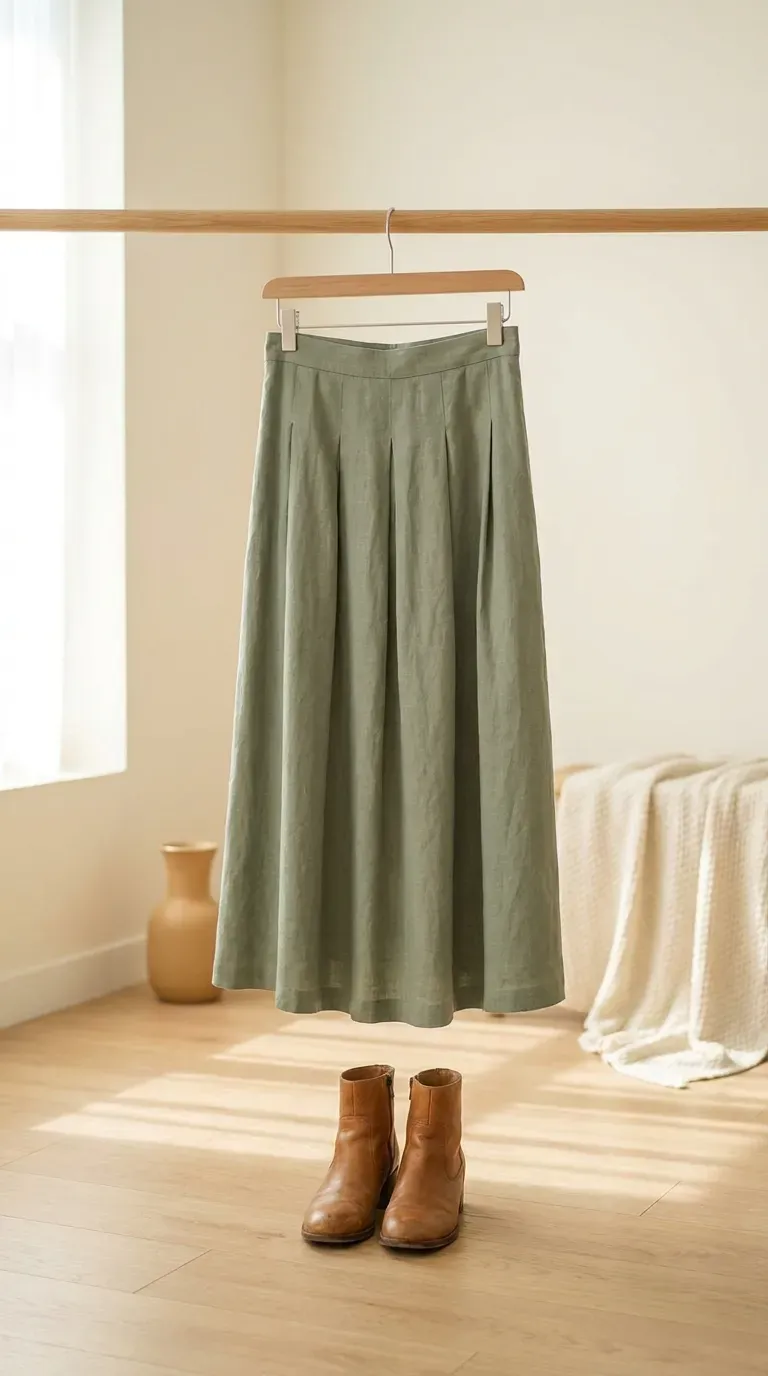
5. Add a Midi Skirt That Moves With You
A midi skirt gives fall a softer option when you want a break from trousers. It works with boots, a knit, and a blazer, and it travels well when you choose a fabric that resists wrinkles.
Look for a length that lands mid-calf or just below the knee. The exact spot depends on your height, so try it on with the shoes you plan to wear.
How to Do It
- Choose a pleated, A-line, or bias-cut shape in a fabric that drapes.
- Check that the waistband stays comfortable when you sit.
- Walk and sit. The skirt should swing freely without clinging or riding up.
- Look at the back and side in the mirror to see how the fabric falls.
- Try it with boots and flats to confirm the hem works with both.
Why It Works
A midi length creates a long, flowing line and keeps your legs covered on cooler days. Pairing it with a fitted knit or a tucked shirt balances the volume at the bottom. In colder climates, add tights and boots.
What to Look For
- Fabric with weight, like crepe, wool blend, or heavy satin
- Lining that keeps the skirt from clinging
- Pleats stitched down at the waist
- A waistband that lies flat under a tucked top
- A hem that falls mid-calf or just below the knee
Pleated styles may need steaming, so check the care label before you buy.
Best For
- Office days with ankle boots
- Dinners and gatherings
- Weekend errands with low sneakers
- Travel days with a knit and flats
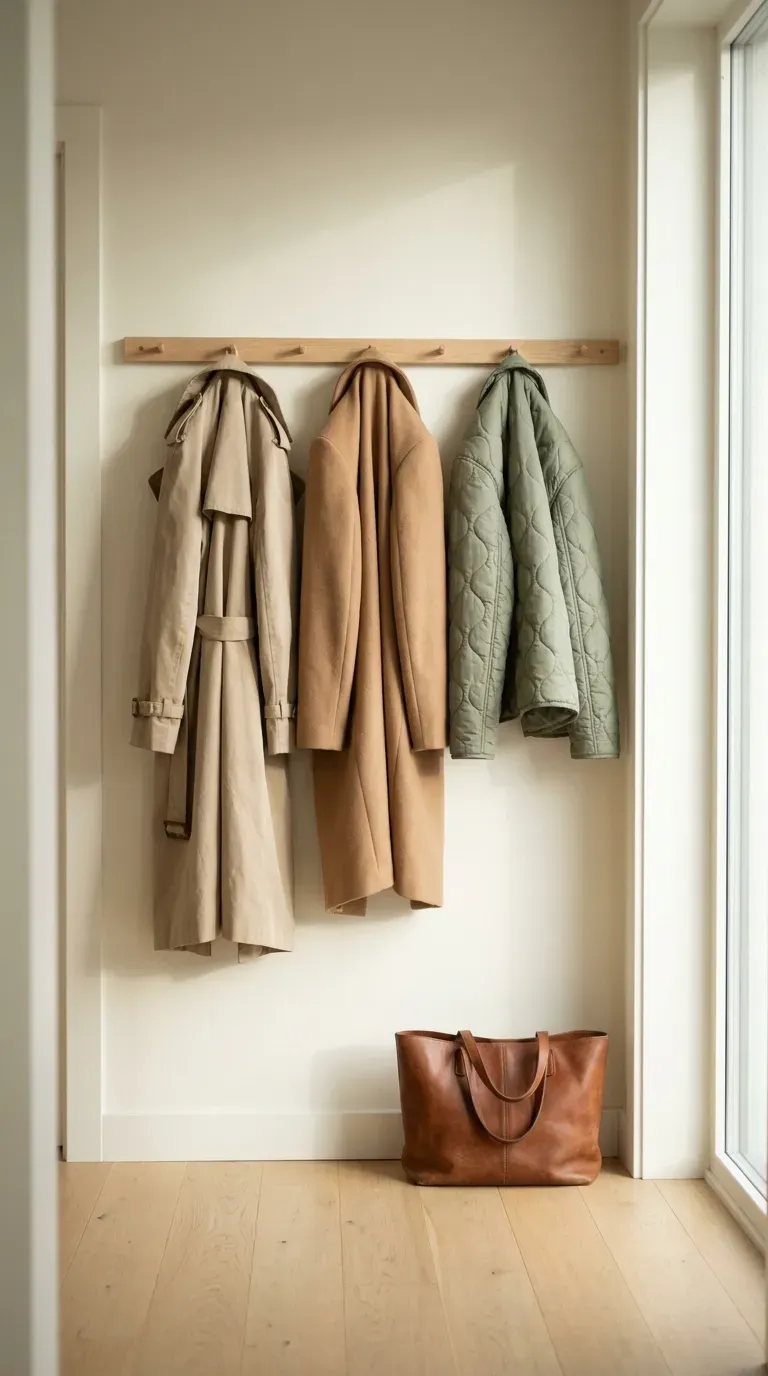
6. Pick a Coat Based on Your Real Fall Weather
The right coat depends less on trends and more on where you live. A trench suits mild, rainy fall days, a wool blend suits colder weather, and a quilted or utility jacket works when mornings are crisp and afternoons warm up.
Start with your weekly routine: commuting, walking the dog, standing at weekend games. That decides the length, weight, and pockets you need.

How to Do It
- Think about your typical temperatures from October through November.
- Bring your thickest sweater or blazer to the fitting room.
- Check that your arms move freely and the cuffs reach the wrist.
- Choose a length that works over both trousers and skirts.
- Test the pockets and closures with one hand, the way you will use them.
Why It Works
A coat is the layer people see first, so it sets the tone for everything under it. One well-chosen coat in a neutral color works with every outfit in this guide.
What to Look For
This table compares three common fall coat types.
| Coat | Best For | Style It With |
|---|---|---|
| Trench | Mild, rainy fall days | Trousers, knit, ankle boots |
| Wool-blend coat | Cold fall, early winter | Midi skirt, loafers, scarf |
| Quilted or utility jacket | Cool mornings, casual days | Jeans, sneakers, tee |
Wool blends often need special care, so check the care label.
Common Mistakes to Avoid
- Buying a coat that only fits over a thin top
- Choosing for the coldest day when most days are mild
- Sleeves too short for layering
- Closures that are hard to handle with gloves on
7. Wear Ankle Boots With a Stable Heel
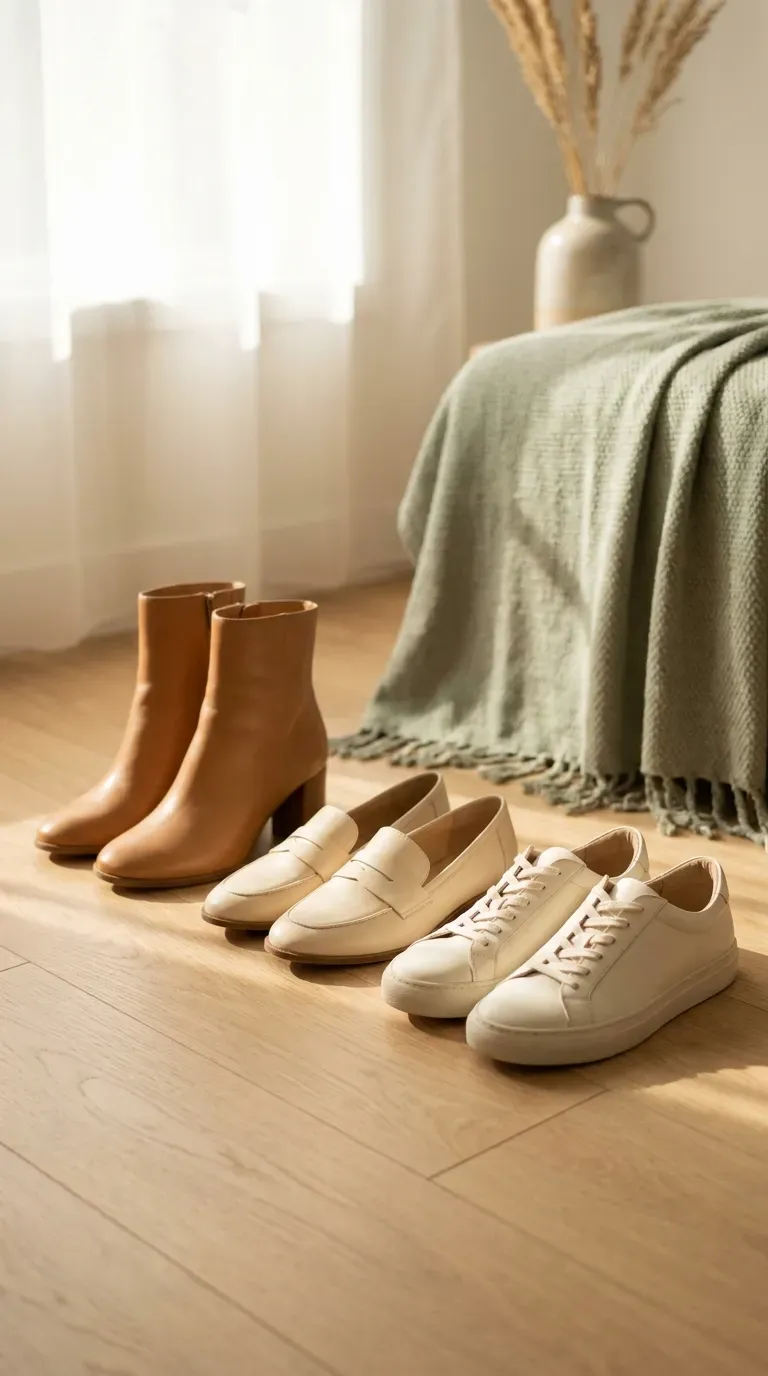
Ankle boots are the shoe that makes fall outfits feel complete. They work with jeans, trousers, and midi skirts, and they handle damp pavement and cool mornings better than most flats. Comfort decides whether you actually wear them, so shop for it first.
A block or stacked heel around 1½ to 2 inches gives you lift and stability, which is a practical range for a full day on your feet.
How to Do It
- Try boots on at the end of the day, with the socks or tights you will wear.
- Stand, walk, and take a few steps up and down if the store has stairs.
- Check that your heel stays put and your toes can move.
- Make sure the shaft does not pinch at the ankle or calf.
- Look at how the boot meets your usual hems, whether jeans, trousers, or a midi skirt.
Why It Works
A low, stable heel and a rounded or almond toe give a polished finish without sacrificing comfort. The boot also closes the gap between hem and ground, which makes the whole outfit look planned.
What to Look For
- Block or stacked heel around 1½ to 2 inches
- Cushioned insole with arch support
- Toe box with room for your toes to move
- Leather or suede upper with a flexible rubber sole
- Zip or elastic side panel for easy on and off
If you have foot pain, check with your doctor or a podiatrist before buying new shoes.
Here is how three common fall shoes compare.
| Shoe | Best For | Heel or Sole Notes |
|---|---|---|
| Ankle boot | Cool, damp days; skirts and jeans | Block heel, 1½ to 2 inches |
| Loafer | Trousers, office, dry days | Flat or small heel, cushioned sole |
| Low sneaker | Weekends, travel, errands | Flexible, cushioned, supportive sole |
8. Finish With a Scarf and a Structured Bag
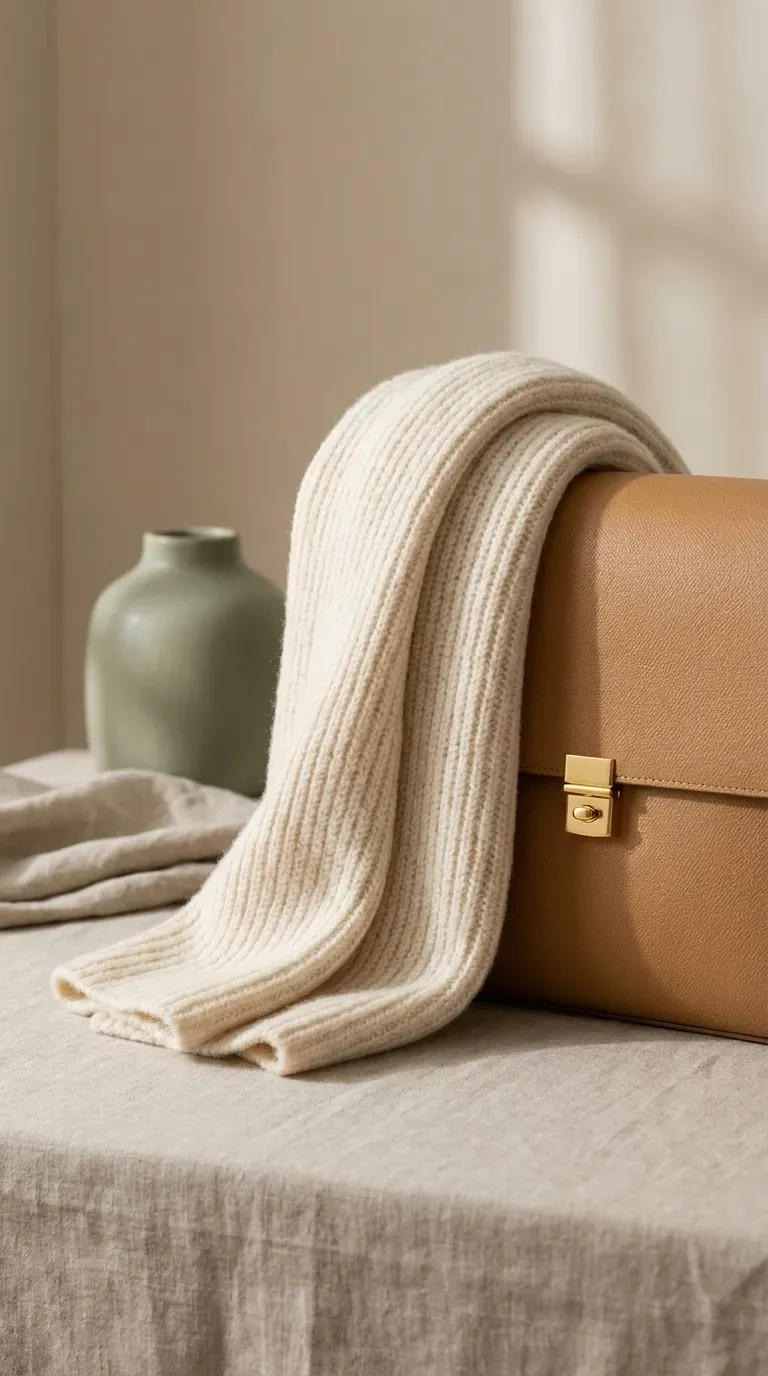
Accessories are where a fall outfit comes together, and two of them do most of the work: a good scarf and a bag that keeps its shape. They also change how a repeated outfit looks, so they are the easiest pieces to rotate.
Choose the scarf for texture and color, and the bag for size and structure.
How to Do It
- Choose a scarf in wool, a wool blend, or soft cotton, in a color from your palette.
- Pick one large enough to wrap once or drape loosely.
- Try it with your coat to make sure it does not bunch at the neck.
- Fill the bag with your daily items in the store, then carry it for a few minutes.
- Repeat one metal tone in the hardware, like gold or silver, so the look feels intentional.
Why It Works
A scarf adds texture and color near your face, and a structured bag gives an outfit a defined edge. Together they repeat the neutrals in your wardrobe, so everything looks like it belongs.
What to Look For
- Soft scarf that does not itch
- Neutral or deep color that works with your coat
- Bag with a firm base that stands upright
- Straps that sit comfortably on your shoulder
- Interior pocket for keys and phone
A Simple Rule to Remember
Let one accessory be the statement and keep the other simple.
Quick Fall Wardrobe Staples Cheat Sheet
Use this table as a short reference before you shop.

| Piece | Why It Earns Its Spot | Wear It With |
|---|---|---|
| Knit sweater | Warm, neutral, and easy to layer | Blazer, trousers, jeans |
| Blazer | Adds structure to soft pieces | Jeans, midi skirt, knit |
| Trousers | Comfortable for work and travel | Knit, ankle boots, scarf |
| Dark jeans | Dress them up or down | Blazer, loafers, tee |
| Midi skirt | Soft alternative to trousers | Fitted knit, ankle boots |
| Fall coat | Sets the tone for every outfit | Scarf, boots, any look |
| Ankle boots | Adds polish with all-day comfort | Jeans, trousers, midi skirt |
| Scarf and bag | Finishes and refreshes outfits | Coat, knit, neutral palette |
The Principles Behind These Rules
Buy Fewer Pieces, Wear Them More
A small closet of well-chosen items beats a full one with gaps. Each piece in this guide mixes with at least three others, so you get more outfits from fewer purchases. That is where the value comes from.
Fit Matters More Than Trend
A trend-driven piece that fits poorly will sit in the closet, while a plain one that fits well gets worn weekly. Check shoulders, rise, and sleeve length first, and treat color and detail as the finishing layer.
Fabric Weight Makes Fall Dressing Easier
Midweight fabrics like wool blends, crepe, and heavier denim drape better and hold their shape through a long day. They also handle changing temperatures better than very thin or very heavy options.
Build Around a Small Color Palette
Pick three or four colors, such as camel, charcoal, cream, and deep green, and keep most pieces within them. A tight palette means everything you own works together without extra planning.
Common Mistakes Worth Skipping
Buying for a Closet You Don't Have
It is easy to buy for an imagined life: the dinner you might go to, the office you rarely visit. Buy for the days you actually have, and add occasion pieces only when a real plan shows up.
Ignoring Comfort at the Store
"I'll get used to it" rarely works. If a waistband digs or a boot pinches during the fitting, it will be worse by the end of a full day, so walk, sit, and reach before you buy.
Skipping the Tailor on Key Pieces
A small hem or sleeve adjustment can make a good piece look custom. Plan for it in your budget, especially for trousers, coats, and blazers.
A Few Last Tips Before You Shop
Try Everything With Your Real Shoes and Layers
Bring the boots, the thickest sweater, and the bag you use most. A piece that works only in the fitting room setup will not work in real life.
Do a Closet Check Before You Shop
Lay out what you already own and note the gaps. You may find you need only three or four items from this list rather than all eight.
Add Pieces Slowly
Buy one or two staples at a time and wear them for a few weeks. That way you learn what you actually reach for before spending on the next piece.
Fall Wardrobe Basics Worth Owning
- A midweight knit sweater in a neutral color
- A blazer that fits through the shoulder
- Trousers with a stable, comfortable rise
- Dark jeans in an even wash
- A midi skirt with drape
- A coat suited to your climate
- Ankle boots with a stable heel
- A soft scarf and a structured bag
Build Your Fall Closet One Piece at a Time
Good fall wardrobe staples are not about buying more. They are about choosing pieces that fit well, feel good, and work together, so getting dressed takes less thought. Start with the one gap that bothers you most, then add from there.
Save this guide for your next shopping trip, and use the cheat sheet to keep your list short.
Comments
✎ Write a commentCommunity Guidelines
We love hearing what you think. Please keep comments about the article itself, stay kind and helpful to other readers, and leave out personal details or links. Every comment is checked before it appears.