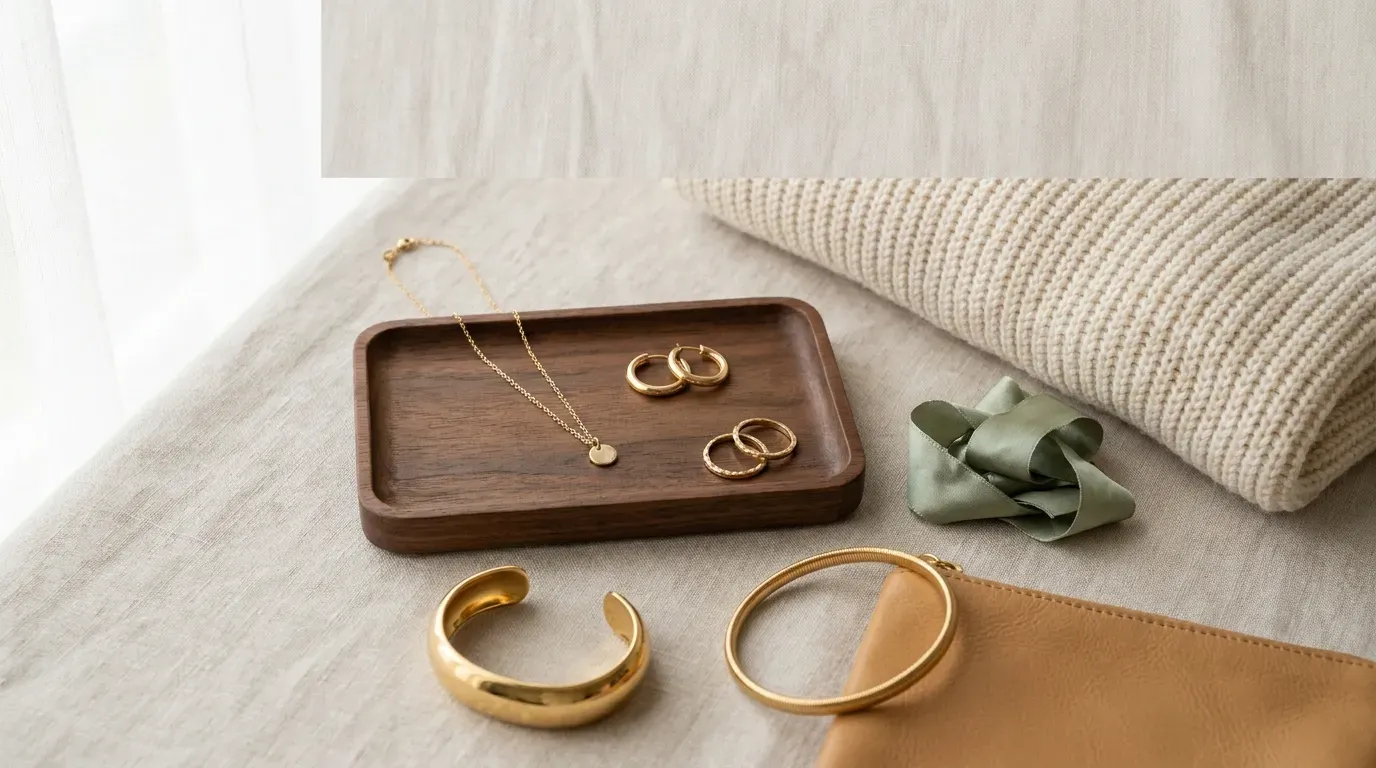

Easy Guide to Wearing Jewelry Elegantly for Women Over 40 — You open your jewelry box five minutes before heading out, and every piece looks lovely on its own. Together, nothing quite agrees. Wearing jewelry elegantly over 40 doesn't call for a bigger collection, just a few clear habits.
What you actually need is a way to decide: which metal, how big, how many pieces, and where the eye should land. Once those four choices are settled, the rest of the box mostly sorts itself.
I've organized this guide into seven simple steps, from choosing a metal plan to caring for what you already own. Take the ones that suit your wardrobe and leave the rest.
1. Start With a Simple Metal Plan
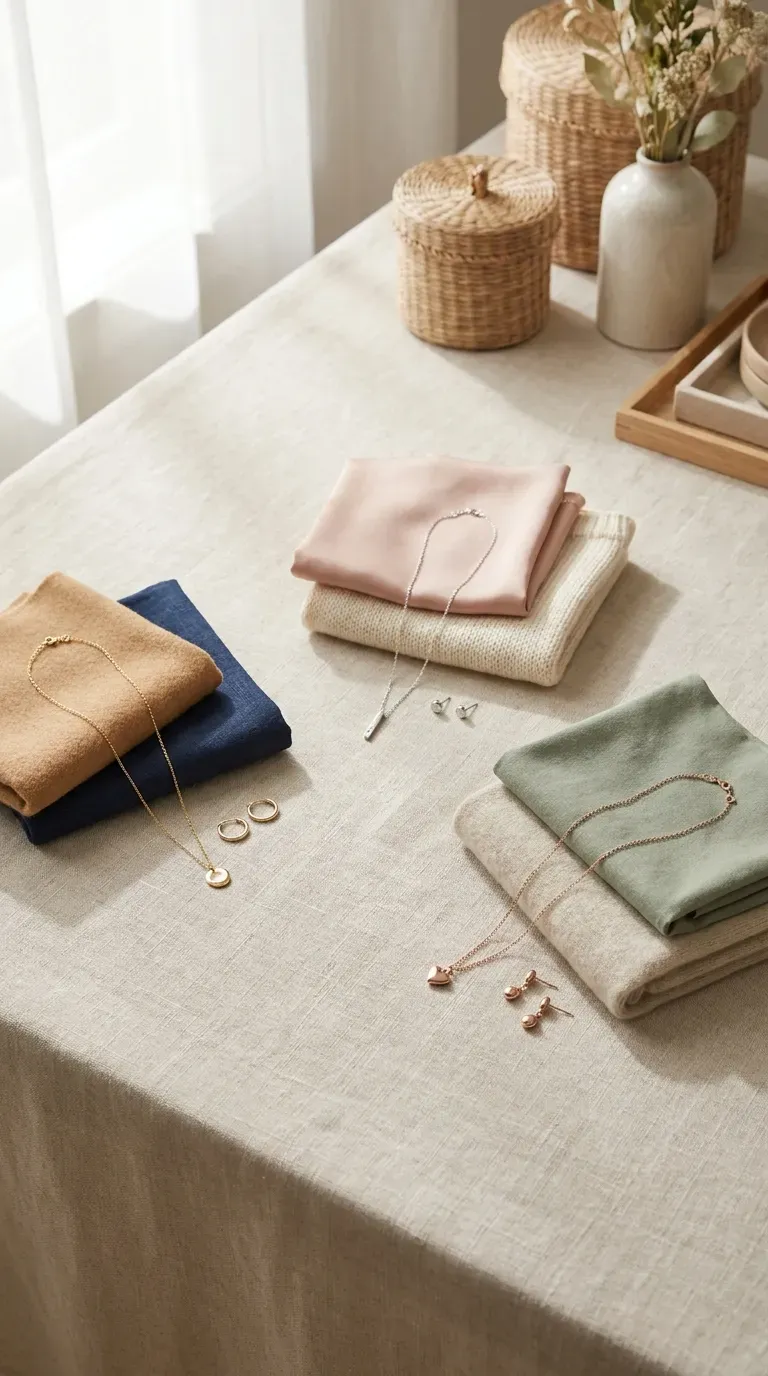
Before you think about styles, decide which metal leads. A lead metal gives your jewelry a consistent look, even when the pieces were bought at different times and in different places.
It doesn't have to be the only metal you wear. It's simply the one that shows up most often, so your outfits feel pulled together.
How to Do It
- Hold gold, silver, and rose gold pieces near your face in natural light
- Notice which metal looks most comfortable with your skin and hair
- Choose that metal as your lead, and aim for most pieces to be in it
- Add a second metal only as a small accent, such as a watch or a ring
Why It Works
A lead metal acts like a base color in a wardrobe. Repetition makes a look feel planned, and one small accent in a second metal keeps it from feeling rigid. Contrast works best when it's intentional, not accidental.
The trade-off: a lead metal means some favorite pieces will sit out on certain days. That's a fair price for outfits that look pulled together.
What to Look For
Use this table as a starting point, then trust what you see in the mirror.
| Metal | Works Well With | Why |
|---|---|---|
| Yellow gold | Cream, camel, olive, warm neutrals | Echoes warm tones in fabric |
| Silver | Navy, gray, white, black | Keeps cooler shades crisp |
| Rose gold | Blush, taupe, soft denim | Adds warmth without strong yellow |
| Mixed metals | Neutral outfits, simple prints | Works when one metal leads |
Common Mistakes to Avoid
- Mixing three metals with no clear leader
- Treating every zipper and buckle as a match you must make
- Forgetting that a two-tone piece already mixes metals
2. Choose a Scale That Balances Your Proportions
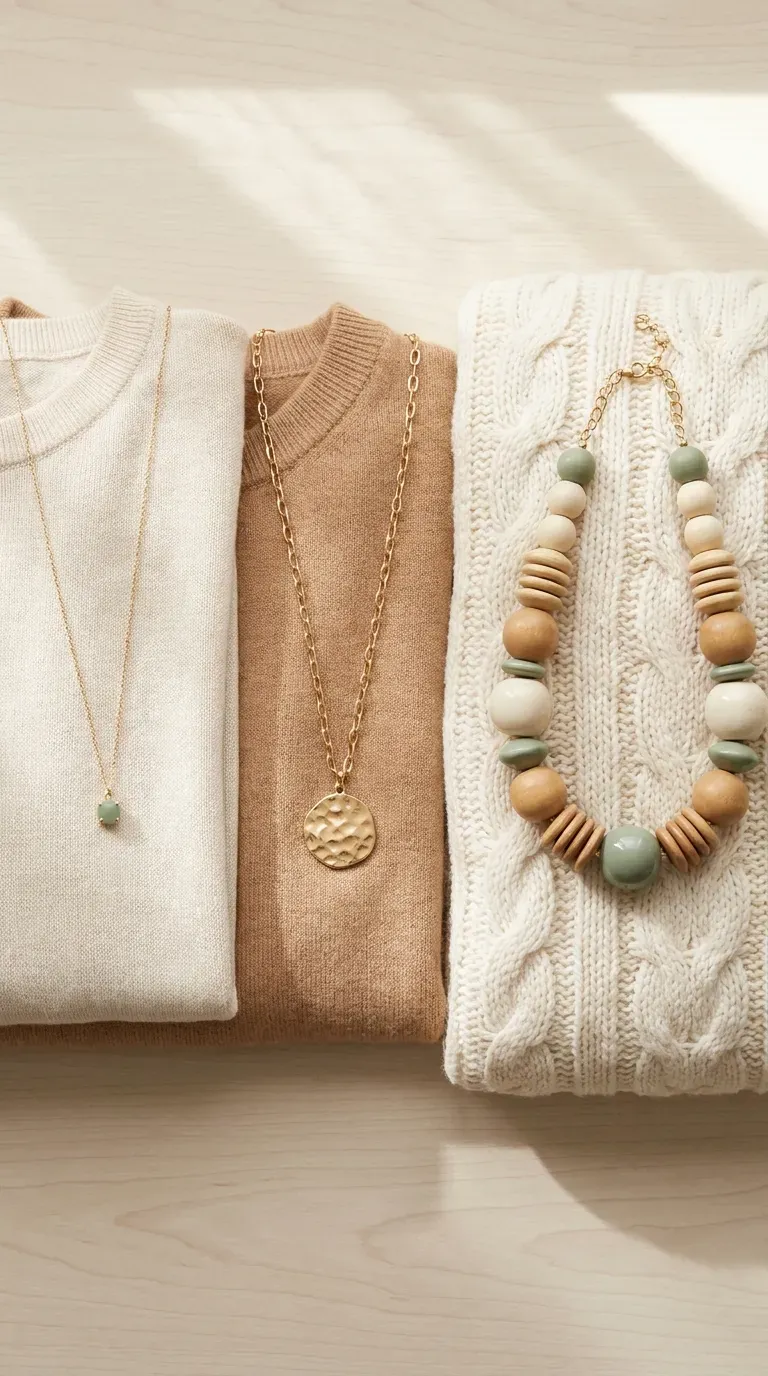
Scale is how big a piece looks next to you and your outfit. A pendant that feels right over a thin tee can disappear over a chunky knit, and the reverse is true too.
The aim is balance. Think of the jewelry, the neckline, and the fabric as parts of one picture, not three separate decisions.
How to Do It
- Look at the weight of your outfit first: light, medium, or heavy fabric
- Match jewelry to that weight, with delicate pieces for fine fabrics and bolder ones for textured fabrics
- Hold the piece against the outfit and check whether either one overpowers the other
- Go one size up or down until neither competes
Why It Works
Jewelry reads as part of the outfit's proportions. Pieces that echo the fabric's weight look intentional, while a big mismatch pulls the eye to just one of them. Scale is about balance between pieces, not about your body.
Your own proportions, such as shoulder width, hair volume, or hand size, also change what feels balanced. That's why a quick mirror check beats any fixed rule.
What to Look For
- Chain width that suits the weight of the fabric
- Earring size in proportion to your hairstyle
- Rings with room to move comfortably
- Bracelets that sit well without sliding off
Best For
- Work outfits with fine-knit tops
- Weekend looks in chunky knits or denim
- Evening outfits in silk or satin
- Collections that mix delicate and bold pieces
3. Let One Statement Piece Lead
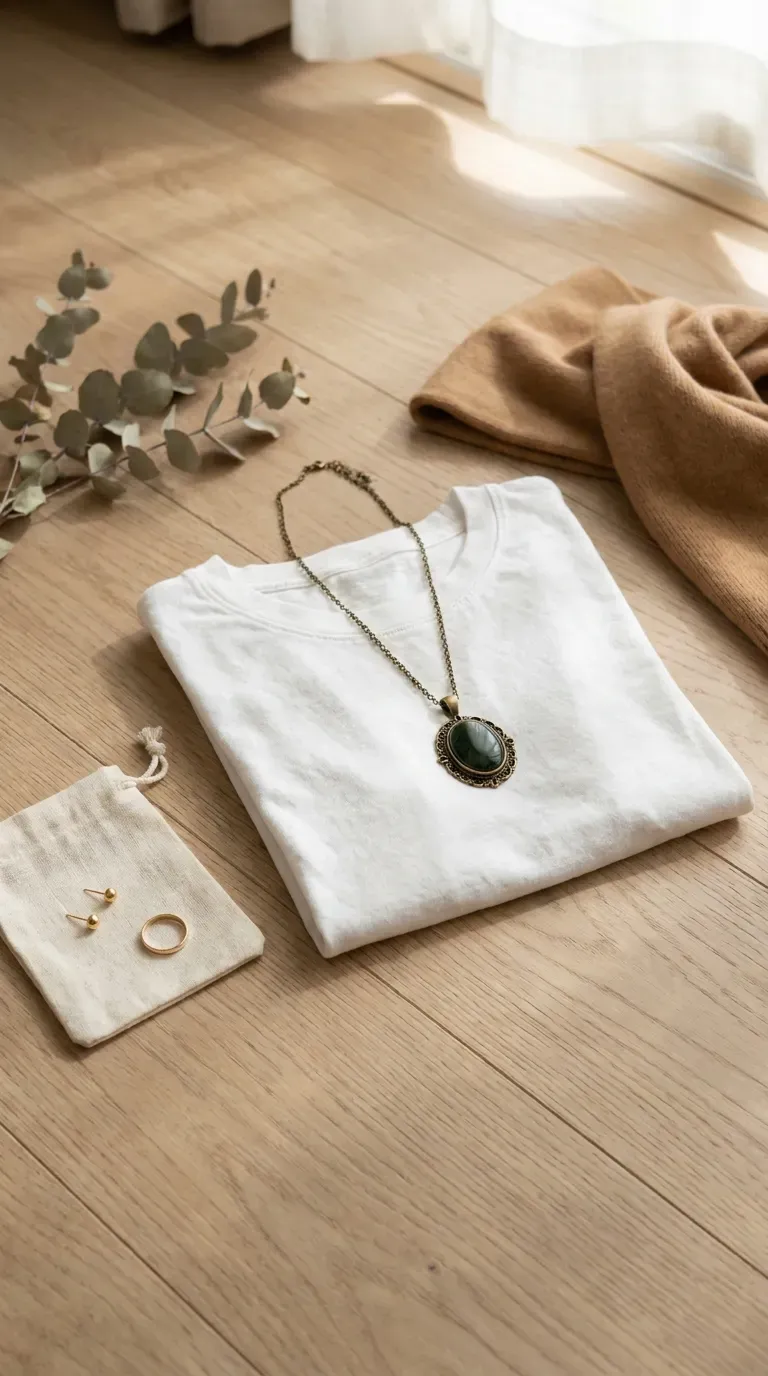
A statement piece is the item people notice first. Everything else plays a supporting role.
This keeps a look polished without feeling crowded. It also makes choosing easier: once the lead is picked, the rest is about quieter companions.

How to Do It
- Choose where you want attention: neck, ears, wrist, or hand
- Pick one bold piece for that spot
- Keep jewelry elsewhere small and simple, such as studs or a thin band
- Keep the outfit plain enough to give the piece room
Why It Works
The eye needs somewhere to land. With one clear focal point, a look reads as deliberate. Two statement pieces compete, while one leads and the rest support.
It works less well with a heavily patterned or embellished top, where a quieter piece lets the fabric do the talking.
Common Mistakes to Avoid
- Wearing a bold necklace with bold earrings
- Adding a statement piece to a detailed neckline
- Going so minimal that the look feels unfinished
A Simple Rule to Remember
Pick one place for attention, then keep the rest quiet.
4. Match Your Necklace to Your Neckline
Your neckline frames the spot where a necklace sits, so the two are best chosen together. A pendant that fights the neckline looks crowded, while one that follows its shape looks easy.
Think of the necklace as an echo of the neckline: a curve with a curve, a point with a point.
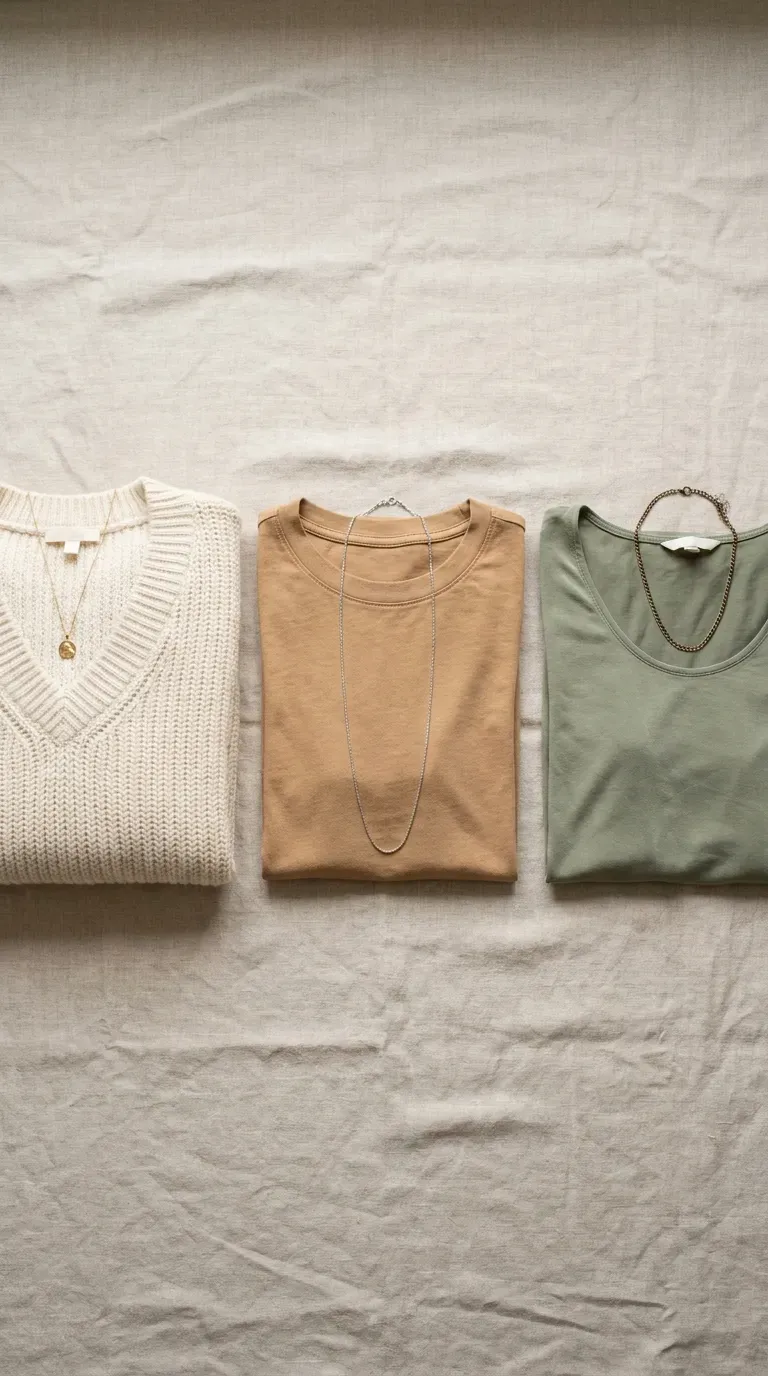
How to Do It
- Identify your neckline shape before you choose a necklace
- Pick a necklace that echoes that shape, such as a pendant that points down in a V-neck
- Check where it sits: it should rest on skin or fabric, not collide with the neckline edge
- If the neckline already has a lot of detail, skip the necklace and let earrings lead
Why It Works
A necklace that follows the neckline keeps the lines of the outfit continuous. When the two shapes fight, the eye jumps between them. The space between the necklace and the neckline matters as much as the shape.
The trade-off: some outfits simply don't want a necklace, and that's a perfectly good answer.
What to Look For
Here's a quick reference for the most common necklines.
| Neckline | Works Well With | Why |
|---|---|---|
| Crew neck | Longer chain or pendant | Creates a vertical line |
| V-neck | Short pendant that follows the V | Echoes the shape |
| Scoop neck | Short, collar-length chain | Follows the curve |
| Button-up collar | Fine chain, worn under the collar | Avoids crowding the collar |
| Boat neck | Earrings or a long chain | Leaves the neckline open |
Best For
- Work tops with simple necklines
- Casual tees and knits
- Dinner outfits with scoop or V-necks
- Button-up shirts worn open at the collar
5. Layer Delicate Pieces With Intention
Layering means wearing two or three fine chains or bracelets together so they look collected rather than crowded. It's a good way to use pieces you already own, and it gives you a fuller look without one bold item.
The key is intention: different lengths, a shared metal, and enough space between each piece.
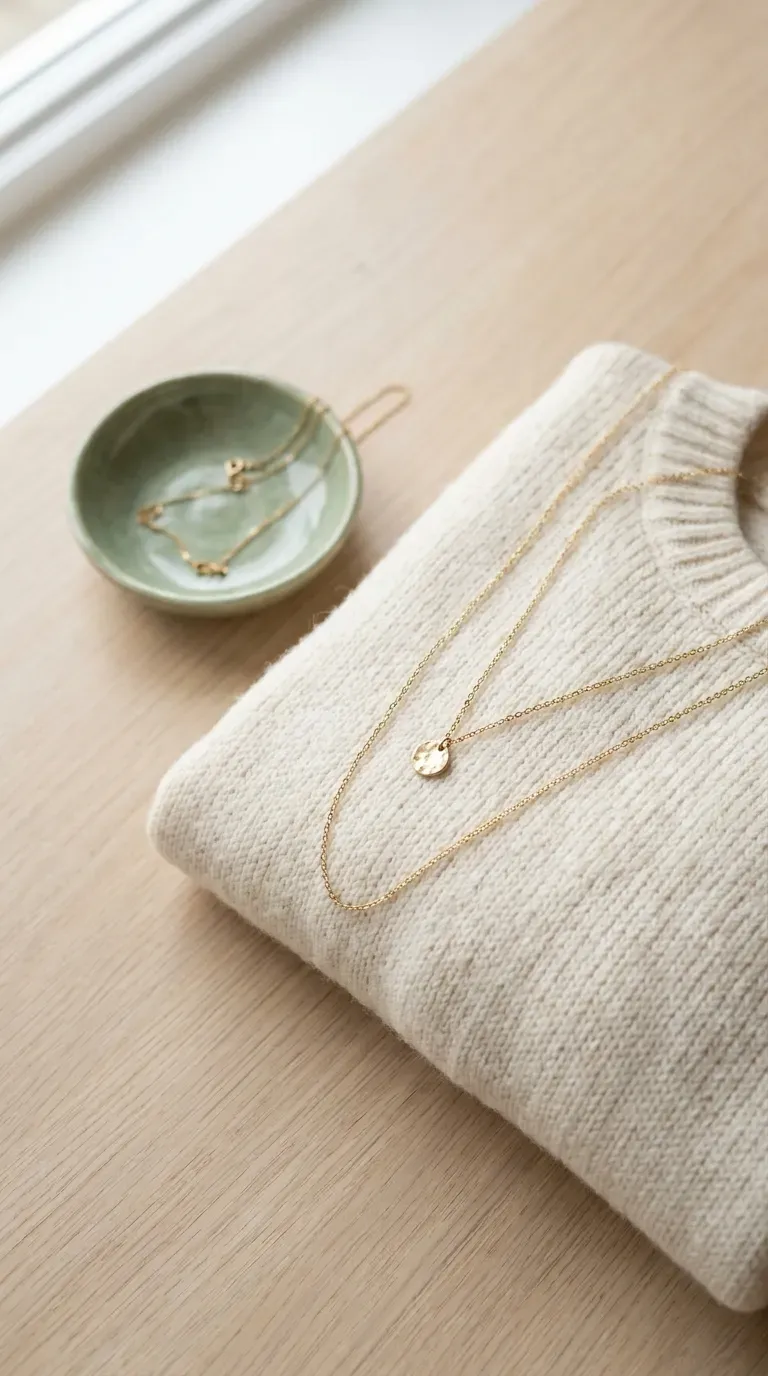
How to Do It
- Start with the longest chain and decide where it will sit
- Add a second chain about 2 inches shorter
- If you like, add a third piece in a different texture but the same metal
- Check in a mirror that the chains lie flat and don't tangle
Why It Works
Different lengths create rhythm, and a shared metal ties the pieces together. Space between layers keeps fine chains from looking cluttered.
The trade-off: layering takes a minute of untangling, and fine chains can catch on scarves and textured knits. It also works less well with a busy neckline.
What to Look For
- Chains in similar thickness, or a deliberate contrast
- Lengths at least 2 inches apart
- One pendant at most among the layers
- Lightweight clasps that lie flat
Common Mistakes to Avoid
- Layering chains of nearly equal length
- Stacking several pendants that compete
- Layering under a textured collar where chains tangle
6. Pick Earrings, Rings, and Bracelets You Can Wear All Day
Jewelry you keep adjusting is jewelry you stop wearing. For earrings, rings, and bracelets, comfort is part of looking elegant, because it lets you stop thinking about what you have on.
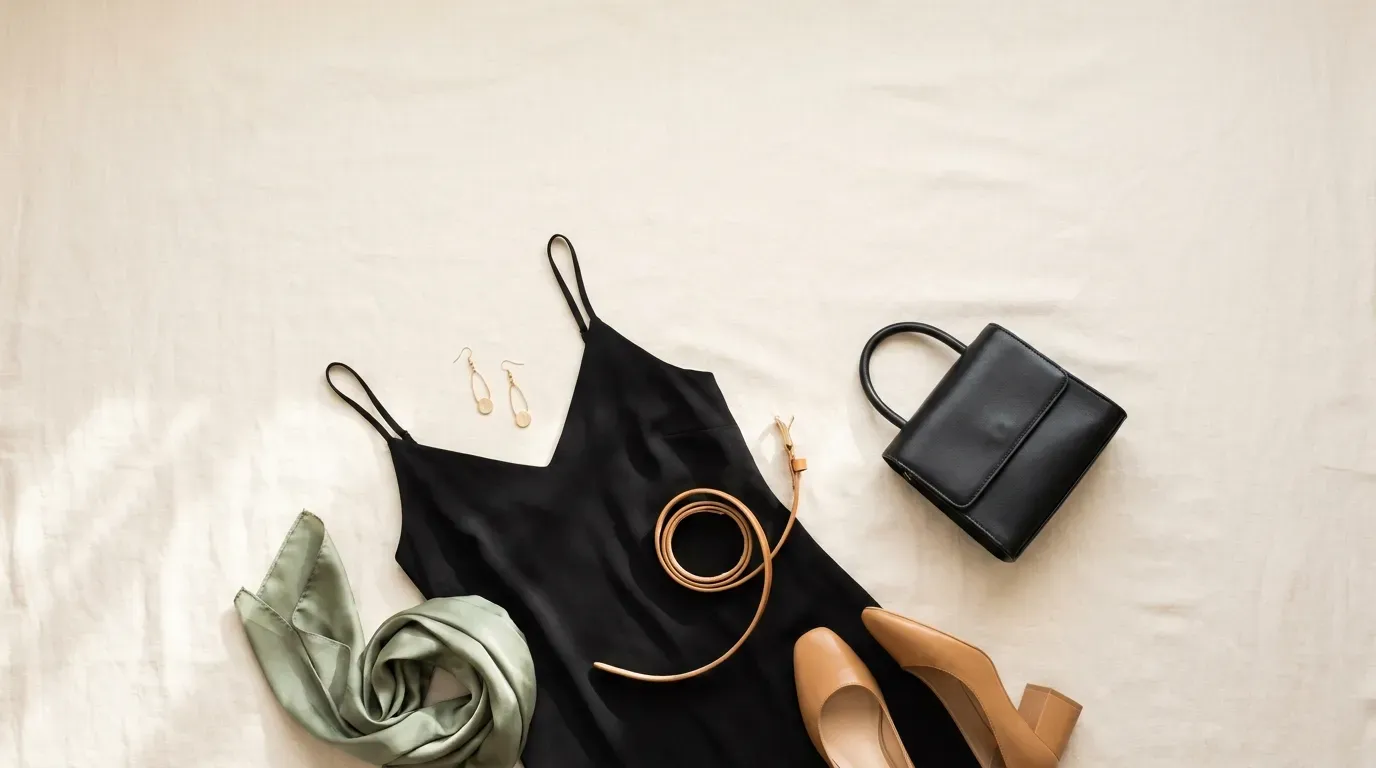
These pieces sit closest to your face and hands, so a few practical checks go a long way.
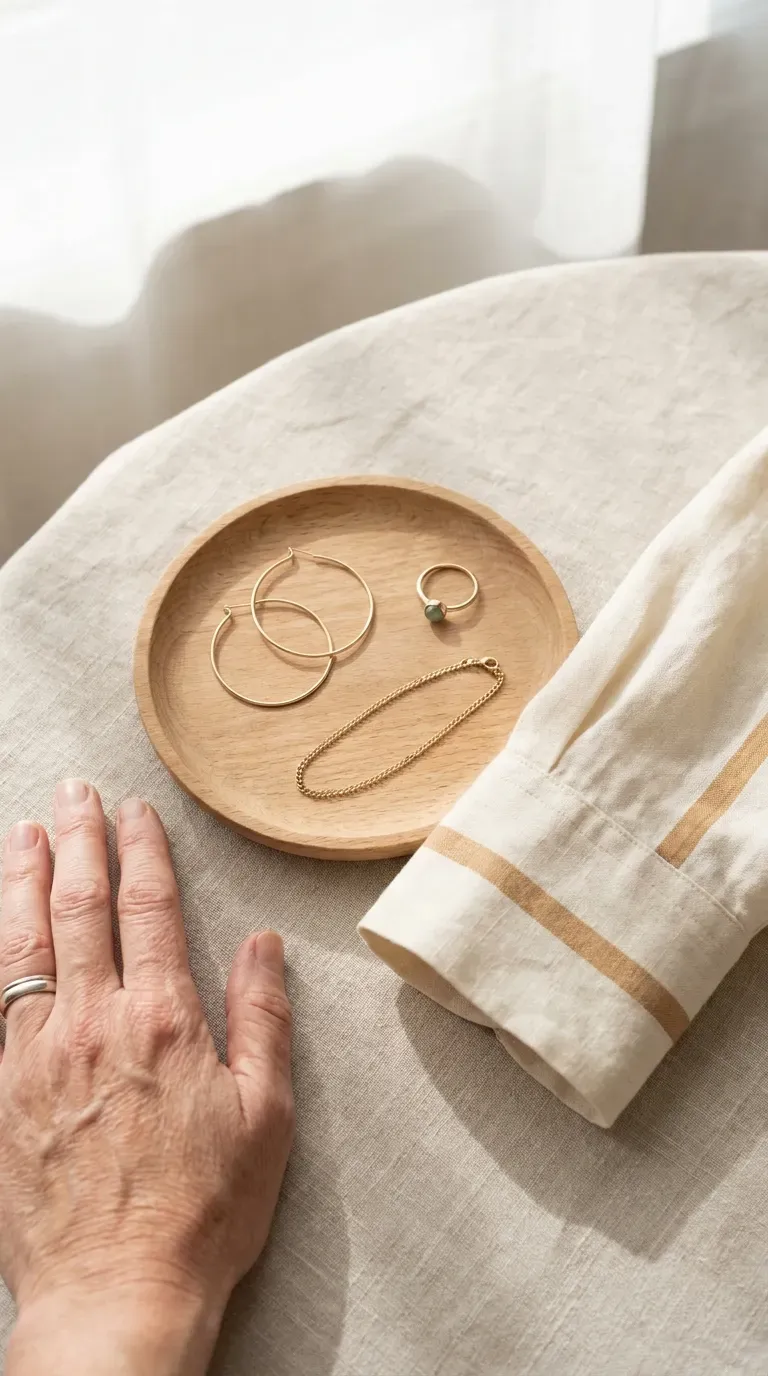
How to Do It
- Try on earrings and turn your head to check weight and balance
- Choose rings that slide on and off without force and sit comfortably
- Test bracelets for movement, so they don't catch on sleeve cuffs
- Wear a new piece around the house before planning a full day in it
Why It Works
Comfortable pieces get worn more, so your collection works harder. Lighter earrings and well-fitted bracelets also stay in place, which keeps the whole look tidy. If you keep touching it, it isn't right for that day.
The trade-off: some of the most striking pieces are heavy. Save those for shorter events, and wear lighter ones for long days.
What to Look For
- Lightweight earrings for long days
- Secure backs that don't pinch
- Rings with a smooth inside edge
- Bracelets that clear sleeve cuffs
- Metals that suit sensitive skin
If a metal bothers your skin, check with your doctor or a dermatologist.
Best For
- Long workdays
- Travel and errands
- Standing events where you'll be moving around
- Evenings when a statement necklace is the lead
7. Keep Your Pieces Clean and Ready to Wear
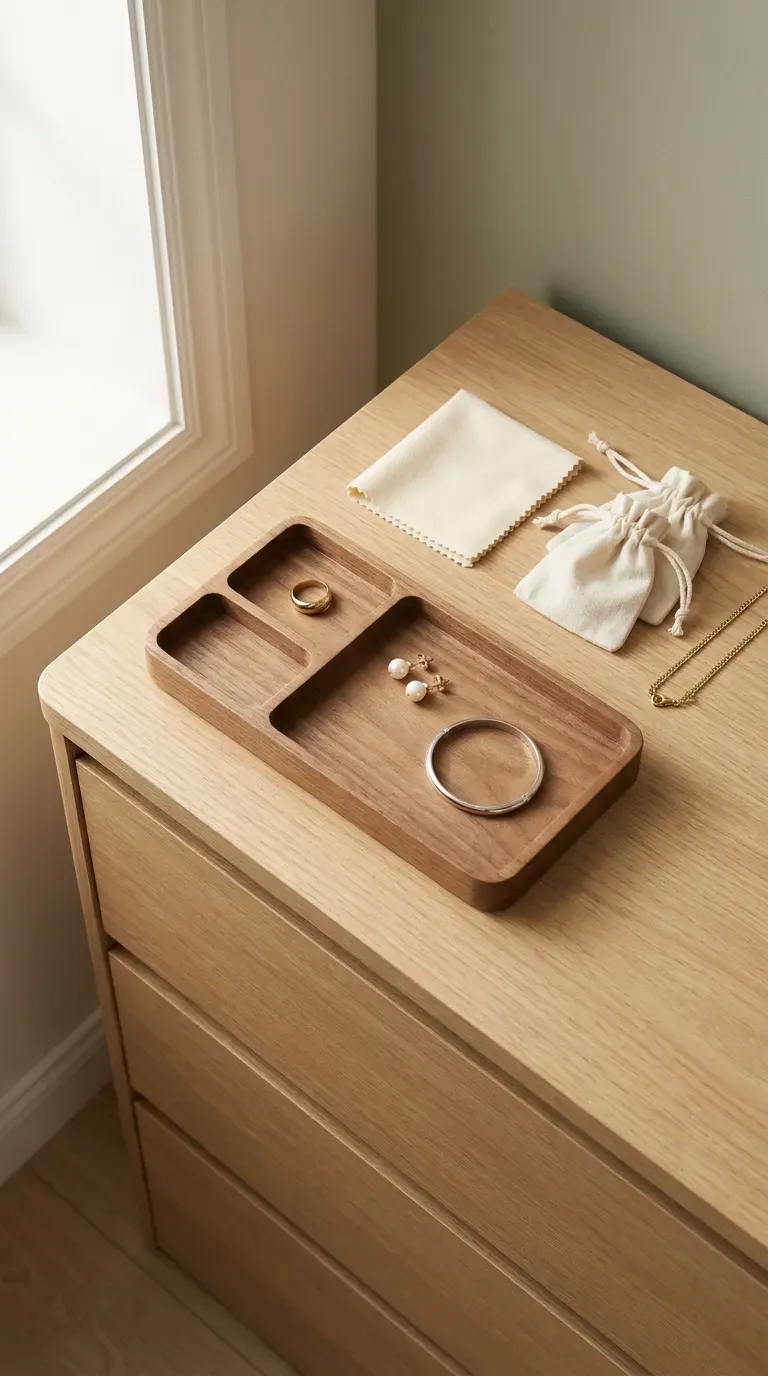
Even well-chosen jewelry looks tired when it's tarnished, tangled, or missing a clasp. A few quick habits keep your pieces ready for any outfit.
Care also makes the earlier steps easier. You can only follow a metal plan with pieces you can find and actually wear.
How to Do It
- Check the care label or the seller's care notes before cleaning anything
- Wipe pieces with a soft cloth after wearing
- Put jewelry on last, after lotion, perfume, and hair products
- Store each piece separately, with chains clasped so they don't tangle
- Check every few months for loose stones or weak clasps
Why It Works
Clean, well-stored pieces look polished and stay easy to reach, so you actually wear them. Putting jewelry on last also keeps products off the metal. A piece you can find in ten seconds is a piece you'll wear.
The trade-off: it takes a few minutes of upkeep, and some finishes and stones need more care than others.
Common Mistakes to Avoid
- Storing chains in one tangled pile
- Cleaning delicate stones with harsh products
- Wearing delicate pieces for swimming or heavy chores
Quick Accessorizing Cheat Sheet
| Rule | Why It Works | Quick Fix |
|---|---|---|
| Start with a metal plan | Repetition looks planned | Pick one lead metal |
| Balance your scale | Pieces match fabric weight | Go one size up or down |
| Let one piece lead | Gives the eye one focal point | Keep other pieces small |
| Match necklace to neckline | Keeps outfit lines continuous | Echo the neckline's shape |
| Layer with intention | Different lengths create rhythm | Space chains 2 inches apart |
| Choose all-day comfort | Comfortable pieces get worn more | Test new pieces at home |
| Keep pieces ready | Tidy pieces stay easy to reach | Wipe and store separately |
The Principles Behind These Rules
Balance Comes Before Quantity When Wearing Jewelry Elegantly
Every rule above comes back to balance. One strong piece with quiet partners looks more composed than ten pieces of equal weight.
Before you add anything, ask what is already leading the look.
Contrast and Repetition
Repeat something, such as a metal, a shape, or a finish, so the look feels connected. Then add one small contrast so it feels lived in.
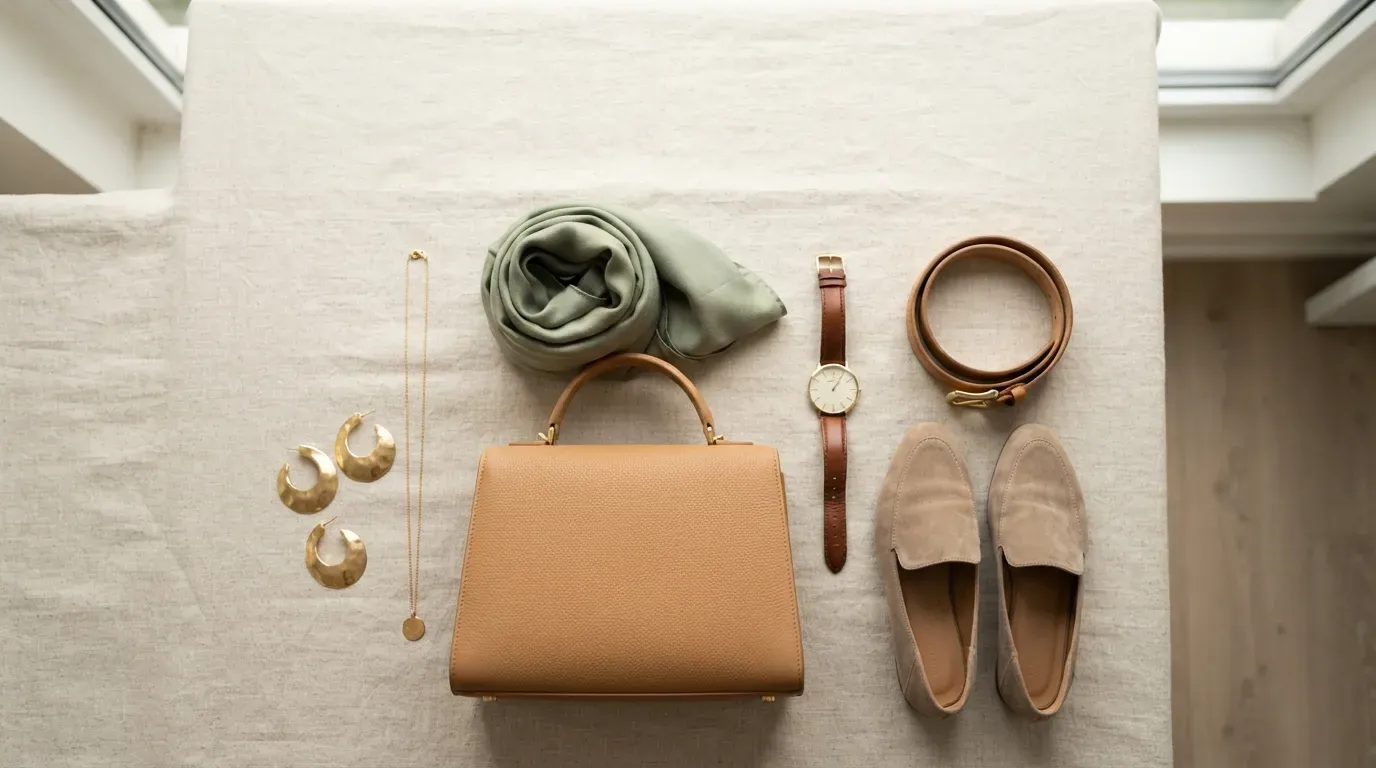
Round studs with a round pendant, plus a watch in a second metal, is a simple example.
Comfort Decides How Often You Wear It
Pieces that pinch, snag, or slide around tend to stay in the box. Weight, clasps, and fit matter as much as appearance.
When two pieces look equally right, wear the more comfortable one.
Occasion Sets the Volume
Daytime and workdays usually call for smaller, quieter pieces, and dress codes vary, so use your own workplace as the guide. Evenings and special events leave more room for a bold lead piece.
Casual weekends suit relaxed, easy-to-wear pieces.
Common Mistakes Worth Skipping
Wearing Everything at Once
A ring on every finger, three necklaces, and large earrings leaves the eye with no place to rest. Choose a focal point and edit the rest.
Choosing Looks Over Comfort
A piece that needs constant adjusting pulls attention to itself for the wrong reason. Try new pieces at home first, and keep the heaviest ones for short occasions.
Matching Every Piece Too Perfectly
A fully matched set can feel stiff. Pair a pendant with unrelated studs in the same metal, and the look feels more personal and relaxed.
Final Tips for Success
Build a Small Core Collection First
A handful of reliable pieces in your lead metal will style more outfits than a large, scattered collection. Add to it slowly, one piece at a time.
Edit Before You Leave the House
Do a quick mirror check with your full outfit on. If you can't tell which piece is leading, take one piece off.
Try Pieces With the Outfit You Plan to Wear
Jewelry looks different against different fabrics and necklines. A short test with the actual outfit saves second-guessing at the door.
Jewelry Basics Worth Owning
- Small studs or hoops in your lead metal
- A fine chain with a simple pendant
- A slim bracelet or watch
- One bold piece that can lead
- A small tray or pouches for storage
Conclusion
Wearing jewelry elegantly over 40 comes down to a few clear decisions: a lead metal, a balanced scale, and one place for the eye to land. Everything else is a supporting detail.
Comfort and care keep it all working. Pieces you enjoy wearing and can easily find will do more for your style than any rule.
Start with one step from this guide and try it with an outfit you already love. Small changes tend to show up quickly.
Save this guide for the next time you open your jewelry box and aren't sure where to begin.
Comments
✎ Write a commentCommunity Guidelines
We love hearing what you think. Please keep comments about the article itself, stay kind and helpful to other readers, and leave out personal details or links. Every comment is checked before it appears.