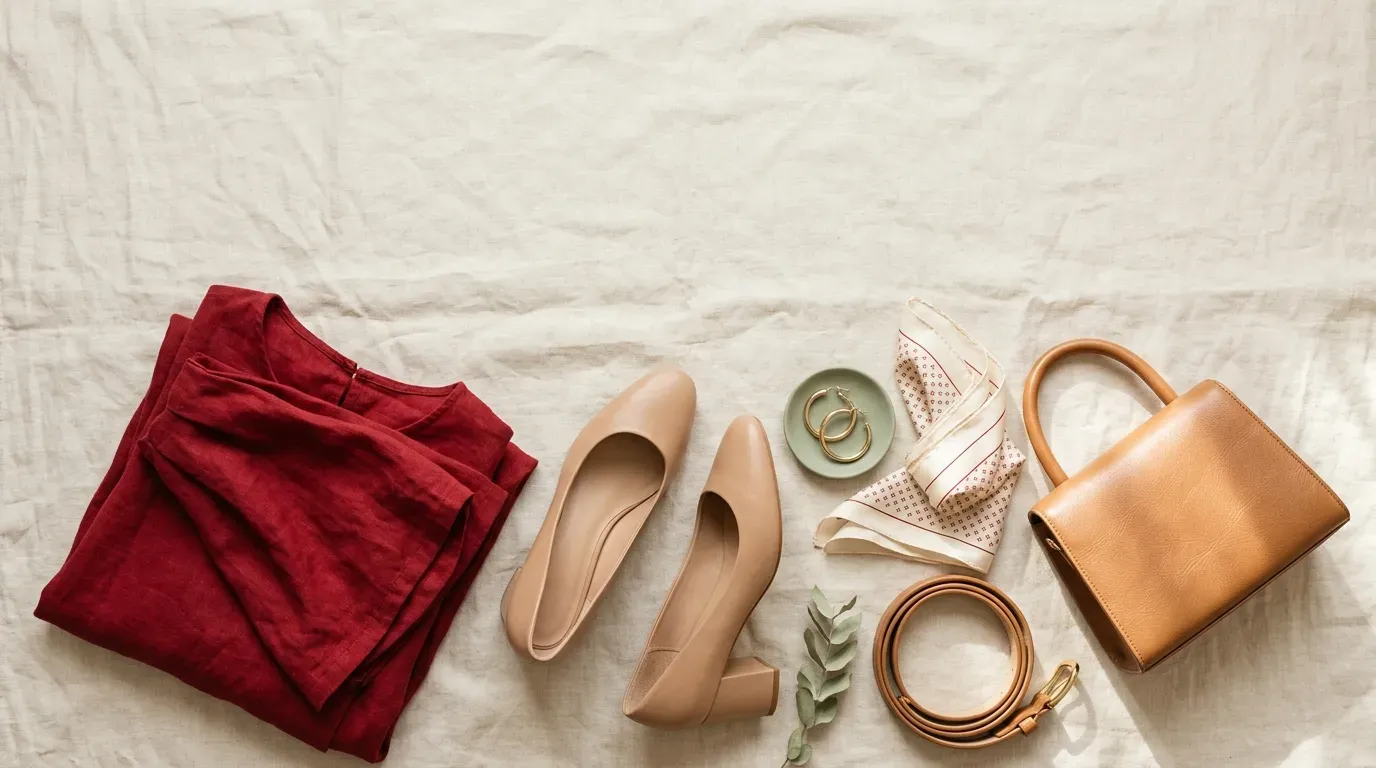

Guide to Accessorizing a Red Dress for Women Over 40 — You pulled the red dress out of the closet for a dinner, a wedding, or a holiday party, and now the jewelry box feels like a guessing game. Gold or silver? Black heels or nude? A statement necklace or nothing at all? When you accessorize a red dress, the color already does a lot of talking, so the choices that follow matter more than the number of pieces you add.
What you need is a short set of decisions you can make in order, not a long list of maybes. Red is a confident color, and it responds best to calm, deliberate partners.
Here are seven steps I'd walk a friend through, with the reasoning behind each one so you can adapt them to your dress, the occasion, and the pieces you already own.
1. Start With the Shade of Red You Actually Have
Red is not one color. A cherry red that leans toward blue looks very different from a tomato red that leans toward orange, and the accessories that suit one can feel slightly off beside the other.
Before you reach for anything, look closely at the dress. Ten seconds of looking saves you from trying on five necklaces that almost work.
How to Do It
- Hold the dress near a window in daylight, not under a yellow bulb.
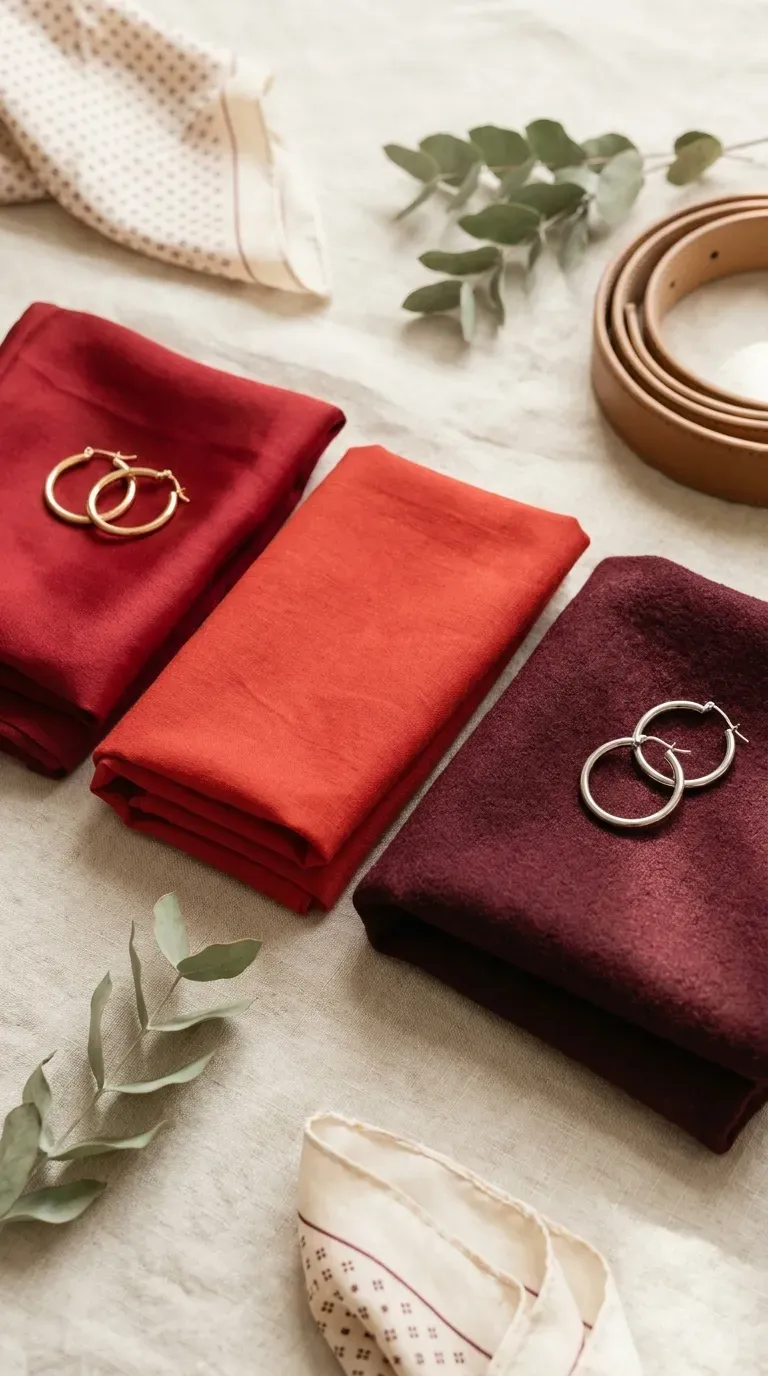
- Decide whether the red leans blue (cherry, raspberry), leans orange (tomato, poppy), or sits in the middle.
- Hold one gold earring and one silver earring against the fabric.
- Keep the metal that makes the red look cleaner and richer.
Why It Works
Metals and neutrals pick up the undertone in the fabric. When they share it, the whole outfit looks planned. When they clash, even good pieces look random.
What to Look For
Use this table as a starting point, then trust what you see in the mirror.
| Red Shade | Works Well With | Why |
|---|---|---|
| Blue-based (cherry, raspberry) | Silver, cool pearls, navy | Matches the cool undertone |
| Orange-based (tomato, poppy) | Gold, tan, warm brown | Echoes the warm undertone |
| Deep (burgundy, wine) | Antique gold, black, olive | Keeps the contrast rich and calm |
| Classic true red | Gold or silver, black, cream | Balanced, so either metal works |
Best For
- Dresses you have owned for years and never styled the same way twice
- Online purchases where the screen color differed from the fabric
- Satin or shiny fabrics that shift color in different light
2. Pick One Metal and Let It Lead
Once you know your dress's undertone, choose a single metal for your jewelry. Let it set the tone for the earrings, the bracelet, and even the hardware on your bag.
Red already carries plenty of visual energy. One consistent metal gives the eye somewhere to rest.
How to Do It
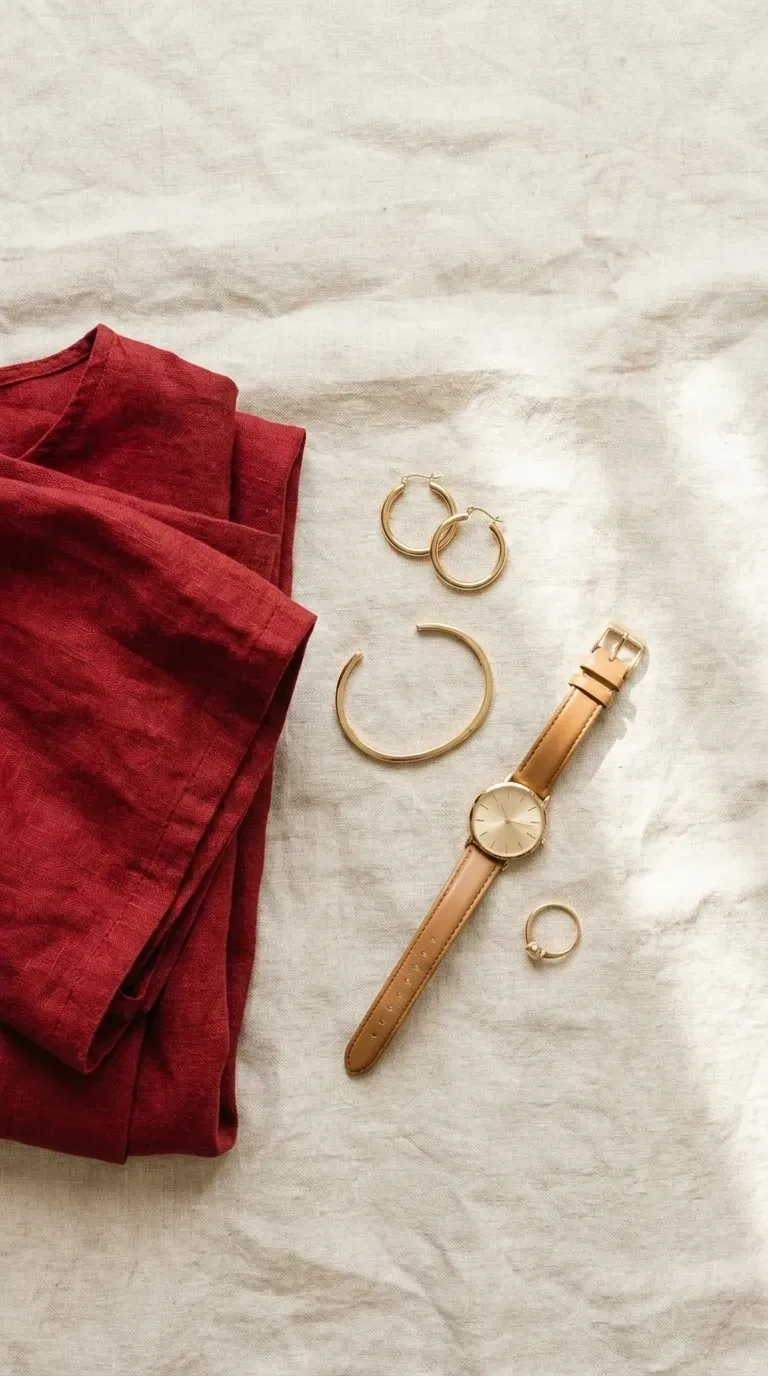
- Choose gold, silver, or a soft rose gold, based on the shade test in step 1.
- Lay out every piece you own in that metal.
- Pick two or three pieces, such as earrings and a bracelet.
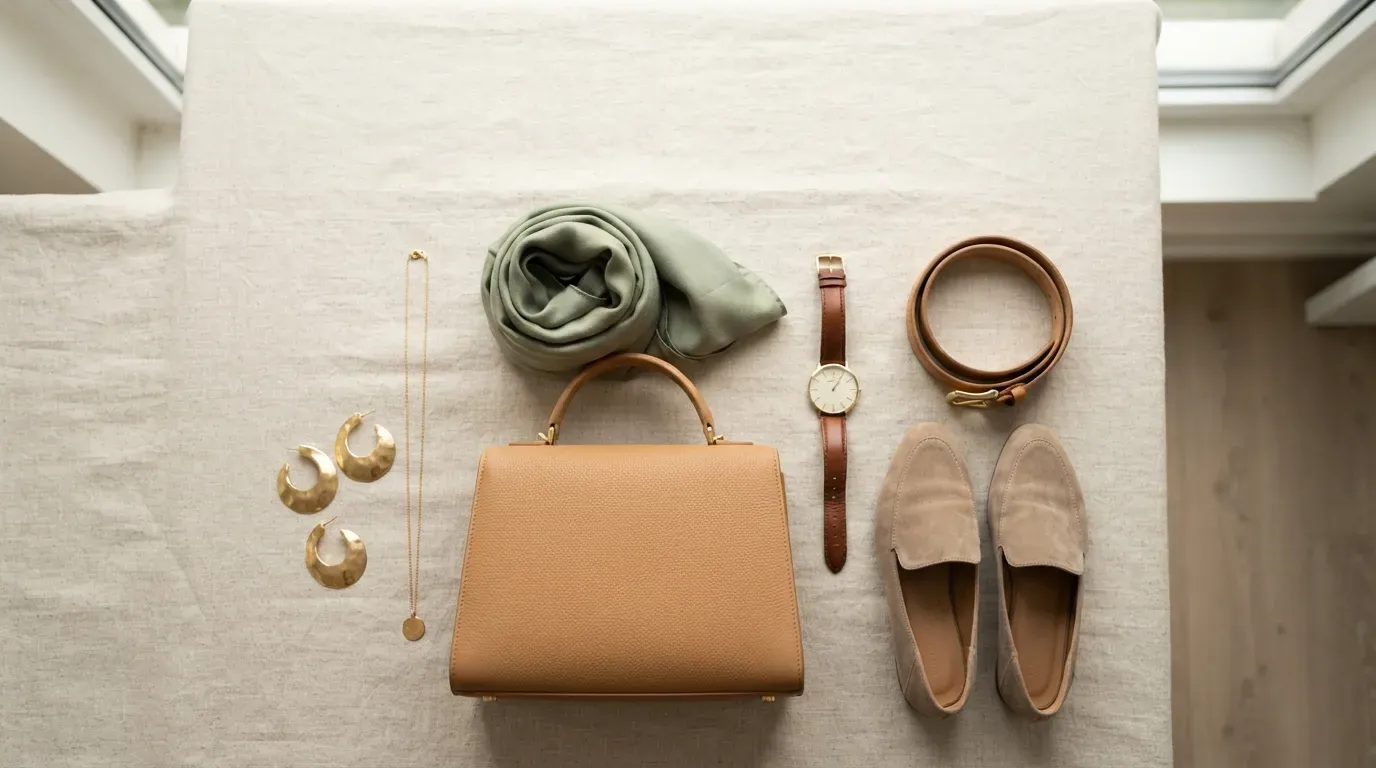
- Check the buckles and clasps on your shoes and bag, and keep them close to the same metal.
Why It Works
A single metal reads as one clear decision, so the red stays the star. Shiny metal against a saturated color also gives clean contrast, which is why even simple jewelry looks finished.
Common Mistakes to Avoid
- Wearing three different metals with nothing to connect them
- Choosing a metal because it is popular, not because it suits the dress
- Adding every matching piece until the set looks like a uniform
Mixing metals can work when one piece, such as a two-tone watch, bridges them, but it asks for more judgment than a single metal does.
Best For
- Dinners, weddings, and holiday parties
- Small jewelry collections that need a clear plan
- Anyone who wants to get dressed quickly without second-guessing
3. Match Your Jewelry to the Neckline
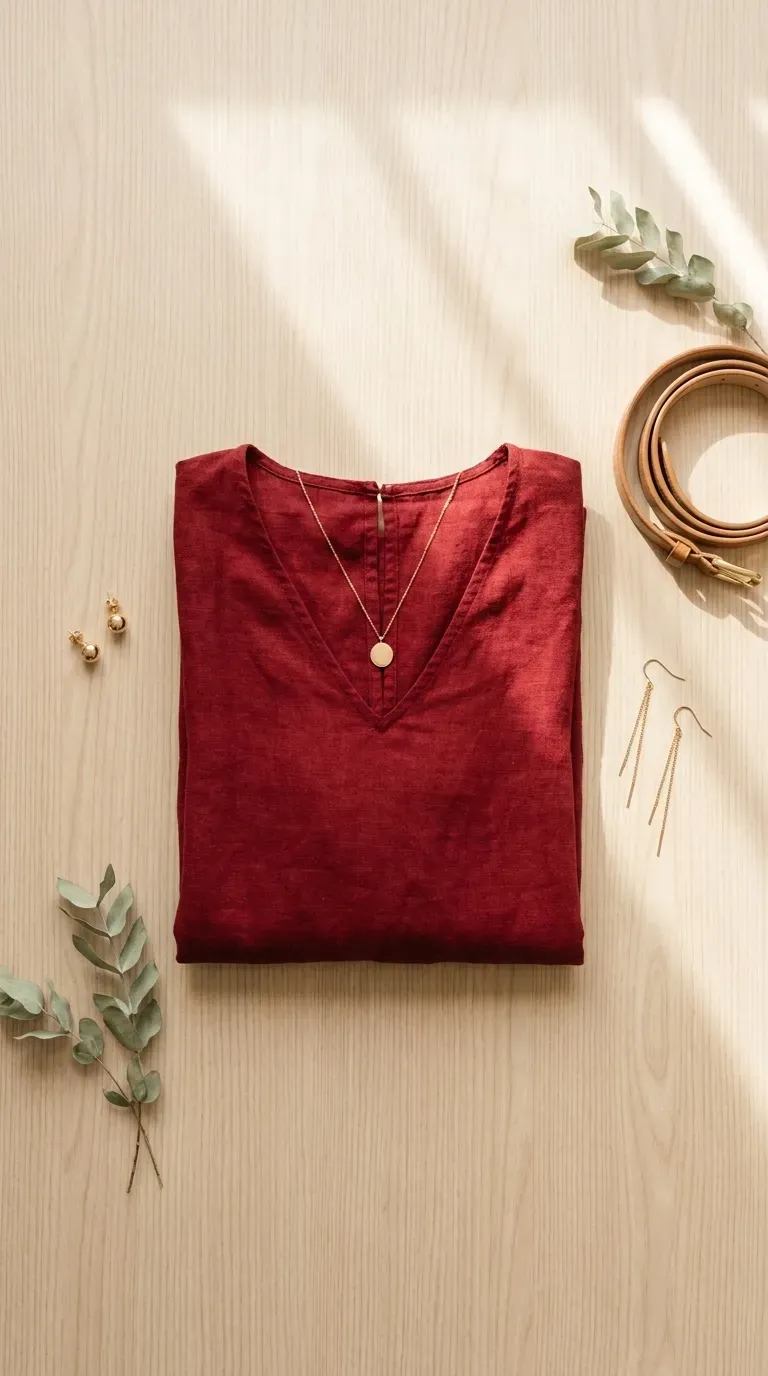
Your neckline decides where the eye lands, so it also decides where jewelry belongs. A necklace that fights the neckline looks crowded, while earrings alone can leave an open neckline feeling unfinished.
Think of the neckline as a frame, and choose pieces that follow its shape instead of competing with it.
How to Do It
- Name your neckline: V, scoop, square, high, or off-the-shoulder.
- Decide whether the neckline or the ears will carry the statement.
- Add a necklace only when it sits cleanly in the open space.
- Keep the other area simple.
Why It Works
Jewelry that echoes the neckline's shape creates one continuous line. A pendant that follows a V, for example, draws the eye in a single direction instead of scattering it.
What to Look For
Use this quick match when you are choosing between necklaces and earrings.
| Neckline | Works Well With | Why |
|---|---|---|
| V-neck | Short pendant, small studs | Follows the line of the V |
| Scoop | Collar-length chain, small earrings | Fills the open curve |
| Square | Delicate chain or bold earrings | Keeps the angles uncluttered |
| High or crew | Statement earrings, no necklace | Gives the neck room |
| Off-the-shoulder | Drop earrings, a bracelet | Leaves the shoulder line open |
A Simple Rule to Remember
Fill the neckline or the ears, not both.
4. Let Neutral Shoes and Bags Do the Quiet Work
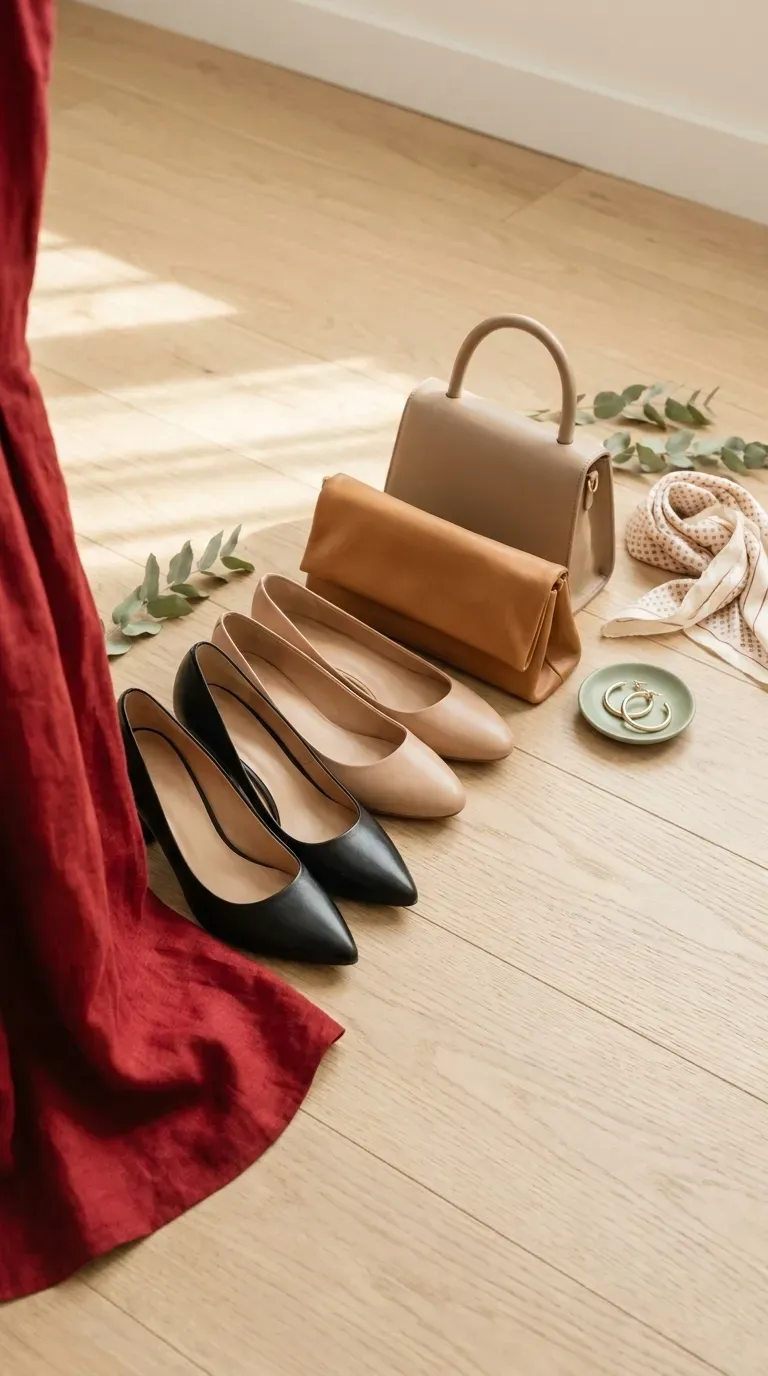
A red dress already supplies the color, so your shoes and bag don't need to add more. Neutrals frame the red and keep the outfit from feeling busy.
The right neutral depends on the occasion and the shade of your dress, and each one asks for something slightly different from you.
How to Do It
- Choose one neutral for both shoes and bag, or two close shades.
- Match the formality: sleek and dark for evening, softer and lighter for daytime.
- Let the bag be small and simple, since the dress is the focal point.
- Check that the shoe and bag hardware echoes your jewelry metal from step 2.
Why It Works
Neutral pieces give the eye a place to pause between bursts of color. They also let the red keep its full impact instead of splitting attention with a second bright shade.
What to Look For
Pick the neutral that fits your event, then check the notes in the last column.
| Neutral | Best For | How to Wear It |
|---|---|---|
| Black | Evening events, formal dinners | Add a simple bag and one metal |
| Nude or tan | Daytime, warm weather | Choose a shade close to your skin tone |
| Navy | Cool-toned reds, daytime | Pair with silver jewelry |
| Metallic gold or silver | Weddings, parties | Keep the bag minimal |
Comfort counts too. Look for cushioning, a stable heel (a block heel of 2 to 2½ inches is a steady choice), and enough room in the toe box. If you have foot pain, check with your doctor or a podiatrist before choosing a heel height.
Black can feel heavy for a summer afternoon, and nude shoes show scuffs more easily, so pick the one you are willing to keep tidy.
Best For
- Dinners, weddings, and holiday parties
- Daytime events where you will be on your feet
- Anyone who wants one pair of shoes to work with several dresses
5. Add a Layer That Softens the Color
A layer lets you change how much red people see at once. A jacket or cardigan in a neutral shade frames the dress and adds structure at the shoulder, which is useful when the dress is plain or the venue is cool.
It also solves a practical problem: an air-conditioned restaurant or an evening chill.

How to Do It
- Choose the layer for the weather: a blazer or denim jacket for crisp days, a lightweight wrap or linen jacket for warm ones.
- Pick a neutral shade such as black, cream, camel, or denim blue.
- Check the length: a cropped or hip-length jacket should end clearly above the dress hem.
- Wear it open so the red stays visible down the front.
Why It Works
A neutral layer turns the dress into a column of red inside a quiet frame. A structured shoulder, such as a blazer, also adds shape to a soft fabric, while a cardigan keeps the look relaxed.
Common Mistakes to Avoid
- Choosing a heavy fabric to wear over a lightweight dress
- Letting the jacket hem land just above or below the dress hem
- Buttoning the layer closed so the red disappears
- Adding a second bold color on top of the red
A layer also adds bulk and one more thing to carry, so check whether the venue has a coat check or a place for it.
Best For
- Fall and winter events, or air-conditioned venues
- Office parties and daytime gatherings
- Plain dresses that need structure
6. Use a Belt or Scarf as Your Finishing Detail
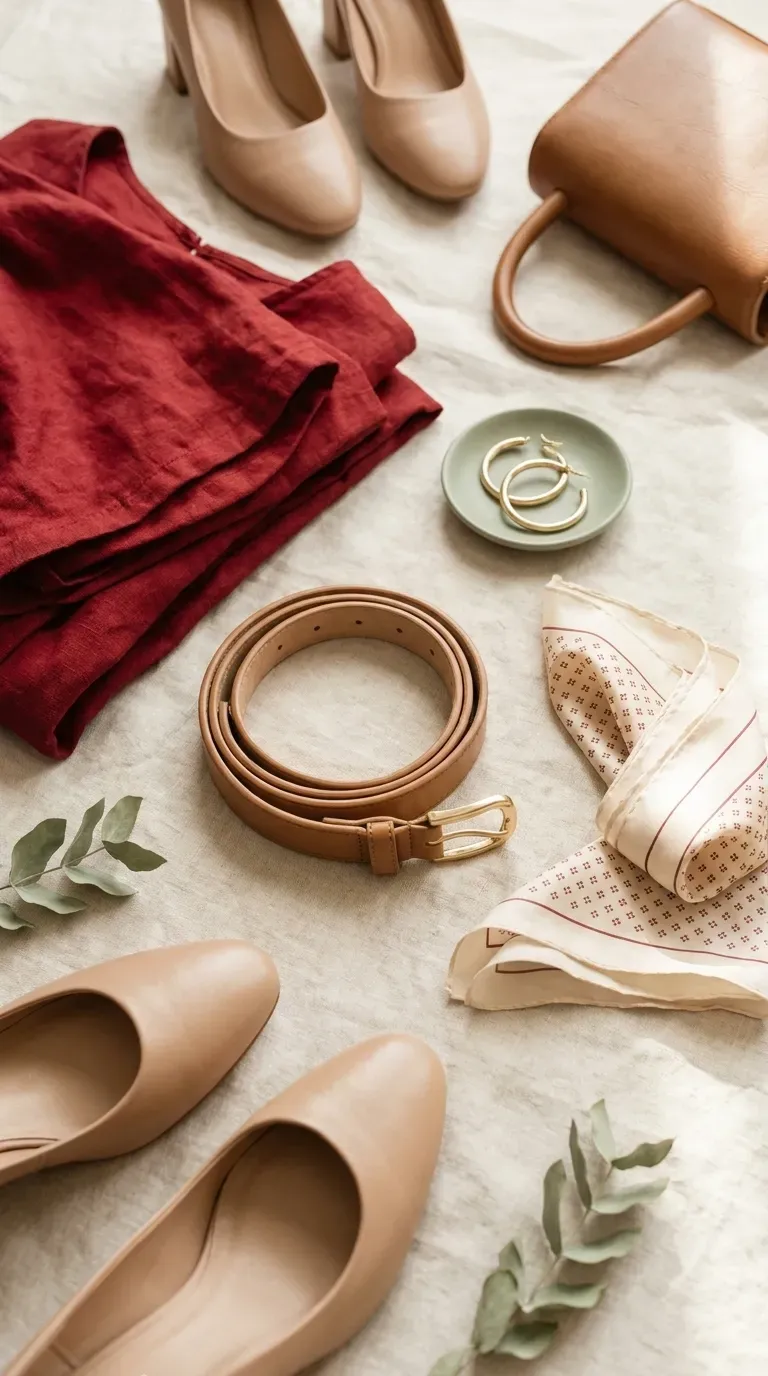
A belt or scarf is the smallest change you can make with the biggest effect. A belt defines the waist, and a scarf adds a pattern or a second texture near the face without taking over the outfit.
Choose one or the other. Using both asks the eye to look in too many places.
How to Do It
- Decide whether the dress needs definition at the waist (belt) or a soft accent near the neckline or bag (scarf).
- For a belt, wear it at the natural waist or at the dress's seam, whichever sits more comfortably.
- For a scarf, tie it loosely at the neck, on a bag handle, or in your hair.
- Match the belt buckle to the metal you chose in step 2.
Why It Works
A belt creates a clear waistline, which gives a straight or loose dress a defined shape. A scarf brings in small amounts of pattern, so the outfit feels layered without adding bulk.
What to Look For
- A slim leather belt, 1 to 1½ inches wide, in black, tan, or cream
- An adjustable or stretch closure for comfort through a long dinner
- A scarf with a small print that includes red plus one neutral
- Hardware that matches the rest of your jewelry
- Silk or silky fabrics that drape instead of stiffening (check the care label before washing)
Best For
- Shirtdresses, wrap dresses, and shift dresses
- Dresses that feel plain from the front
- Work events where a bit of polish matters
7. Repeat a Touch of Red, Then Stop
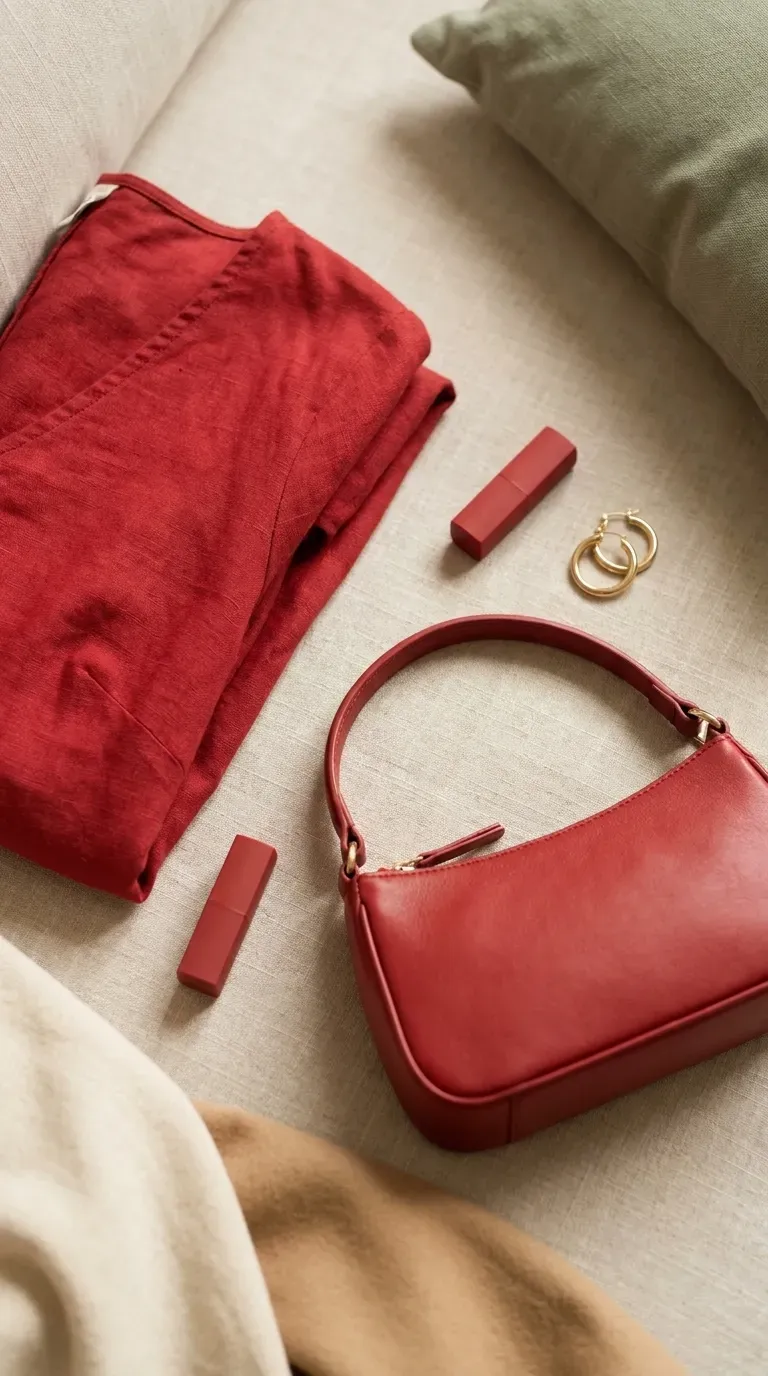
The last step is the one that makes the outfit feel intentional: echo the dress's color once somewhere else. A lip color, a small bag, or a pair of earrings in a related shade tells the eye that the red was planned, not accidental.
Then stop. One repeat is a finishing note, and two or three start to look like a matching set.
How to Do It
- Choose one place to repeat the red: lips, nails, bag, shoes, or earrings.
- Pick a shade in the same family as the dress, not necessarily an exact match.
- Check it in daylight beside the fabric.
- Keep everything else in neutrals and your chosen metal.
Why It Works
A small echo of the color moves the eye across the outfit, from face to hem, so the dress doesn't feel isolated. It also shows that the red was a choice you made on purpose.
Common Mistakes to Avoid
- Matching the red exactly in several places, which can look stiff
- Wearing a close-but-different red that fights the dress
- Repeating the red in three or more places
- Adding red when the outfit already feels complete
A touch of red is optional, and plenty of looks feel finished without it.
A Simple Rule to Remember
One echo of red is enough.
Quick Accessorizing Cheat Sheet
Screenshot this table for the next time you open the closet.
| Rule | Why It Works | Quick Fix |
|---|---|---|
| 1. Start with the shade | Metals and neutrals follow the undertone | Test gold and silver in daylight |
| 2. Pick one metal | One clear decision keeps red the star | Choose two or three pieces in one metal |
| 3. Match the neckline | Jewelry follows the neckline's shape | Fill the neckline or the ears, not both |
| 4. Neutral shoes and bag | Gives the eye a place to pause | Choose one neutral for both |
| 5. Add a layer | Frames the red and adds structure | Wear it open, hem clearly shorter |
| 6. Belt or scarf | Adds definition or pattern without bulk | Pick one, match the buckle metal |
| 7. One touch of red | Repeats the color so it feels intentional | Choose one echo, then stop |
The Principles Behind These Rules
Why Contrast Helps You Accessorize a Red Dress
Red is a saturated color, so pieces with a similar intensity compete with it. Neutrals and metals sit quietly beside it, which lets the dress stay the focus.
One Focal Point Per Outfit
Decide what you want people to notice first: the dress, the earrings, or the bag. If it's the dress, everything else supports it. If you want statement earrings, keep the neckline and the bag simple.

Repeating Tones Ties a Look Together
Your metal, your neutral, and one touch of red make a small palette. Three repeating ideas feel planned, while ten unrelated ones feel scattered.
Comfort Shows in How You Carry the Outfit
A belt you keep adjusting, shoes that pinch, or a scarf that slips will all show in how you stand. Comfortable choices let the outfit look relaxed and confident.
Common Mistakes Worth Skipping
Matching Every Piece to the Dress
Red shoes, a red bag, red earrings, and red nails can look like a costume. Pick one echo and let the rest stay neutral.
Stacking Several Statement Items
A bold necklace, large earrings, a patterned scarf, and a bright bag all compete for attention. Choose one and keep the others quiet.
Choosing Shoes Only for the Photo
Shoes you can't walk in tend to show in your posture by the end of the night. Choose a heel height and style you can keep on for the entire event.
Final Tips for Success
Try the Full Outfit Before the Day
Put on the dress, shoes, jewelry, and layer at least a day early. You will spot a clasp that snags, a belt that rides up, or a bag that feels too heavy while there is still time to swap it.
Check the Lighting and the Fit of Each Piece
Look in daylight and in indoor light, since red and metals can look different in each. Make sure every piece sits comfortably: earrings that don't drag, a bracelet that stays put, and a belt you can sit down in.
Keep a Small Set of Accessory Basics
- Gold and silver stud earrings
- A neutral blazer or cardigan
- Black and nude shoes with a stable heel
- A slim leather belt in black or tan
- A small structured bag in a neutral shade
- A silk scarf with a small print
Change One Thing, Not Everything
If the outfit feels off, swap one piece, such as the shoes, the metal, or the layer, and look again. Changing everything at once makes it hard to see what actually helped.
Conclusion
Red doesn't need much help. Once you know which shade you have, pick one metal, match the jewelry to the neckline, and keep shoes and bags quiet, and most of the work is done.
The remaining steps, a layer, a belt or scarf, and one touch of repeated red, are finishing notes. Use the ones that suit your event and skip the rest.
When you accessorize a red dress this way, you spend less time second-guessing and more time enjoying the evening. The goal is an outfit that feels like you, not a checklist.
Save this guide for the next time a red dress comes out of the closet, and come back to the cheat sheet when you need a quick reminder.

Comments
✎ Write a commentCommunity Guidelines
We love hearing what you think. Please keep comments about the article itself, stay kind and helpful to other readers, and leave out personal details or links. Every comment is checked before it appears.