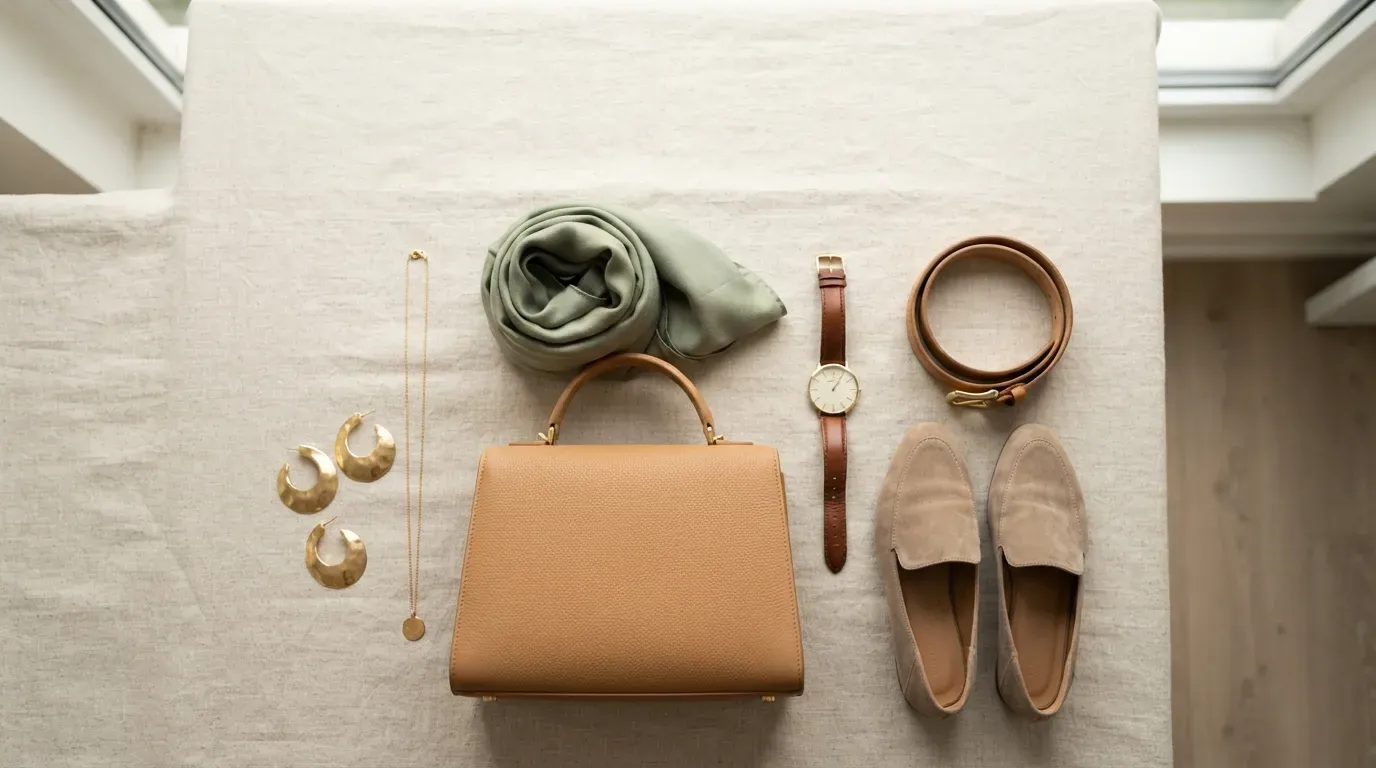

The Complete Guide to Accessorizing an Outfit for Women Over 40 — A good outfit can still feel unfinished when you are standing in front of the mirror wondering what it needs. Accessorizing an outfit for women over 40 is less about adding more pieces and more about choosing details that give the clothes proportion, texture, and personality.
The easiest approach is to start with what you are already wearing. A simple outfit can support a stronger accessory, while a detailed outfit may need only one or two quiet finishing touches.
I like to think of accessories as the final editing pass: choose what adds something useful, then stop when the outfit feels complete.
1. Start With the Outfit, Not the Accessories
Before reaching for jewelry or a handbag, look at the clothes as a whole. Notice the neckline, sleeve length, silhouette, colors, fabric weight, and overall level of formality. Those details tell you what kind of accessories will make sense.
If your outfit already has a strong pattern, sculptural sleeve, textured knit, or statement neckline, accessories can play a supporting role. With a simple shirt and trousers, you have more room to introduce interest through jewelry, a bag, or a scarf.
How to Do It
- Put on the complete base outfit
- Identify the strongest visual detail
- Choose one accessory category to emphasize
- Add supporting pieces only if they improve the balance
- Check the full outfit before adding anything else
Why It Works
Accessories look intentional when they respond to the clothes rather than competing with them. A long pendant can echo a simple open neckline, while a structured bag can provide definition beside relaxed, fluid clothing.
The trade-off is that this approach requires a little editing. You may have to leave a favorite accessory off even when you like it on its own.
What to Look For
- Neckline shape
- Fabric weight
- Outfit proportions
- Existing pattern
- Overall formality
Common Mistakes to Avoid
- Choosing accessories before dressing
- Mixing too many focal points
- Ignoring the outfit's scale
- Adding pieces simply because there is empty space
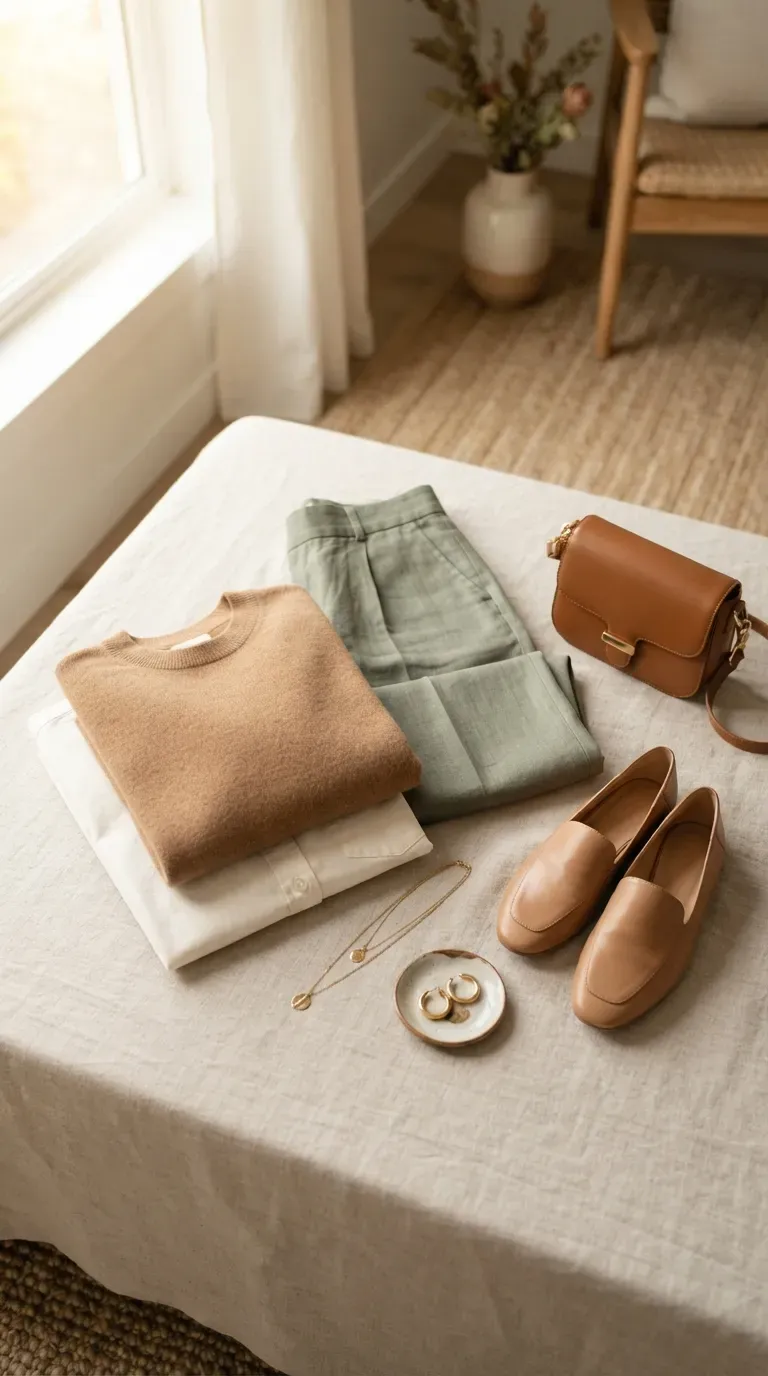
2. Choose a Focal Point
A polished outfit does not need every accessory to attract attention. In fact, deciding which detail gets noticed first can make the rest of your choices much easier.
For accessorizing an outfit for women over 40, a focal point might be a pair of earrings, a necklace, a beautiful bag, a patterned scarf, or an interesting shoe. The key is to let one element lead while the others support it.
How to Do It
Start by choosing the accessory you most want to wear. Then consider its visual weight.
Large earrings may work beautifully with a clean neckline and pulled-back hair. A statement necklace can take the lead when the rest of the outfit is relatively simple. A distinctive bag may need quieter jewelry around it.
Why It Works
A focal point creates visual direction. Instead of asking every accessory to contribute equally, you give the eye a clear place to land.
The trade-off is restraint. If you choose a bold necklace, dramatic earrings and an equally attention-grabbing scarf may compete with it.
What to Look For
- One dominant accessory
- Two or three supporting details
- Repeated colors
- Balanced visual weight
- Clear connection to the outfit
Best For
- Simple work outfits
- Dinner looks
- Minimal neutral outfits
- Special-event dressing
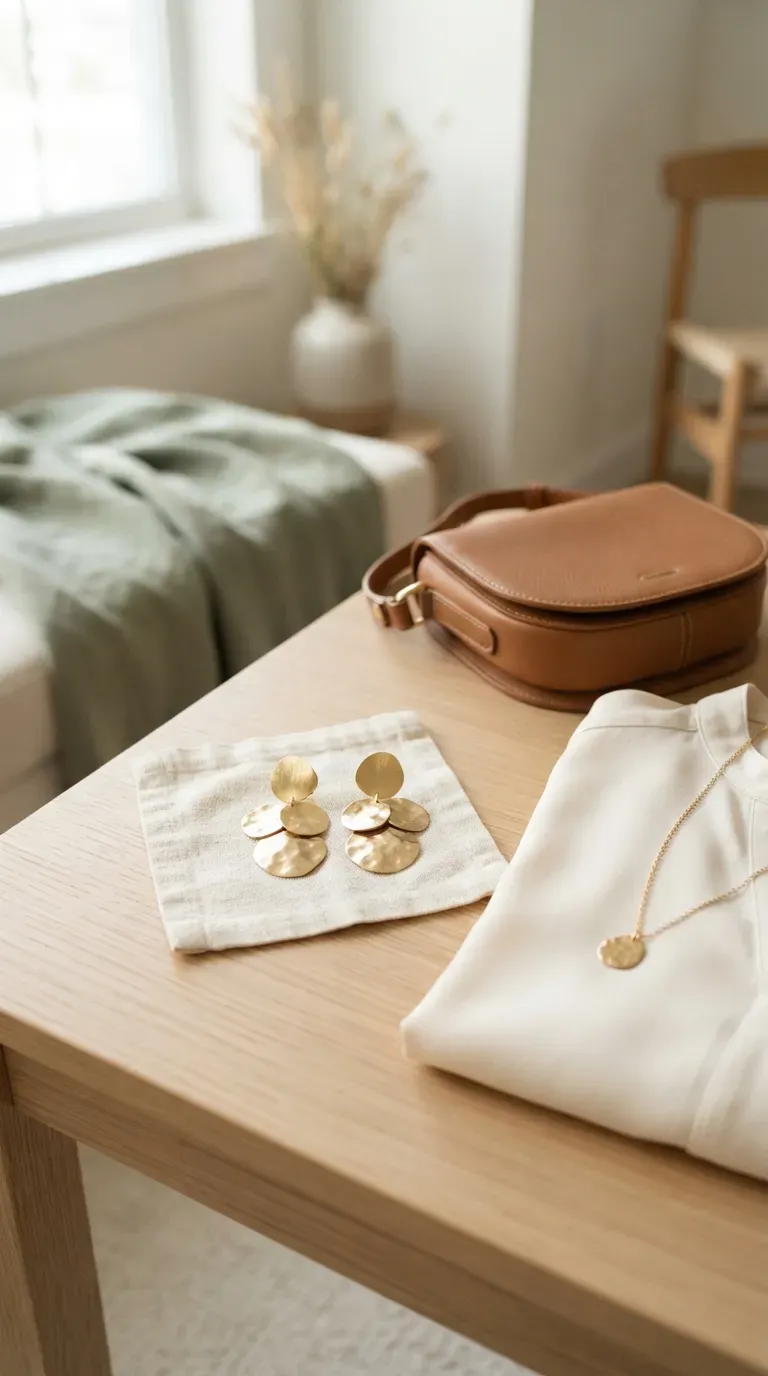
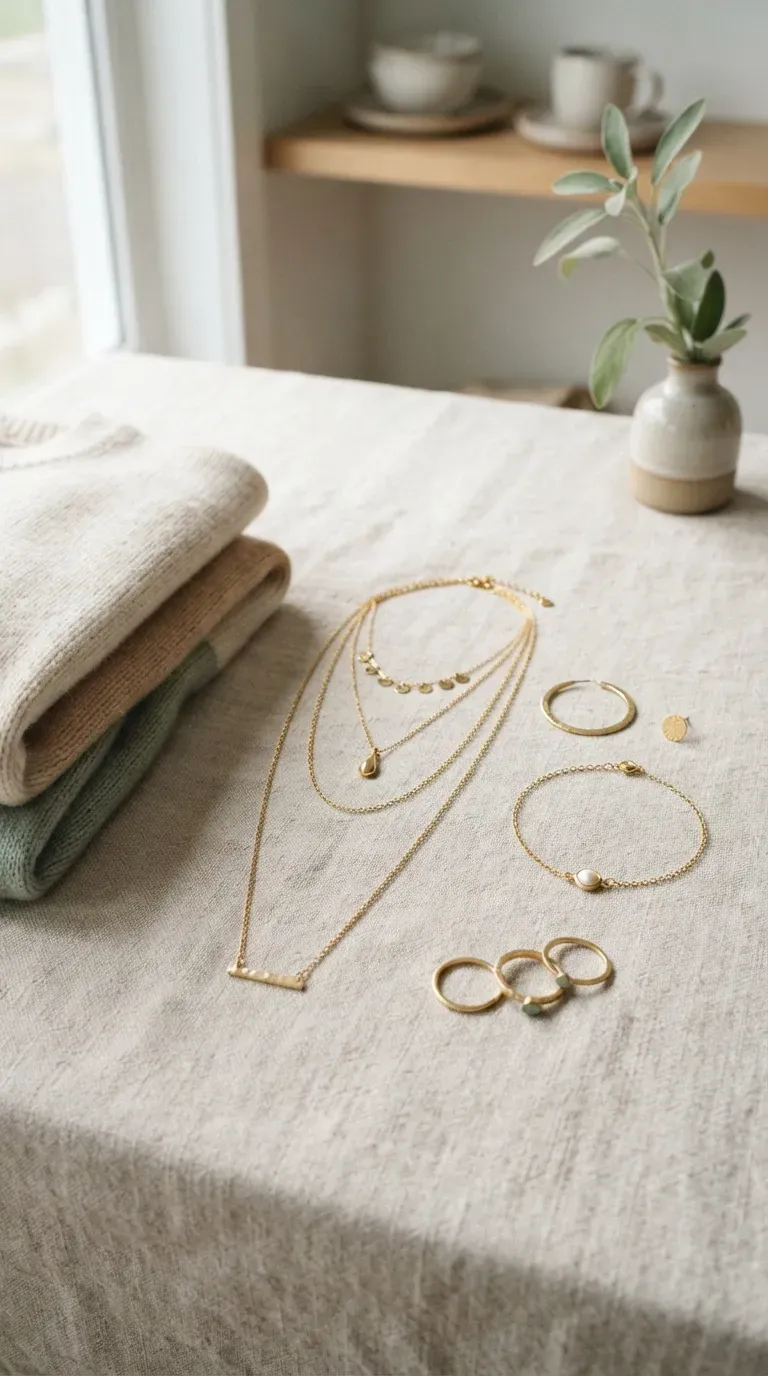
3. Build Jewelry in Layers
Jewelry can change the character of an outfit without changing the clothes themselves. The trick is to layer pieces with enough difference in length, scale, or texture that each one remains readable.
A useful starting point is one main piece, followed by smaller pieces that relate to it. You do not need a complete matching set.
How to Do It
Begin with the neckline. A crew-neck sweater may work with earrings and a bracelet, while an open shirt creates space for a pendant or layered necklaces.
If wearing multiple necklaces, vary the lengths rather than stacking several pieces at nearly the same point. With bracelets or rings, combine different textures or widths so the grouping does not look overly uniform.
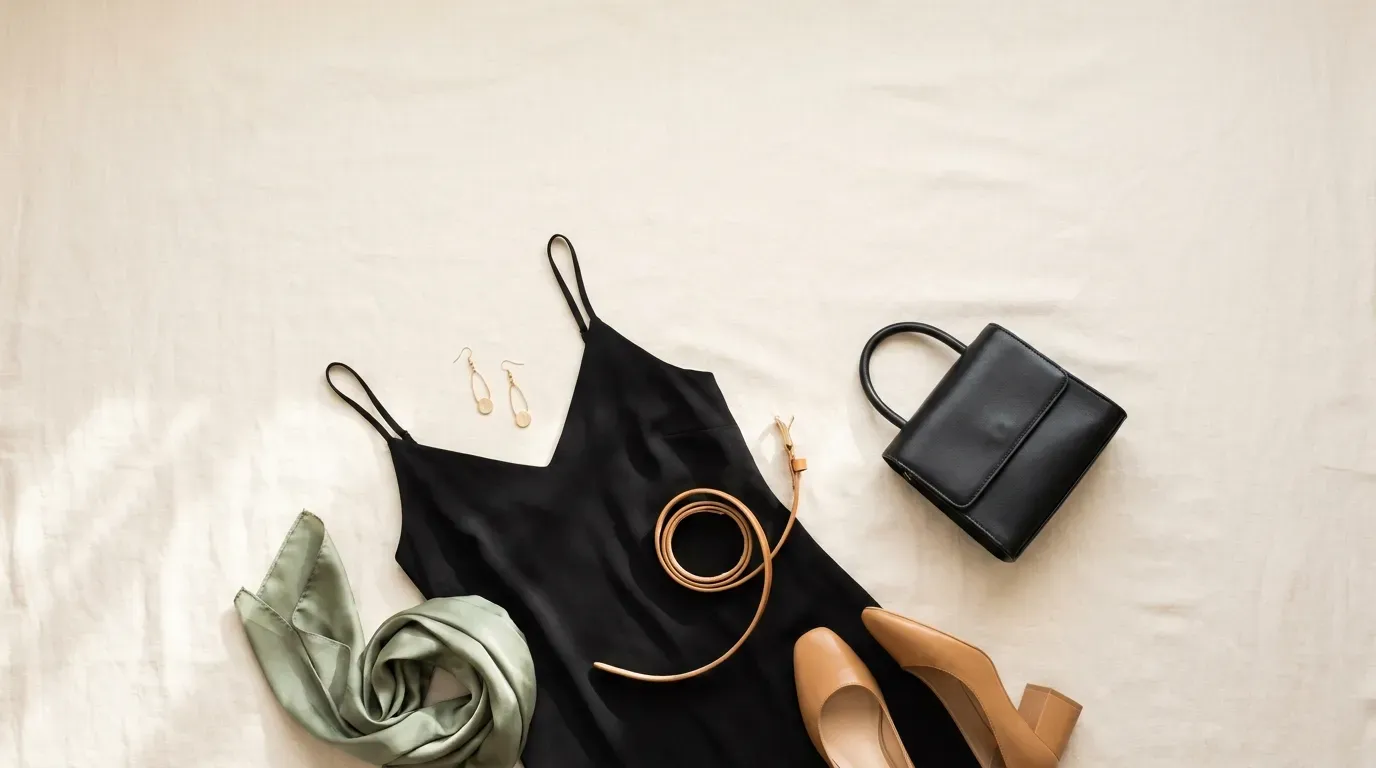
Why It Works
Variation gives layered jewelry structure. Repeating one small detail, such as a metal finish or a color, can also make separate pieces feel connected.
The trade-off is upkeep and attention to detail. More jewelry means more pieces to store, untangle, clean, and coordinate.
What to Look For
| Jewelry piece | Best role | Styling approach |
|---|---|---|
| Earrings | Face-framing detail | Match outfit scale |
| Necklace | Neckline emphasis | Vary lengths |
| Bracelet | Sleeve contrast | Mix textures |
| Ring | Small finishing detail | Repeat one tone |
Common Mistakes to Avoid
- Layering pieces at the same length
- Combining too many statement pieces
- Ignoring the neckline
- Wearing jewelry that catches on clothing
4. Match the Bag to the Outfit's Proportions
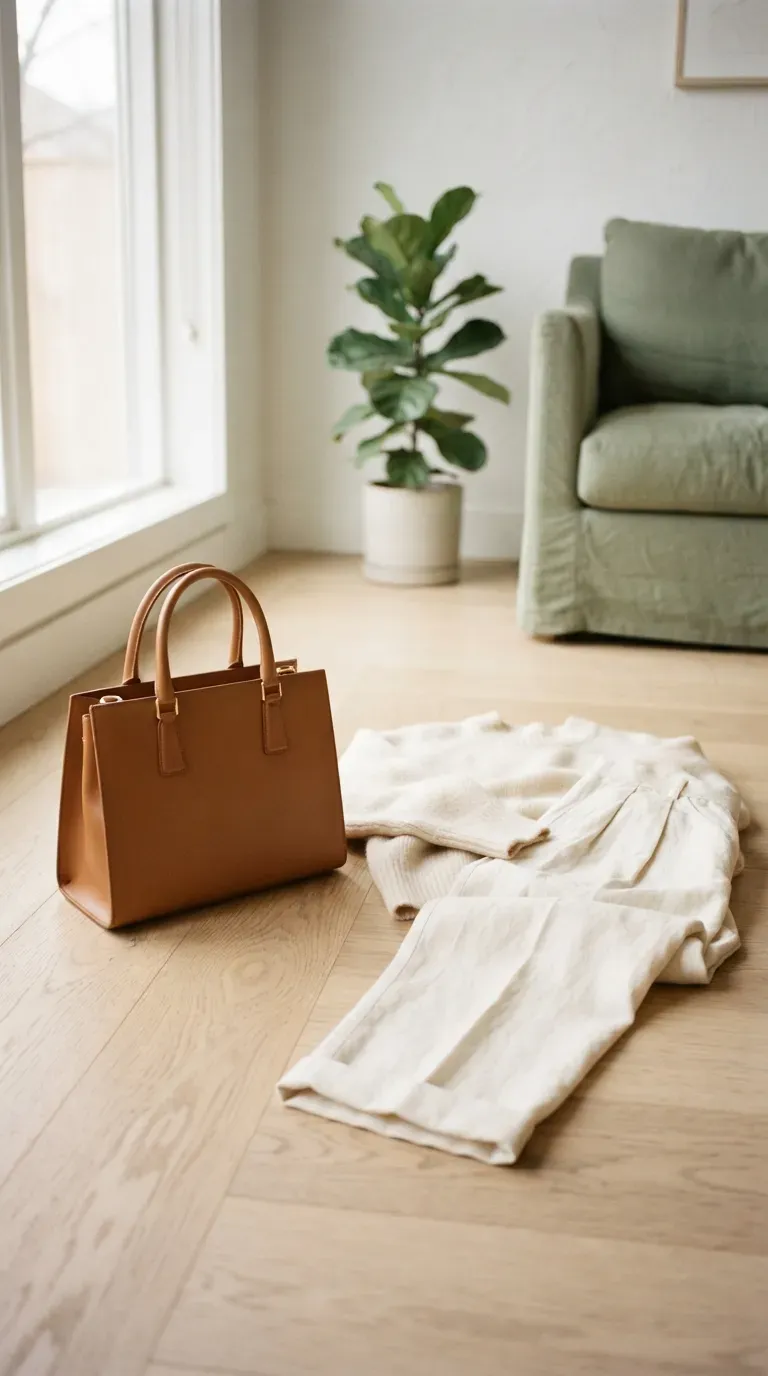
A handbag does more than carry your essentials. Its shape, size, and structure can change how the entire outfit reads, so it is worth considering the bag alongside your clothing rather than as an afterthought.
Start with the proportions of what you are wearing. A relaxed sweater and wide-leg trousers can handle a structured bag that adds definition, while a tailored outfit may pair naturally with a softer bag for contrast.
How to Do It
Look at the overall silhouette first. If your clothing has generous volume, a bag with some structure can create a useful counterpoint. With a fitted jacket or streamlined dress, a medium or softly shaped bag can keep the outfit from feeling overly rigid.
Pay attention to where the bag sits on your body, too. A shoulder bag, crossbody, top-handle bag, or clutch creates a different visual line.
Why It Works
The right bag helps distribute visual weight throughout an outfit. It can repeat a color from your shoes or jewelry, introduce a contrasting texture, or add structure to softer fabrics.
The trade-off is practicality. A smaller bag may look beautifully proportioned but may not accommodate everything you need, while a large tote can be useful without always suiting a dressier outfit.
What to Look For
- Proportion relative to clothing
- Useful interior space
- Appropriate structure
- Practical carrying method
- Connection to another outfit detail
Common Mistakes to Avoid
- Choosing a bag only for its color
- Ignoring how the strap sits
- Pairing a very casual bag with formal clothing
- Carrying more volume than the outfit needs
5. Use Shoes to Finish the Proportion
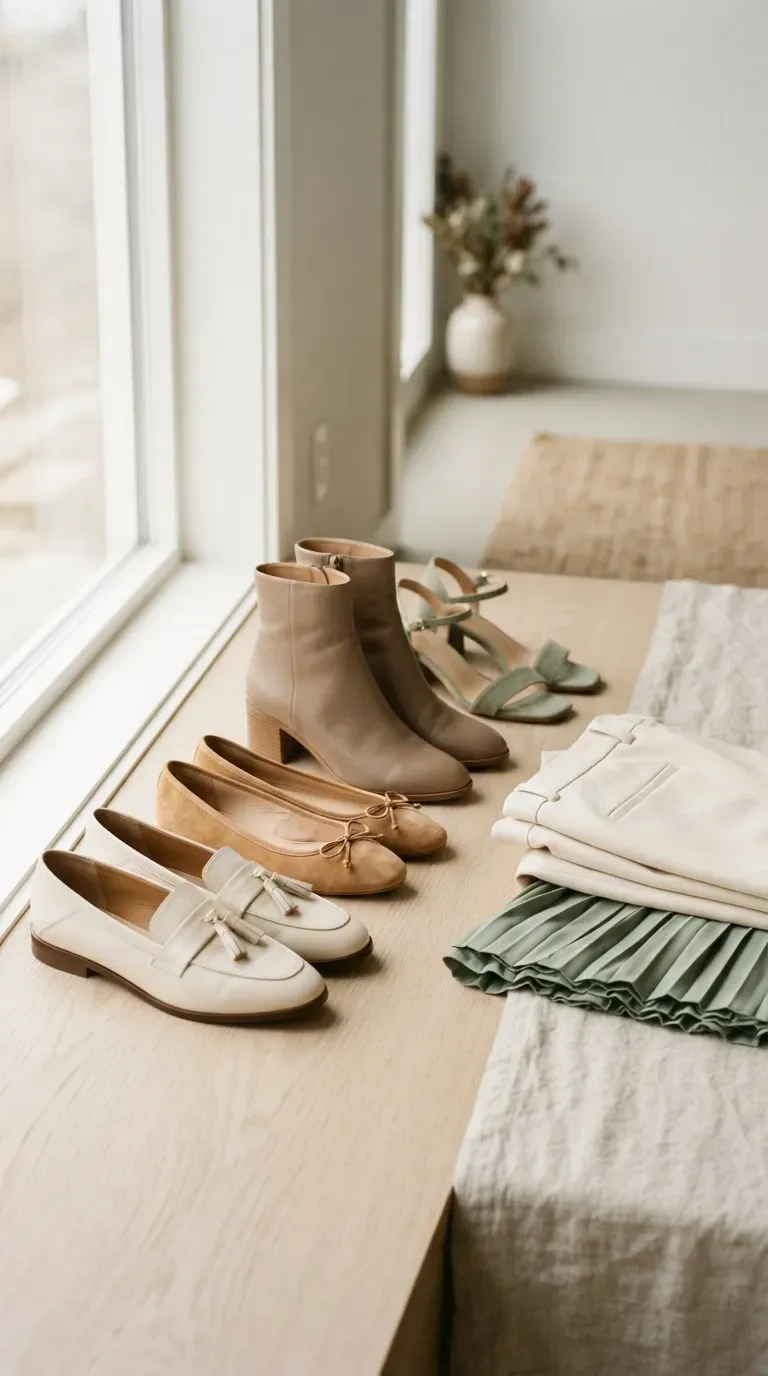
Shoes are one of the easiest accessories to overlook because they sit at the bottom of the outfit. Yet their shape, visual weight, and heel height can affect the relationship between trousers, skirts, dresses, and outer layers.
Think beyond matching colors. The goal is to choose shoes that make sense with the outfit's proportions and the occasion.
How to Do It
For wide-leg trousers, consider a shoe with enough visual presence to balance the fabric. With cropped pants, the shoe becomes more visible, so its shape and finish have a larger role.
For dresses and skirts, consider the hemline and the level of formality. A simple loafer, low block heel, sleek flat, or ankle boot can each create a different effect without requiring a dramatic change elsewhere.
Why It Works
Shoes help complete the visual line of an outfit. They also need to support the practical demands of the day.
The trade-off is comfort versus structure and height. If you choose a heel, look for a stable heel and enough room in the toe box. If you have foot pain, check with your doctor or a podiatrist.
What to Look For
| Shoe | Best for | Styling note |
|---|---|---|
| Loafers | Work outfits | Adds tailored structure |
| Ballet flats | Everyday looks | Keeps the line relaxed |
| Block heels | Dressier outfits | Adds stable height |
| Ankle boots | Transitional weather | Works with trousers |
Best For
- Office outfits
- Dinner looks
- Travel days
- Everyday dressing
6. Add Belts, Scarves, and Other Small Details
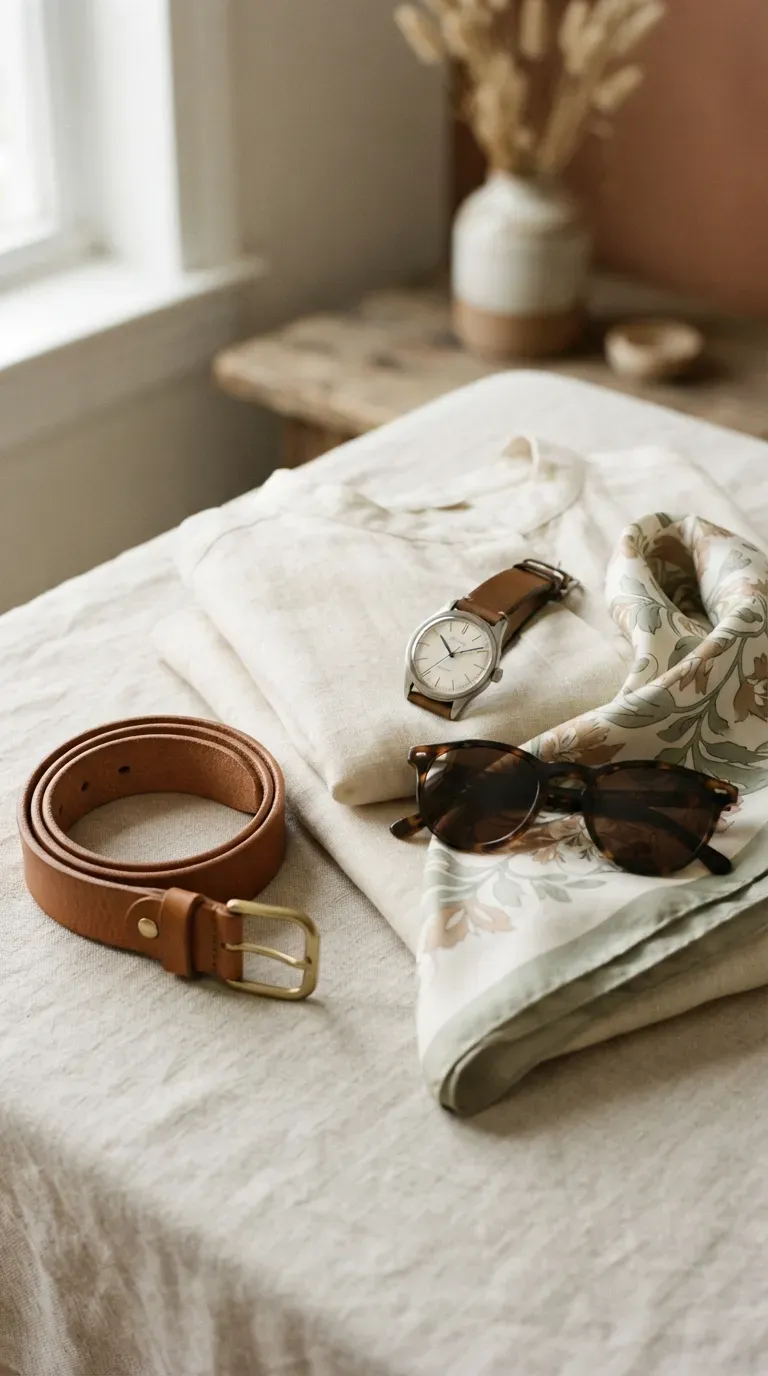
Once the major accessories are chosen, smaller details can connect the outfit. Belts, scarves, watches, sunglasses, and hair accessories can repeat a color, introduce texture, or create a useful break between clothing pieces.
These are especially helpful when an outfit feels visually flat but does not need another major statement piece.

How to Do It
Use a belt when you want to define the relationship between a top and bottom layer or add structure to a looser silhouette. A scarf can bring color and texture near the face, while sunglasses can contribute shape as well as function.
Think in terms of repetition. If your shoes are tan, a belt or bag in a related tone can create a subtle connection without requiring an exact match.
Why It Works
Small accessories act as visual bridges. They can repeat a color found in a print, echo the texture of a knit, or create contrast against a smooth fabric.
The trade-off is that these pieces are easy to overuse. If the outfit already contains several strong details, another scarf, belt, and statement accessory may make the result feel busy.
What to Look For
- One repeated color
- One contrasting texture
- Useful belt width
- Scarf scale suited to the neckline
- Accessories that serve a purpose
Common Mistakes to Avoid
- Matching every accessory exactly
- Adding a belt without considering proportions
- Choosing a bulky scarf with a busy neckline
- Treating every empty space as a reason to add something
7. Edit Before You Leave the House
The final step is often the simplest: take one accessory away before deciding whether the outfit is finished. After adding jewelry, a bag, shoes, and smaller details, give yourself a moment to look at everything together.
The goal is not to reach a particular number of accessories. It is to create a clear relationship between the clothing and the finishing pieces.
How to Do It
Stand back from the mirror rather than inspecting each accessory separately. Look for the first detail your eye notices, then check whether the other pieces support it.
If two accessories seem to compete, remove one. If the outfit feels disconnected, repeat one color, metal finish, or texture. If the shoes feel too delicate or too heavy for the clothing, reconsider their visual weight.
Why It Works
Editing creates breathing room. An outfit can contain beautiful individual pieces and still feel less cohesive when every piece demands attention.
The trade-off is that editing sometimes means leaving out something you enjoy. Save that piece for another outfit where it can play a clearer role.
Common Mistakes to Avoid
- Adding accessories without stepping back
- Matching everything too precisely
- Keeping a competing piece just because you like it
- Forgetting practical comfort
A Simple Rule to Remember
Choose one lead accessory, two or three supporting details, and stop when the outfit feels balanced.
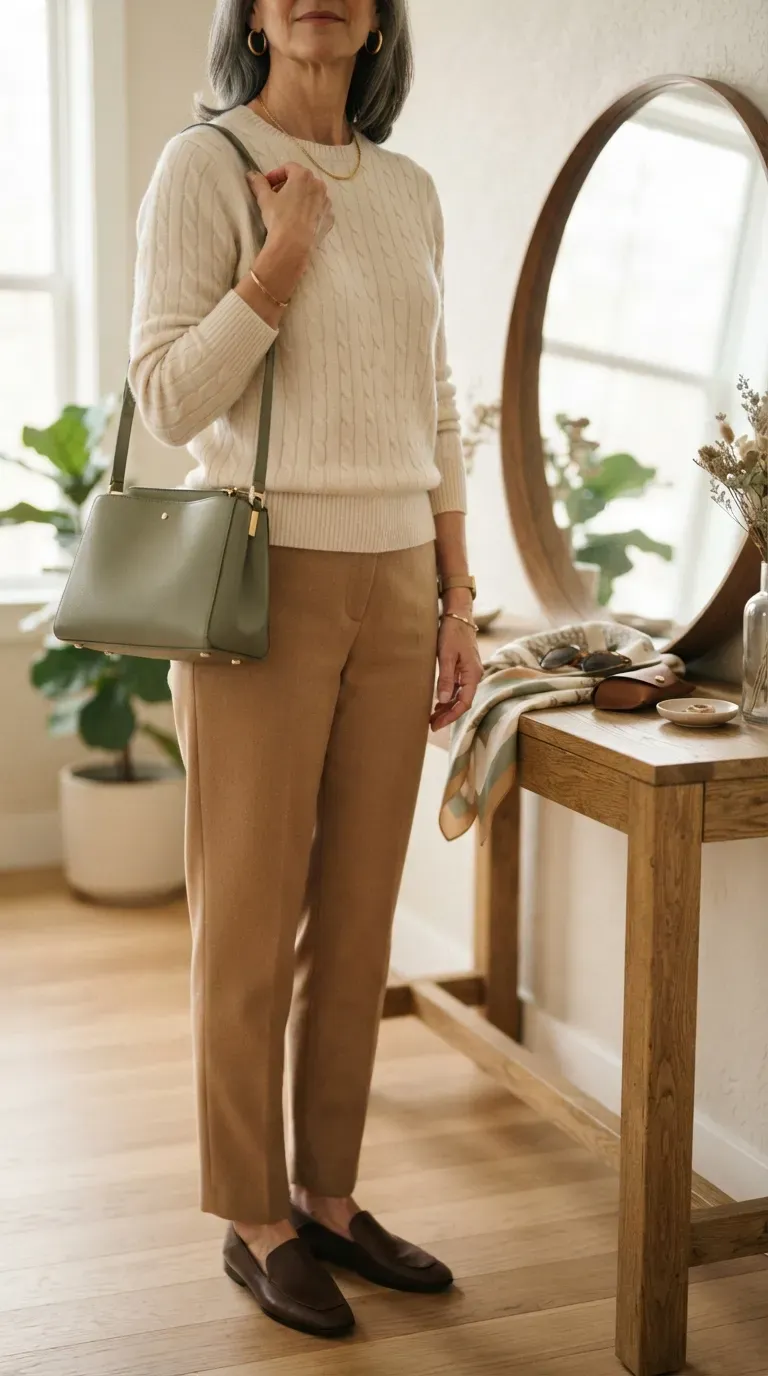
Quick Shoes & Accessories Cheat Sheet
| Item | Best For | Style It With |
|---|---|---|
| Earrings | Face-framing detail | Simple neckline |
| Necklace | Neckline emphasis | Open shirt |
| Handbag | Proportion | Outfit silhouette |
| Loafers | Work outfits | Tailored trousers |
| Block heels | Dressier occasions | Dresses, skirts |
| Belt | Added structure | Relaxed layers |
| Scarf | Color and texture | Simple tops |
The Principles Behind These Rules
Proportion Creates Balance
Accessories should relate to the scale of the clothing. A delicate chain can disappear beside a chunky knit, while an oversized necklace may compete with an intricate neckline.
There is no single correct scale. The useful question is whether the accessory can be seen clearly and whether its visual weight makes sense beside the rest of the outfit.
Repetition Makes an Outfit Feel Intentional
Repeating one element can connect separate pieces. A warm leather tone appearing in both a belt and handbag, for example, creates a subtle visual relationship.
Exact matching is not necessary. Similar tones, finishes, or textures can create the same sense of connection.
Contrast Adds Interest
Accessories do not always need to blend into the outfit. A smooth metal bracelet against a textured sweater or a structured bag beside relaxed clothing can create useful contrast.

The key is to control how much contrast you introduce. When several elements already compete, another strong contrast may not be necessary.
Comfort Is Part of Good Styling
An accessory has to work in real life, not just in a mirror. Consider whether a bag is practical to carry, whether earrings feel comfortable for several hours, and whether shoes provide the support you need.
For footwear, look for features such as cushioning, a stable heel, and adequate room in the toe box. If you have foot pain, check with your doctor or a podiatrist.
Common Mistakes Worth Skipping
Adding Accessories Without a Focal Point
When every piece is intended to stand out, the outfit can lose visual direction. Choose the accessory you want noticed first, then let the remaining pieces support it.
Ignoring Scale
A tiny bag with a very voluminous outfit or a delicate shoe beneath a dramatic trouser silhouette can create an uneven visual relationship.
Before changing colors, consider whether changing the accessory's size or structure would solve the issue.
Wearing Too Many Competing Details
Patterns, statement jewelry, textured accessories, bold shoes, and a distinctive bag can all work individually. Together, they may need more editing.
Try removing one element before adding another. Often the outfit needs less rather than more.
Final Tips for Success
Keep a Small Set of Reliable Accessories
- Simple metal earrings
- One versatile necklace
- Structured everyday bag
- Comfortable loafers or flats
- Low block heel
- Leather belt
- Lightweight scarf
Let One Piece Lead
Choose the accessory that gives the outfit its strongest point of interest. Keep the surrounding pieces quieter so the focal point remains clear.
Check the Whole Outfit in the Mirror
Look at the outfit from a little distance. Check the neckline, waist area, handbag position, hemline, and shoes as one composition rather than judging each item separately.
Wardrobe Basics Worth Owning
A useful accessory wardrobe can include a few jewelry pieces in finishes you regularly wear, one or two practical bags, versatile shoes, a belt, and a scarf or other small finishing piece. Choose each based on how often you will actually use it.
Conclusion
The most useful approach to accessorizing an outfit for women over 40 is to work with the clothes you already love and use accessories to clarify their proportions, texture, color, and level of formality.
Start with the outfit, choose a focal point, then build supporting details around it. Jewelry, bags, shoes, belts, and scarves each have a role, but none needs to carry the entire look.
And remember that good styling includes practicality. An accessory that looks beautiful but does not suit the occasion, your comfort needs, or the rest of the outfit may simply belong in a different combination.
You do not need a large accessory collection to create variety. A thoughtful group of pieces can give familiar clothes many different directions.
Save this guide for the next time an outfit feels almost finished but needs one last thoughtful detail.
Comments
✎ Write a commentCommunity Guidelines
We love hearing what you think. Please keep comments about the article itself, stay kind and helpful to other readers, and leave out personal details or links. Every comment is checked before it appears.