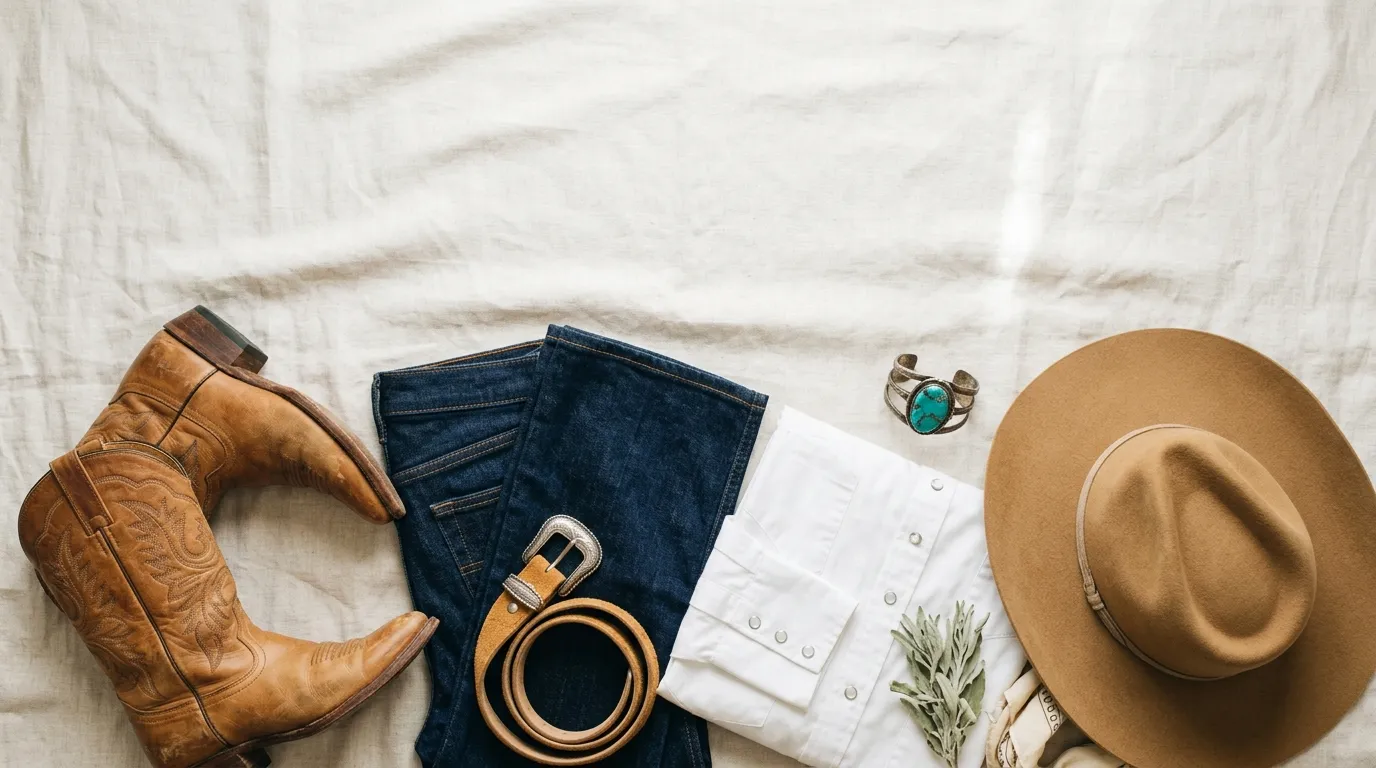

How to Style Western Looks for Plus Size Women Over 40 — The invitation says country-style barbecue, and your closet holds one pair of boots, a denim shirt, and a lot of doubt. Western looks for plus size women over 40 do not need a costume. They need good fit, one clear statement, and boots you can actually walk in.
What you need is a way to wear western pieces so they look like you, not like a theme party. That starts with denim, boots, a belt, and a few details chosen on purpose.
I've put together eight steps, from the first fit check to the final layer, so you can build western outfits one piece at a time.
1. Start With Denim That Fits at the Waist and Thigh
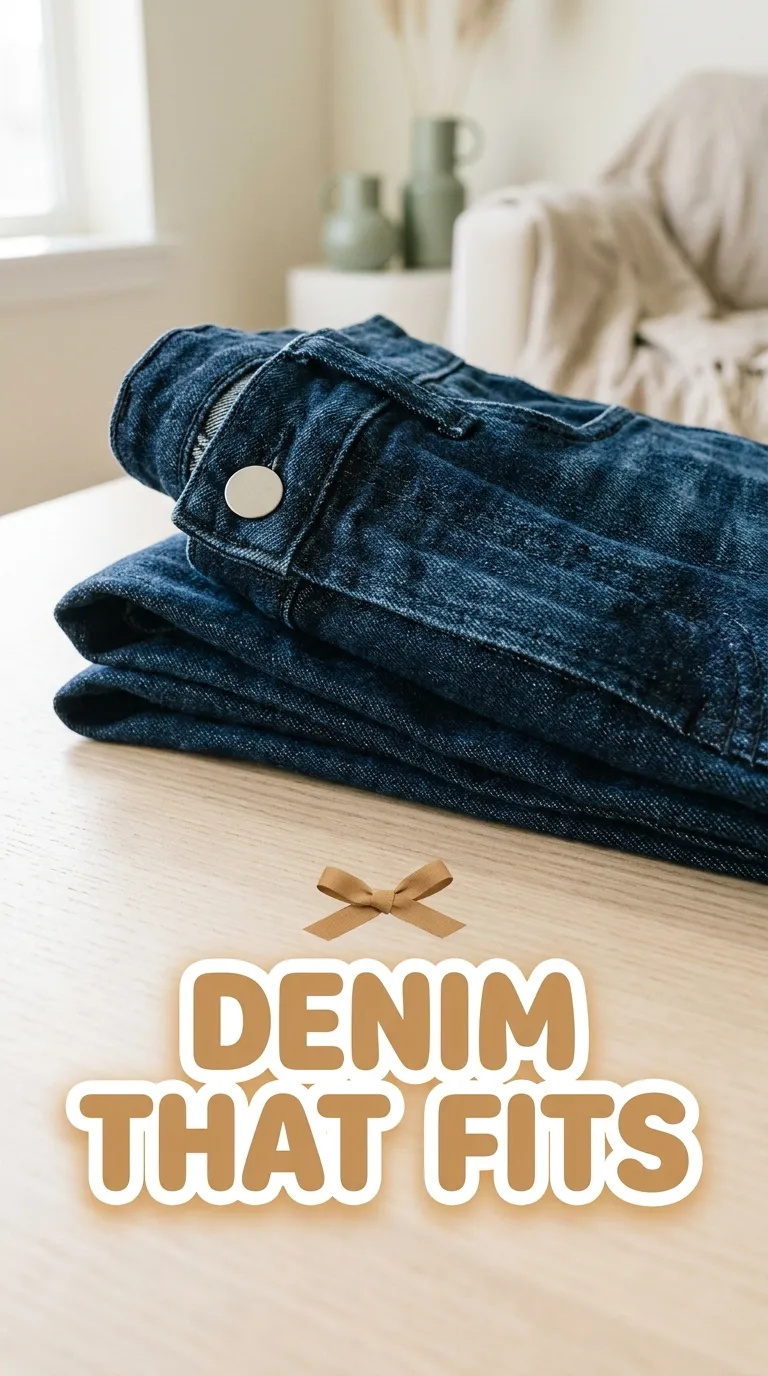
Denim is the base of almost every western look, so fit matters more here than anywhere else. A pair that sits comfortably at the waist and moves with your thighs makes every boot, belt, and shirt look better.
Look for denim with a little stretch and good recovery, a rise that stays put when you sit, and a dark or mid wash that works with boots in any color.
How to Do It
- Pull the jeans on and sit down for a full minute to see how the waistband behaves.
- Check that the waistband lies flat without gapping at the back or digging in at the front.
- Bend your knees and walk a few steps, and make sure the fabric moves with your thighs.
- Put on the boots you plan to wear and check that the leg opening fits over them.
Why It Works
Denim that fits at the waist and thigh gives western pieces a clean base, so belts, tucked shirts, and boots all sit where they should. It also keeps the line from hip to hem smooth, which lets a bootcut or straight leg do its job.
What to Look For
Use this quick check in the fitting room, and take your time with it.
| Area | What a Good Fit Looks Like | Sign It's Off |
|---|---|---|
| Waist | Lies flat, no gap or digging | Gaps at back or pinches |
| Thigh | Room to move, fabric lies smooth | Pulls tight when you sit |
| Rise | Stays in place when you sit | Slides down or rolls over |
| Leg opening | Fits over a boot with room | Catches on the boot shaft |
Rigid denim looks sharp, but it asks for a break-in period. If you want comfort from the first wear, choose a fabric with some give, and check the care label before washing.
Common Mistakes to Avoid
- Buying for the waist and ignoring thigh room
- Choosing rigid denim with no give
- Picking a leg opening too narrow for boots
- Skipping the sit test
Best For
- Everyday western outfits
- Country fairs and concerts
- Casual dinners with boots
2. Choose Boots With the Right Shaft and Heel
Boots carry the whole western look, so comfort decides whether you will wear them. The shaft, which is the part that wraps your calf, and the heel are the two details to check first.
A boot with a little room at the calf and a stable heel is easier to wear all day than a stiff, narrow pair. Try them on with the socks you plan to wear.
How to Do It
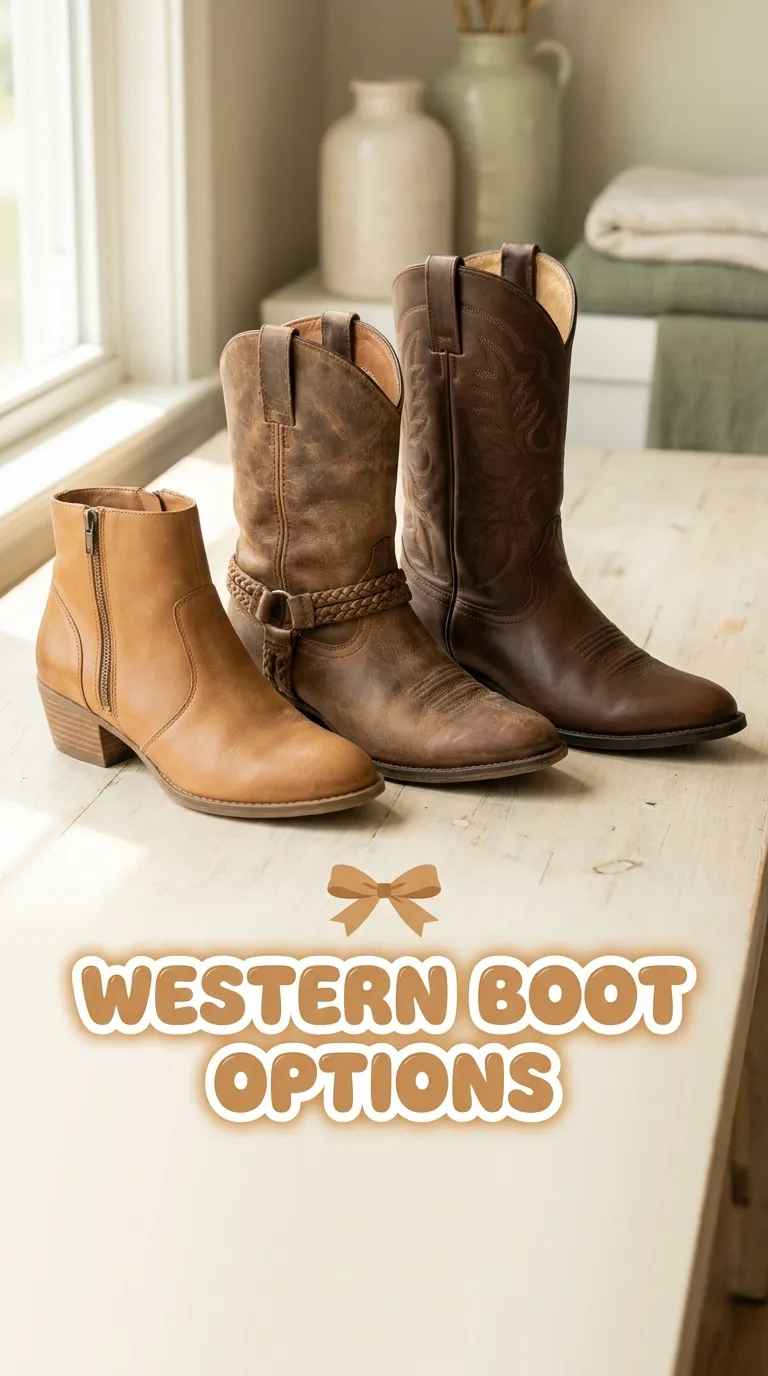
- Pick the height first: ankle, mid-calf, or classic cowboy.
- Try them on with your usual socks and check that your toes have room to move.
- Walk on a hard floor for a few minutes, and notice whether your heel lifts more than slightly.
- Pull the jeans over the boot to check how the hem lands.
Why It Works
The right shaft width keeps the boot from pressing into your calf, and a stable heel keeps your stride steady. When the boot fits well, the jeans hem falls cleanly over the top and the whole outfit looks settled.
What to Look For
Each boot height suits a different kind of outfit, so choose by what you wear most.
| Boot | Best For | Heel or Sole Notes |
|---|---|---|
| Ankle bootie | Dresses, skirts, cropped jeans | Low block heel, easy walking |
| Mid-calf western | Straight and bootcut jeans | Stacked heel, 1½ to 2 inches |
| Classic cowboy | Dark denim, long skirts | Angled heel, check calf room |
Beyond the height, look for:
- Elastic gussets or a wider calf shaft
- Cushioned insole
- Stable heel, 1½ to 2 inches
- Roomy toe box
Check with your doctor or a podiatrist if you have foot pain. Keep in mind that taller shafts run warmer in summer, and new leather needs a few short wears before a long day.
Best For
- Country concerts
- Fall fairs and farmers markets
- Casual dinners
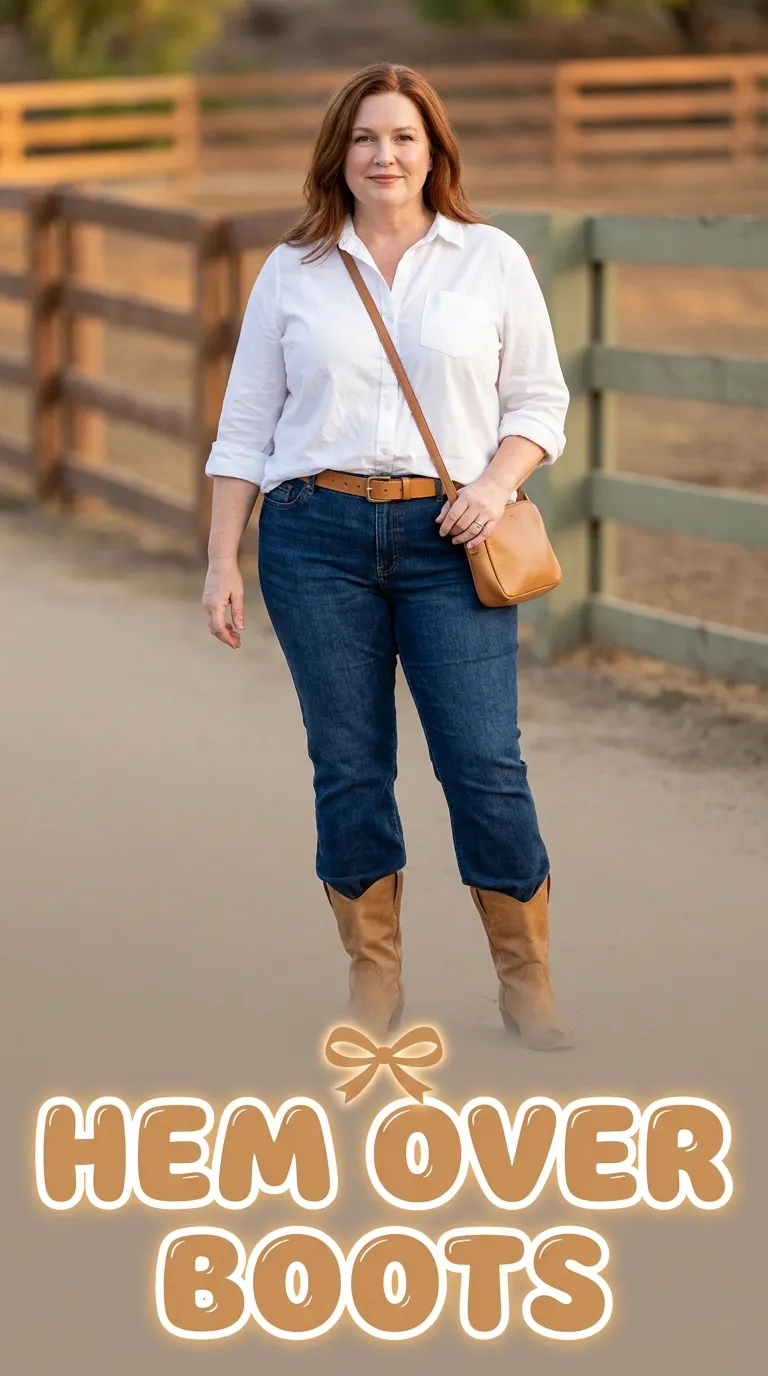
3. Let the Hem Skim the Top of the Boot
How the jeans meet the boot changes the whole outfit. A hem that skims the top of the boot, or falls just over it, creates one longer line from waist to ground.
Bootcut and straight-leg jeans handle this best. A slim leg can be tucked into the boot, but it needs a boot with a wider shaft.
How to Do It
- Put the boots on first, then pull the jeans over them.
- Stand straight and check that the hem covers the top of the boot shaft.
- Look at the back: the hem should skim the top of the heel without dragging.
- Sit and cross your legs to make sure the hem stays over the boot.
Why It Works
Covering the shaft keeps the line unbroken from hip to heel. A leg opening with a little width at the hem also balances the boot, so nothing feels pinched at the ankle.
Common Mistakes to Avoid
- Hemming jeans while wearing flats
- Letting the hem drag on the ground
- Tucking stiff denim into a narrow shaft
- Choosing a leg opening narrower than the boot
This approach asks for a trip to the tailor if your jeans run long, and it works less well with very short boots, where the hem has little to rest on.
Best For
- Country fairs
- Weekend errands
- Casual dinners
A Simple Rule to Remember
Hem for the boots, not for the flats.
4. Define the Waist With a Belt
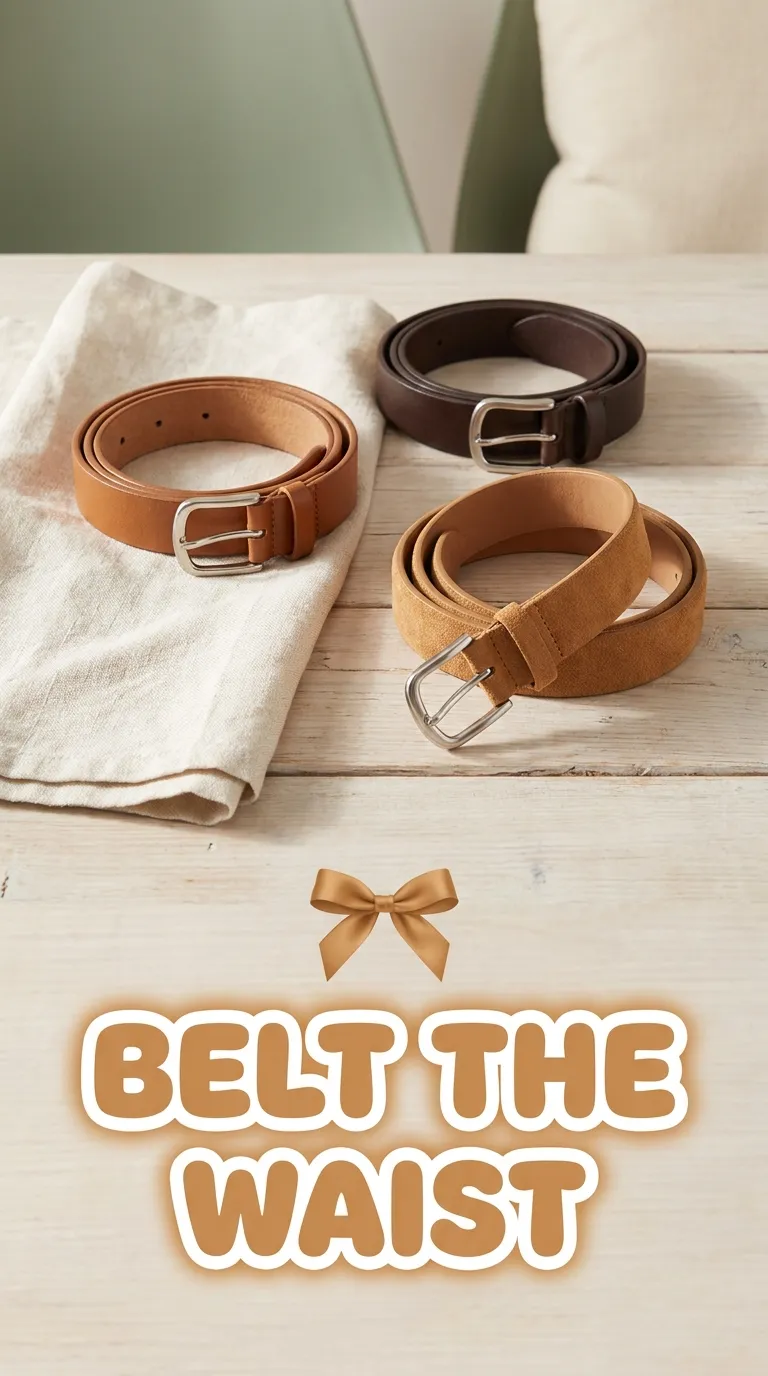
A belt is the western detail that does the most work. It marks where your waist sits and gives a tucked shirt a clear finish.
Wear it at the waistband of your jeans, or at your natural waist over a dress or long shirt. Either way, the belt should rest, not press.
How to Do It
- Choose a belt 1 to 1½ inches wide so it fits the loops on most jeans.
- Pick a buckle that lies flat against your body when you sit.
- Fasten it on a middle hole, so you have room to adjust through the day.
- Match the belt's leather tone to your boots, such as tan with tan or dark brown with dark brown.
Why It Works
A belt defines the waist and breaks up the long line of a tucked shirt, so the outfit has a clear center. A small or medium buckle adds a western detail without adding bulk at the middle.
What to Look For
- Leather or suede with a little flex
- Small to medium buckle with a flat back
- Evenly spaced holes for gentle adjustment
- Width that fits your belt loops
A belt works best over a smooth tuck. Over a long, loose layer it can bunch, so skip it there or move it to the natural waist. New leather also needs a few wears to soften.
Best For
- Tucked shirt outfits
- Dresses with a defined waist
- Denim-on-denim looks
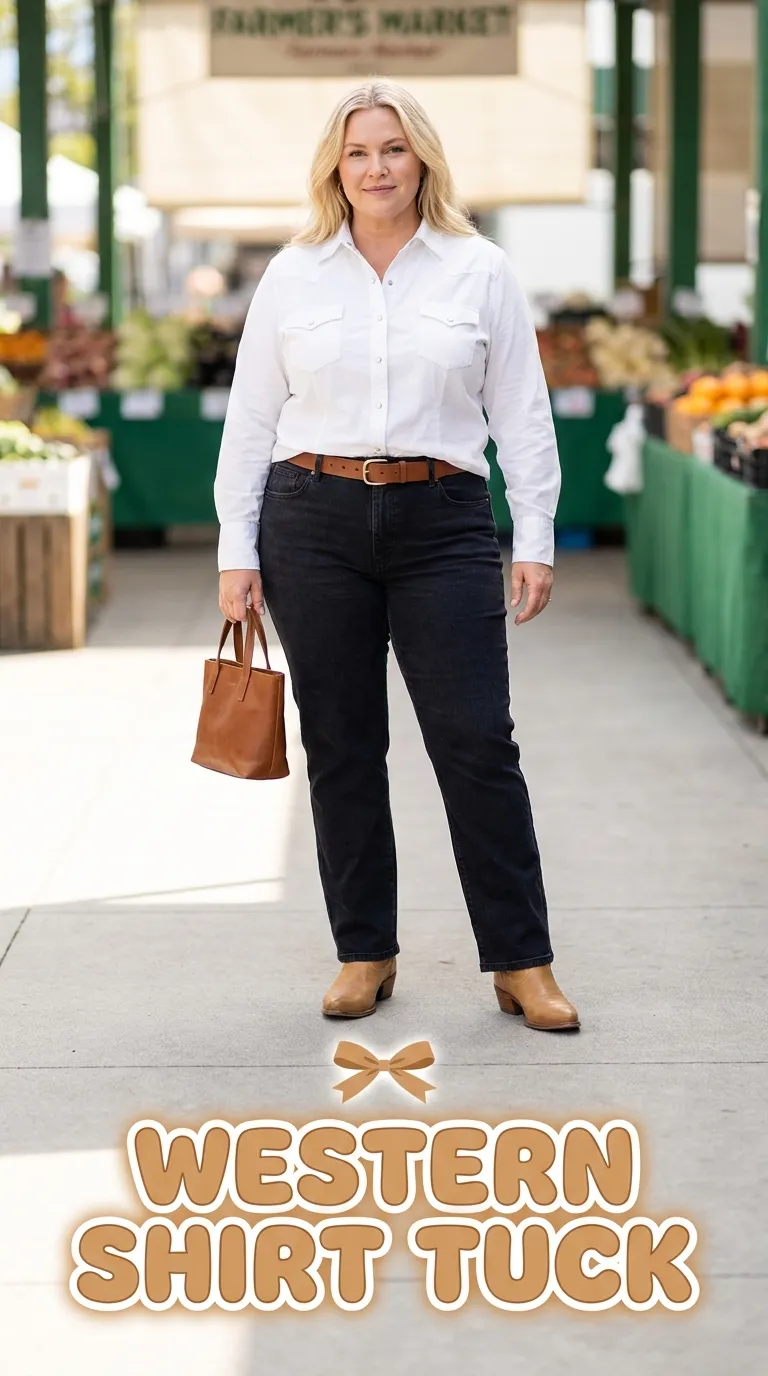
5. Tuck, Half-Tuck, or Leave the Western Shirt Out
A western shirt has structure built in, with a yoke at the shoulder and snaps down the front, so how you tuck it changes the whole shape. You have three choices: a full tuck, a half-tuck, or untucked.
Crisp cotton poplin or chambray holds a tuck well, while softer fabrics drape nicely half-tucked. Whichever you choose, check that the snaps stay closed across the bust when you move.
How to Do It
- Snap the shirt closed and tuck only the front center into the waistband.
- Pull the fabric up slightly so it blouses a little over the waistband.
- Let the sides fall straight, and check that the hem lands around the hip.
- Add a belt for a clear waist line, or skip it for a relaxed finish.
Why It Works
A half-tuck shows where the waist is while the loose sides keep the shirt comfortable. The yoke and snaps give the top a structured shoulder, so the outfit reads western without any extra pieces.
Common Mistakes to Avoid
- Tucking in every inch of a long shirttail
- Pulling the tuck too tight
- Wearing a hem that falls well past the hip untucked
- Skipping a mirror check after you sit down
A half-tuck needs a quick fix after sitting, and a full tuck needs a shirt long enough to stay in place.
Best For
- Weekend markets
- Casual dinners
- Casual Fridays at the office
A Simple Rule to Remember
Tuck the front, let the sides fall.
6. Keep Fringe and Embroidery to One Statement
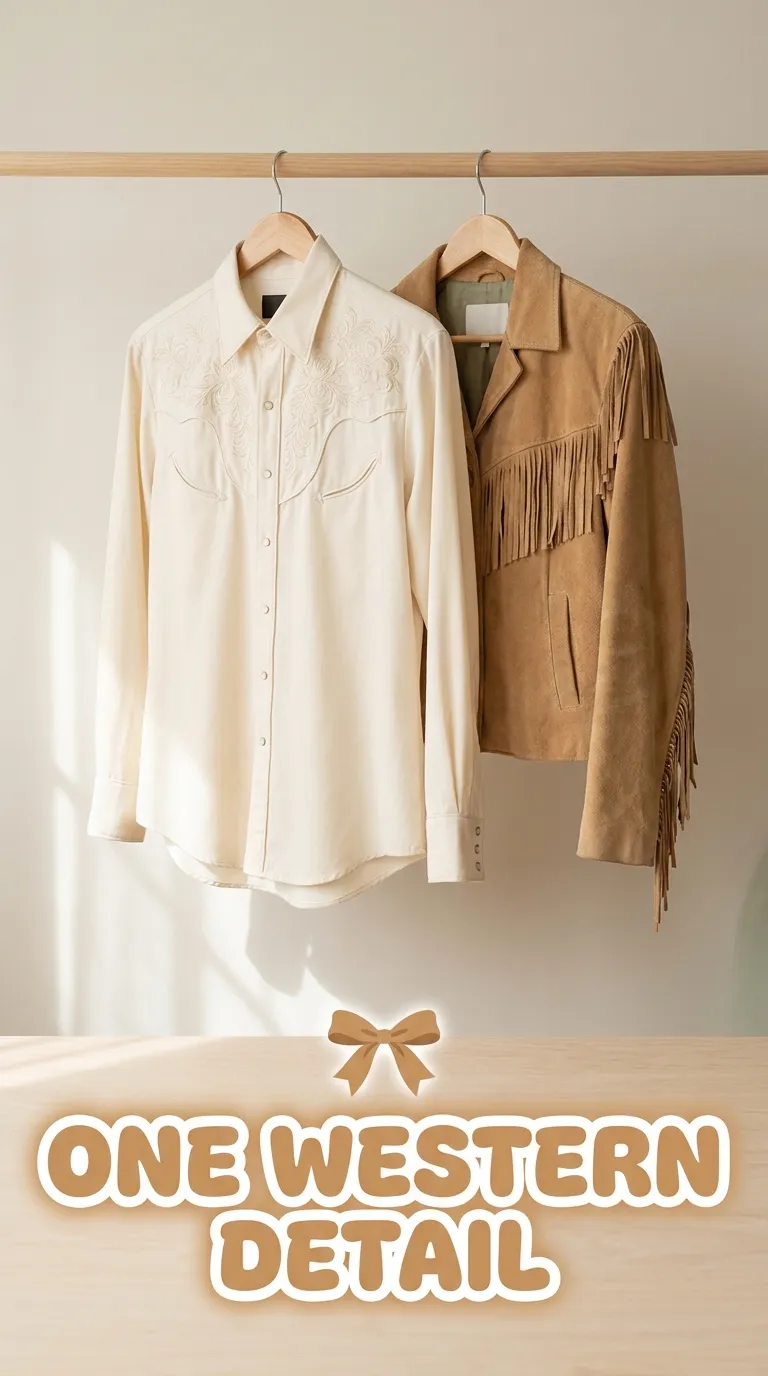
Fringe, embroidery, and yokes are what make a piece read as western. One of them at a time is enough.
Pair the detailed piece with plain ones. If the jacket has fringe, let the shirt be solid, and if the shirt has embroidery, keep the jacket simple.
How to Do It
- Pick the piece you love most: an embroidered shirt, a fringe jacket, or stitched boots.
- Build the rest of the outfit from plain pieces, such as solid denim, a simple top, and a plain belt.
- Keep your colors in one family so the detail stands out.
- Check the side and back view to make sure the detail looks balanced.
Why It Works
One statement gives the eye a place to land, so the outfit looks designed instead of stacked. Plain pieces around it make the detail look intentional, and you can rewear the statement piece with different bases.
What to Look For
- Short or medium fringe
- Tone-on-tone embroidery or one accent color
- Flat, neat stitching at the seams
- Soft suede or leather, with a check of the care label
Common Mistakes to Avoid
- Pairing a fringe jacket with an embroidered shirt
- Adding bold boots, belt, and bag at once
- Choosing fringe that catches on chair backs and bags
- Mixing several bold colors
Fringe and suede ask for a little upkeep, and they can mark in rain, so keep them for dry days.
7. Add Western Accessories One at a Time
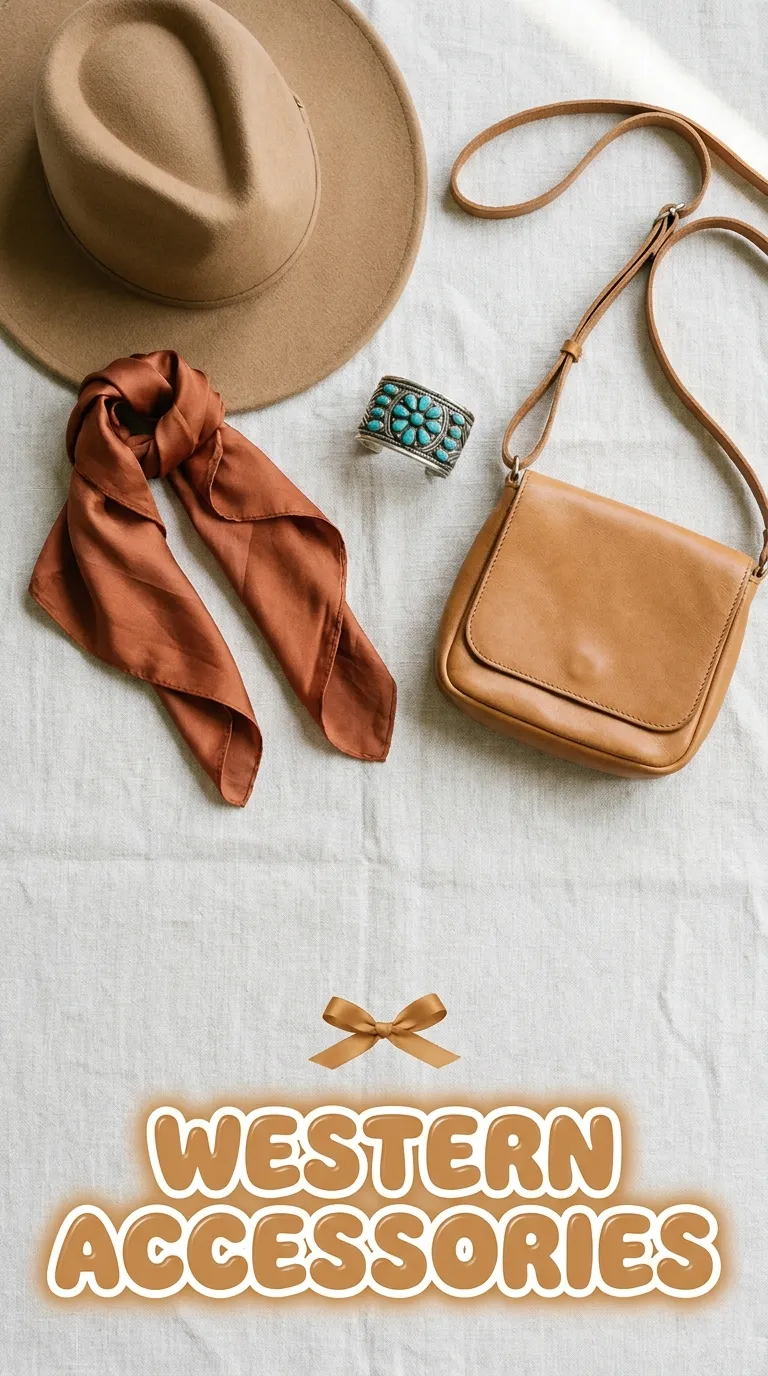
Accessories make an outfit read western without changing the clothes. Add one at a time and let each one have room.
Start with the piece that feels most like you, then add a second only if the first needs company.
How to Do It
- Choose one lead accessory: a hat, a bandana, turquoise jewelry, or a bag.
- Add a second only if it stays quiet, such as plain stud earrings.
- Look at the full outfit in a mirror and remove one item if anything competes.
- Check comfort: the hat brim should not block your view, and the bag strap should sit easily across your body.
Why It Works
One lead accessory adds personality at the face, wrist, or shoulder without crowding the outfit. Leaving the rest plain keeps the look easy to wear day after day.
What to Look For
Match the accessory to the outfit and the occasion.
| Accessory | Best For | How to Wear It |
|---|---|---|
| Felt hat | Fall outings, outdoor events | Sits just above your ears |
| Silk bandana | Casual shirts, ponytails | Knot at neck or on bag |
| Turquoise cuff | Plain tops, rolled sleeves | One cuff on one wrist |
| Leather crossbody | Walking, concerts | Strap sits at the hip |
Felt hats suit cooler weather, so choose straw for summer heat. A hat can also flatten your hair, so bring a small clip or brush if you plan to take it off.
Best For
- Concerts and festivals
- Fall fairs
- Weekend trips
8. Layer With a Vest or Jacket for Structure
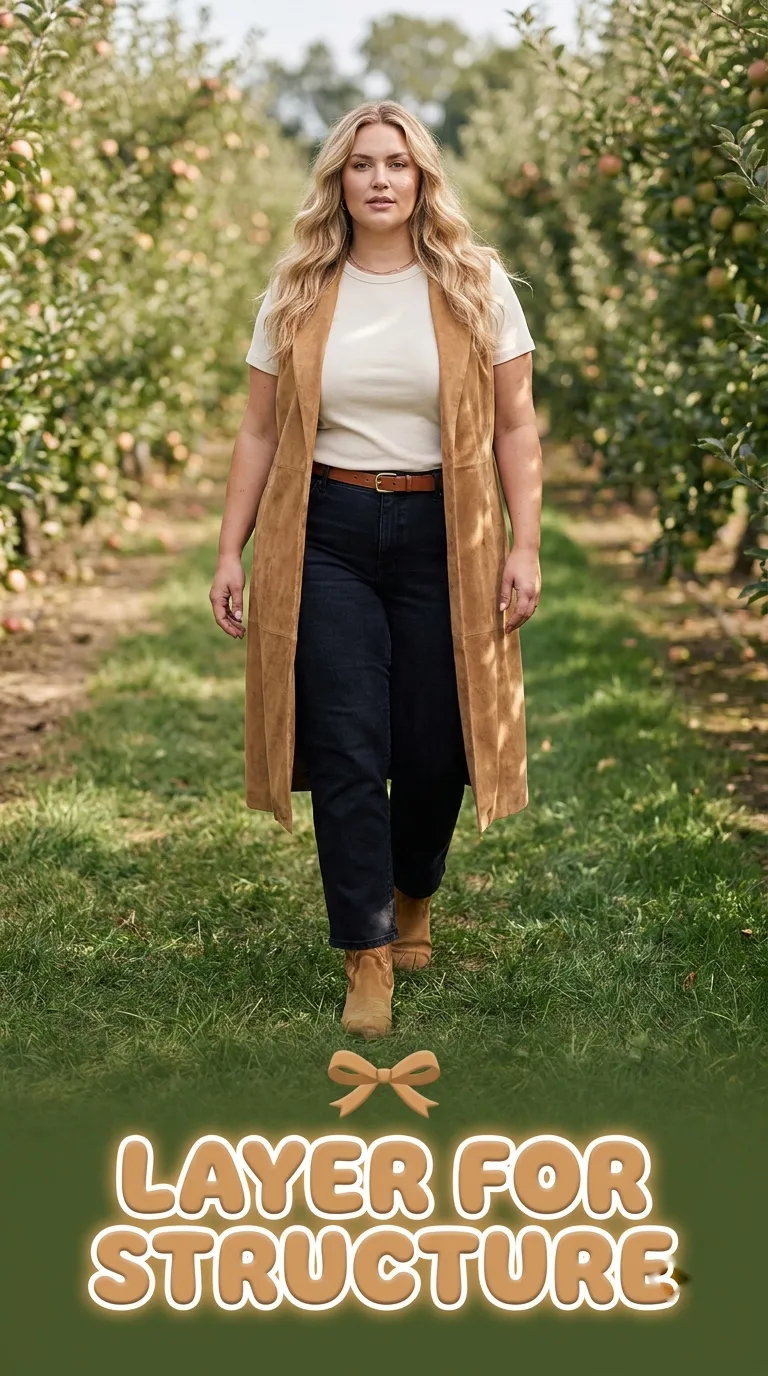
A vest or jacket gives the outfit structure at the shoulder and a finished edge. It is also the quickest way to make a simple tee and jeans look western.
Long vests, denim jackets, and soft suede jackets each work a little differently, so choose by the weather and by how much structure you want.
How to Do It
- Start with a fitted tee or a simple shirt in a plain color.
- Add a long vest that ends at the hip or just below, or a jacket that hits at the hip.
- Wear it open for a long vertical line, or fasten one button at the waist.
- Check that the shoulder seam sits at the edge of your shoulder, and reach forward to make sure the sleeves move freely.
Why It Works
An open layer creates a vertical line and adds structure at the shoulder, which frames the outfit from top to boots. A vest also gives you that structure on warmer days without sleeve bulk.
Common Mistakes to Avoid
- Buttoning a jacket that pulls across the bust or arms
- Layering a bulky jacket over a bulky top
- Skipping the shoulder seam check
- Choosing heavy suede for warm days
Suede vests run warm and do not love rain, and denim jackets need room to move over a top. Try the layer on with the exact top you plan to wear, and in hot climates choose a light denim or skip the layer.
Best For
- Fall fairs and orchards
- Cool evening concerts
- Travel days
A Simple Rule to Remember
Wear it open, with the shoulder seam at the edge of your shoulder.
Quick Western Looks Cheat Sheet
| Rule | Why It Works | Quick Fix |
|---|---|---|
| Start with denim that fits | Clean base for boots and belts | Test sitting and walking |
| Choose boots with room | Steady stride, clean hem | Try with your usual socks |
| Hem over the boot | Unbroken line to the ground | Hem while wearing the boots |
| Define the waist with a belt | Clear center, western detail | Match belt to boots |
| Half-tuck the shirt | Shows the waist, stays comfortable | Tuck the front center only |
| Keep one western statement | Gives the eye one focus | Keep everything else plain |
| Add one lead accessory | Adds character without clutter | Remove one item before leaving |
| Layer open for structure | Adds shoulder and a long line | Check the shoulder seam |
The Principles Behind These Rules
Balance Structure With Softness
Western pieces tend to be structured: a yoke shirt, a stiff boot, a leather belt. Soft pieces, like stretch denim and a drapey tee, balance them so the outfit stays comfortable.
When an outfit feels too stiff, swap one structured piece for a softer one. When it feels shapeless, add one structured piece, such as a belt or a vest.
One Western Statement Per Outfit
Every step above comes back to the same idea: one detail leads and the rest supports. The lead can be fringe, embroidery, a hat, or even a strong boot.
Outfits with a single focus look intentional, and they are easier to rewear because the plain pieces change while the statement stays.
Match Fabric Weight to the Season
Suede, felt, and heavier denim suit fall and winter. Chambray, lightweight cotton, and straw suit warm weather.
Advice here depends on climate, so adjust to where you live. If your summers run hot, choose the lighter version of each piece rather than skipping western style altogether.
Comfort Comes From Fit and Cushioning
A western outfit only works if you want to keep it on. Boots with room, denim with a little give, and a belt that rests instead of presses are the details that make the day easier.
Try everything on together, and walk, sit, and reach before you decide.
Common Mistakes Worth Skipping
Wearing Every Western Piece at Once
Hat, fringe, embroidery, boots, belt, and bandana together read as a costume. Pick one lead and let the others stay plain.
Choosing Stiff Denim With No Give
Rigid denim can look sharp, but it often feels restrictive when you sit or walk in boots. Choose a fabric with a little stretch and good recovery.
Skipping a Test Walk in New Boots
Wear new boots around your home on a hard floor before the event. A few short wears help leather soften and show you whether the fit works for a full day.
Final Tips for Success
Build Western Looks for Plus Size Women Over 40 Around Boots and Denim
Buy these two first. Once the boots and jeans fit, every other piece in this guide has a solid base to sit on.
Try Pieces on Together Before Buying
Bring your boots to the jeans fitting, and wear the shirt you plan to tuck. A piece that looks great alone can behave differently once the belt and boots join it.
Keep Colors in One Family
Browns, tans, denim blue, and cream mix easily. Add one accent, such as turquoise or a deep rust, and the outfit looks pulled together.
Western Basics Worth Owning
- Dark stretch jeans in bootcut or straight leg
- Comfortable mid-calf or ankle boots
- Cotton or chambray western shirt
- Leather belt with a small buckle
- Soft suede or denim jacket
- One turquoise accessory
Conclusion
Western looks for plus size women over 40 come down to a few decisions made well: denim that fits, boots you can walk in, a belt that marks the waist, and one detail that leads.
None of it needs a costume. Each piece should earn its place by fitting well and feeling good to wear.
Start with one step this week. Try your jeans over your boots, or half-tuck a shirt and see how the shape changes.
Save this guide for the next time an invitation says country-style, and come back to the cheat sheet before you shop.
Comments
✎ Write a commentCommunity Guidelines
We love hearing what you think. Please keep comments about the article itself, stay kind and helpful to other readers, and leave out personal details or links. Every comment is checked before it appears.