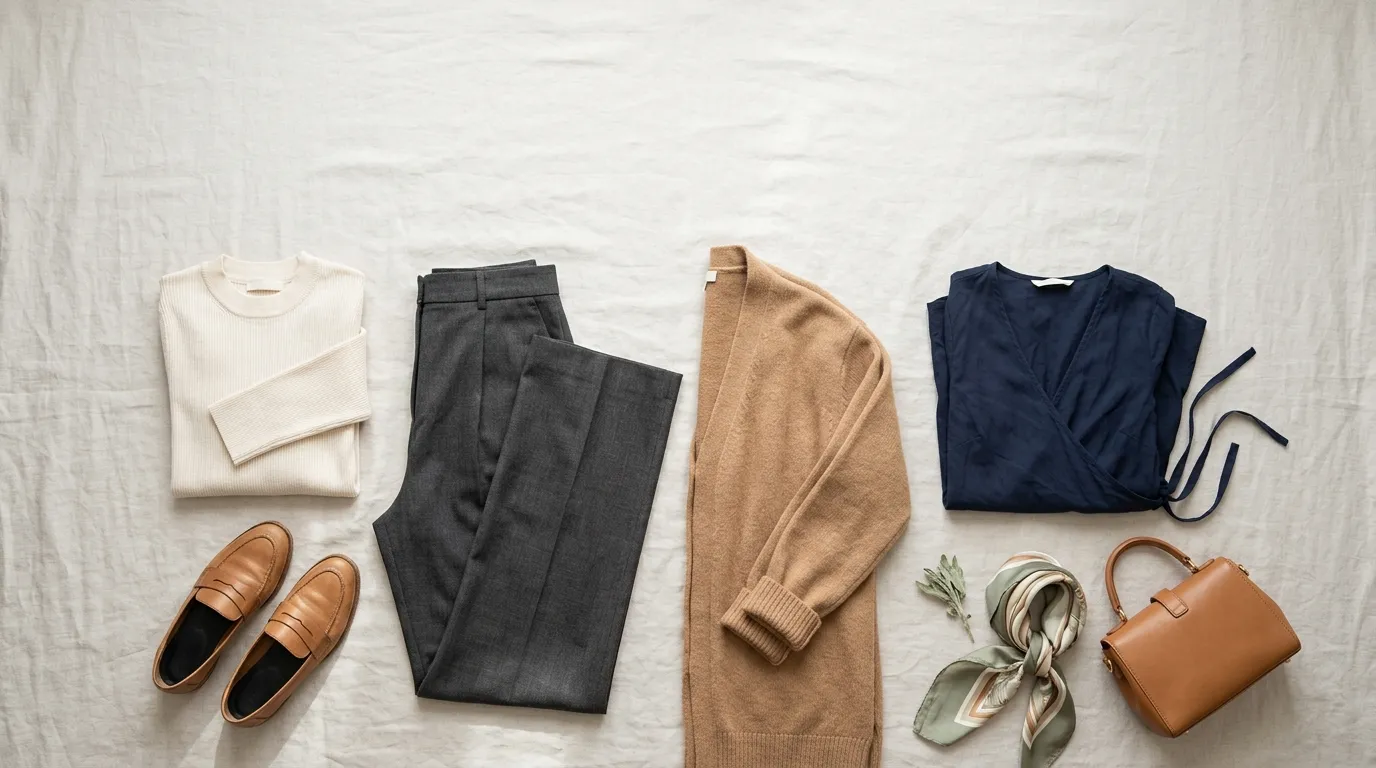

Easy Outfit Formulas for Plus Size Women Over 40 — It's a weekday morning, the closet is full, and nothing feels quite right. If you've ever stood there rethinking the same three pieces, outfit formulas for plus size women over 40 are the shortcut worth learning.
A formula isn't a uniform. It's a short list of pieces that work together, so you decide the structure once and then swap in whatever color, fabric, or mood you want that day.
I love formulas because they save your energy for the things that matter. Here are six I come back to again and again, with the reason each one works and what it asks of you.
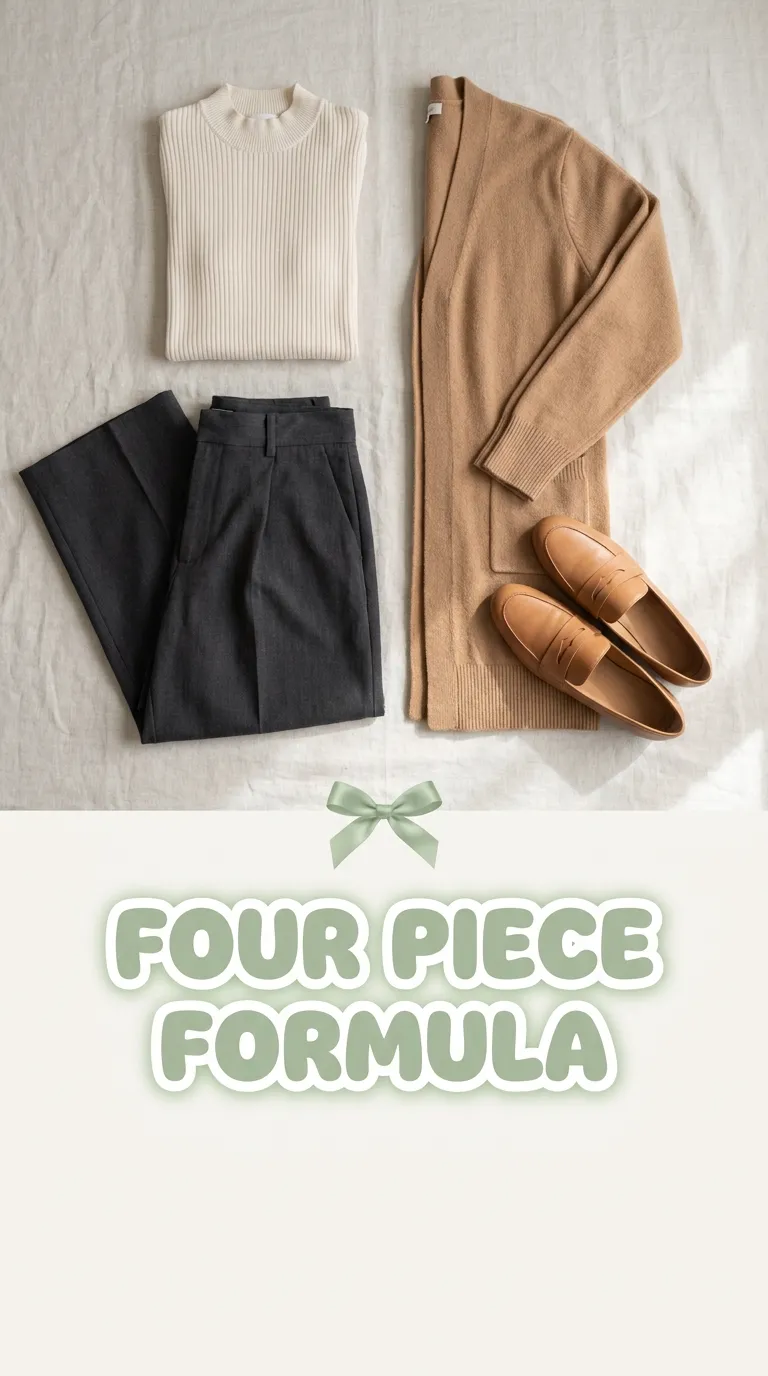
1. Build Every Outfit From Four Pieces
Nearly every outfit that looks pulled together has the same skeleton: a top, a bottom, a third piece, and shoes. Once you can see that frame, both shopping and getting dressed get simpler.
The third piece is the one most people skip. It's the open jacket, the long cardigan, or the structured vest that adds length and shape. It takes a little extra effort, but it's what turns a tee and pants into an outfit.
How to Do It
- Choose a top that fits well through the shoulders and bust
- Pick a bottom with a comfortable waistband and a clean leg line
- Add a third piece that is open, long, or structured
- Finish with shoes you can walk in all day
Why It Works
A fixed frame gives every piece a job. The top sets the neckline, the bottom sets the leg line, the third piece adds length and structure, and the shoes close the line at the bottom.
It also makes problems easy to solve. When an outfit feels off, you know which one of the four to swap instead of starting over.
The trade-off is the extra layer. In hot weather, choose something light, like linen or a thin knit, or skip the third piece and let a structured top do that work.
What to Look For
Use this table as a quick check when you shop or get dressed.
| Piece | What It Does | What to Look For |
|---|---|---|
| Top | Sets the neckline and shoulder line | Seams that sit at the shoulder |
| Bottom | Creates the leg line | Waistband that stays put when seated |
| Third piece | Adds length and structure | Drape that opens and closes easily |
| Shoes | Finishes the line | Cushioning and a stable heel |
Best For
- Busy weekday mornings
- Building a capsule wardrobe
- Packing for a long weekend
- Shopping with a clear list
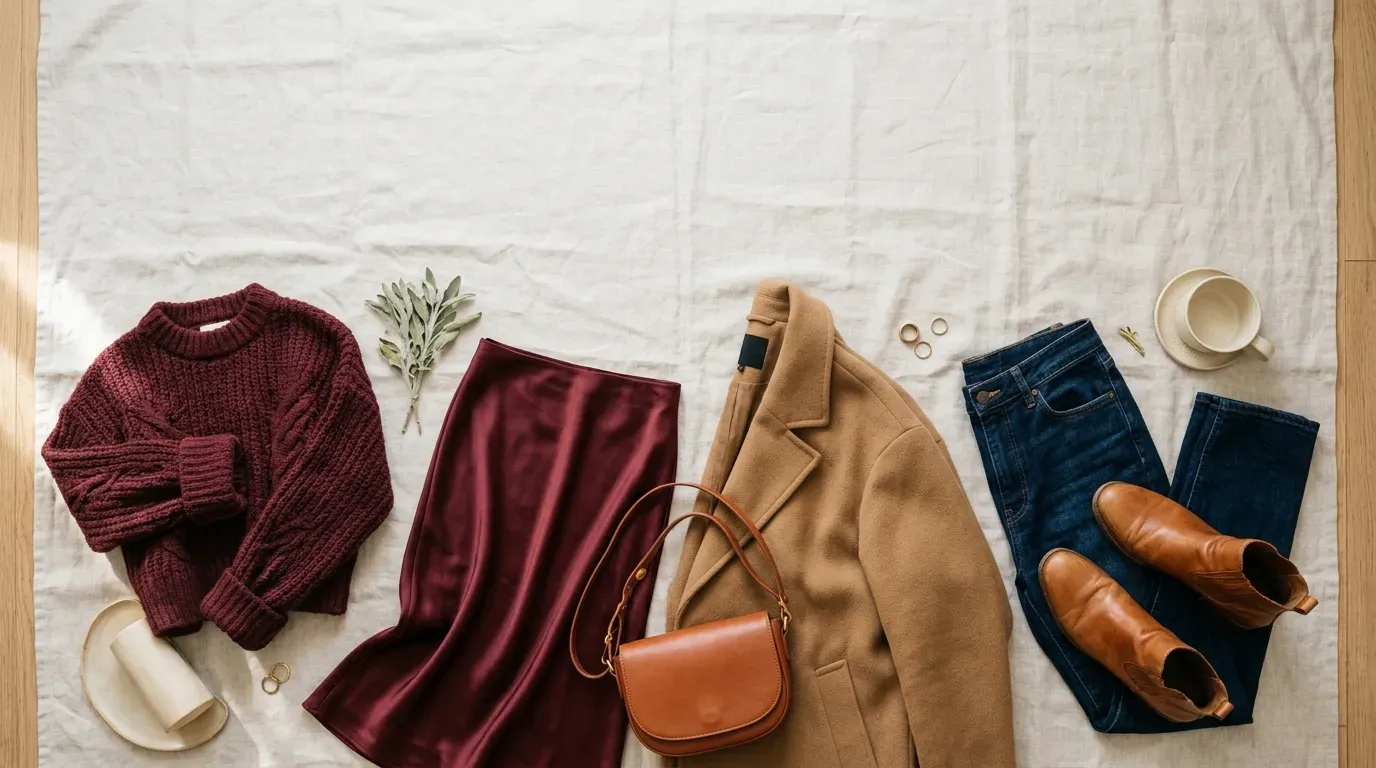
2. Wear One Color Head to Toe, Then Add a Long Layer
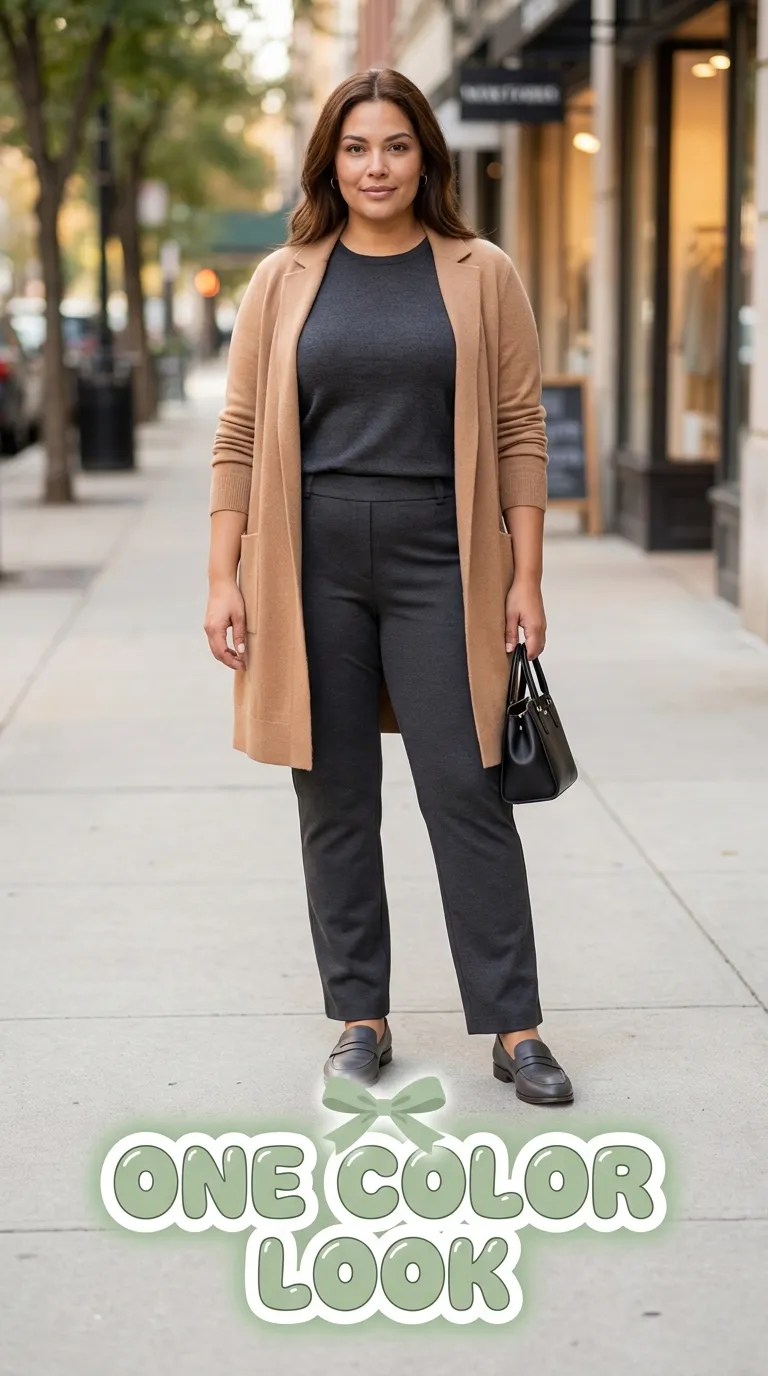
A one-color base creates a single, unbroken line from neckline to shoes. A long layer in a second shade then adds depth on top of it. It's one of the easiest formulas to repeat, because the color decisions are made before you start.
The color doesn't have to be black. Navy, chocolate brown, olive, and deep burgundy all work well, and two shades of the same color add interest without any extra effort.
How to Do It
- Pick a top and pants in the same color family, or in two close shades
- Choose fabrics with some drape, such as ponte, soft knit, or crepe
- Add a longline cardigan, duster, or open blazer that falls at mid-thigh or lower
- Wear the layer open so the base color shows down the center
- Finish with shoes in the same tone or a soft neutral
Why It Works
The open layer frames the column of color underneath, which creates a long vertical line from the neckline to the hem. Because the base is one color, the eye reads the outfit as a whole instead of as separate pieces.
The trade-off is that one-color outfits show every wrinkle, lint speck, and pill. Choose fabrics that hold their shape, and keep a steamer or lint roller close.
Common Mistakes to Avoid
- Two blacks that don't match
- Layers that stop at an awkward point
- Stiff or clingy fabrics that fight the drape
Choose pieces that are either truly identical in color or clearly different shades. Pick a layer with a hem that obviously sits at mid-thigh or lower, and check the fit through the shoulders, because a boxy layer can overwhelm everything underneath it.
Best For
- Office days
- Travel days
- Casual dinners
- Cooler weather
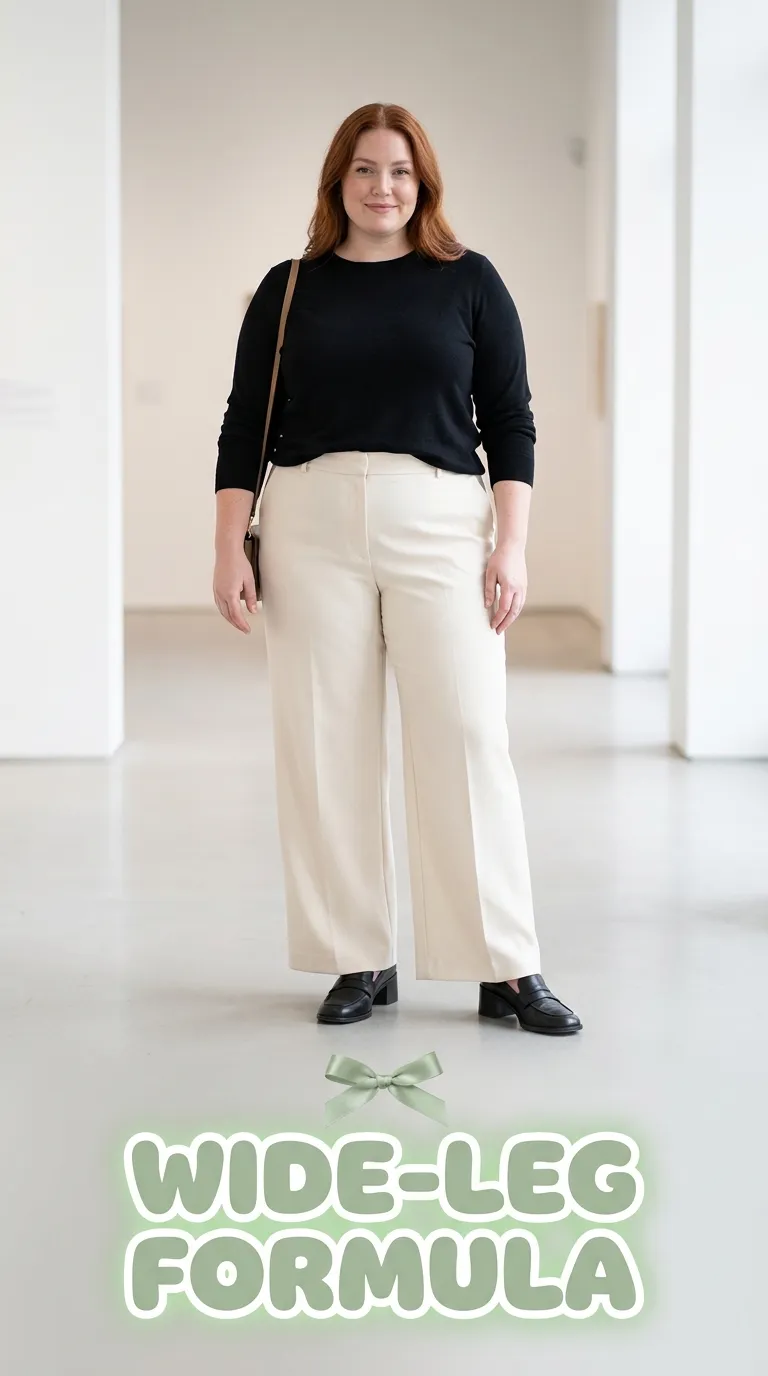
3. Pair a Fitted Top With Wide-Leg Pants
Wide-leg pants bring volume to the bottom half of an outfit, so the top works best when it balances that volume with a closer fit through the torso. "Fitted" here means close to the body without clinging, not tight.
This is a polished formula that feels as comfortable as leggings when the waistband and fabric are right.
How to Do It
- Choose wide-leg pants with a smooth waistband and fabric that falls straight from the hip
- Pick a top that skims the body, such as a fine knit, a bodysuit, or a stretch cotton tee
- Tuck the front or half-tuck to define the waist where the pants begin
- Check the hem with your shoes on, so it skims the top of the shoe without dragging
- Add a shoe with a little lift, like a 1½ to 2 inch block heel, if that's comfortable for you
Why It Works
The contrast in volume gives the outfit shape: a closer top above, a fuller leg below. Tucking marks the waist, and the pants' drape keeps the whole line moving.
The trade-off is the hem. Wide-leg pants almost always need to be tried with the real shoes you plan to wear, and a quick hem adjustment is often worth the cost. Very thin fabric can cling, so look for something with weight.
What to Look For
- Waistband that stays flat when seated
- Fabric with weight and drape
- Pockets that lie flat
- Top with stretch and stable seams
- Hem length tested with real shoes
Best For
- Office days
- Brunch with friends
- Gallery or shopping days
- Airport travel
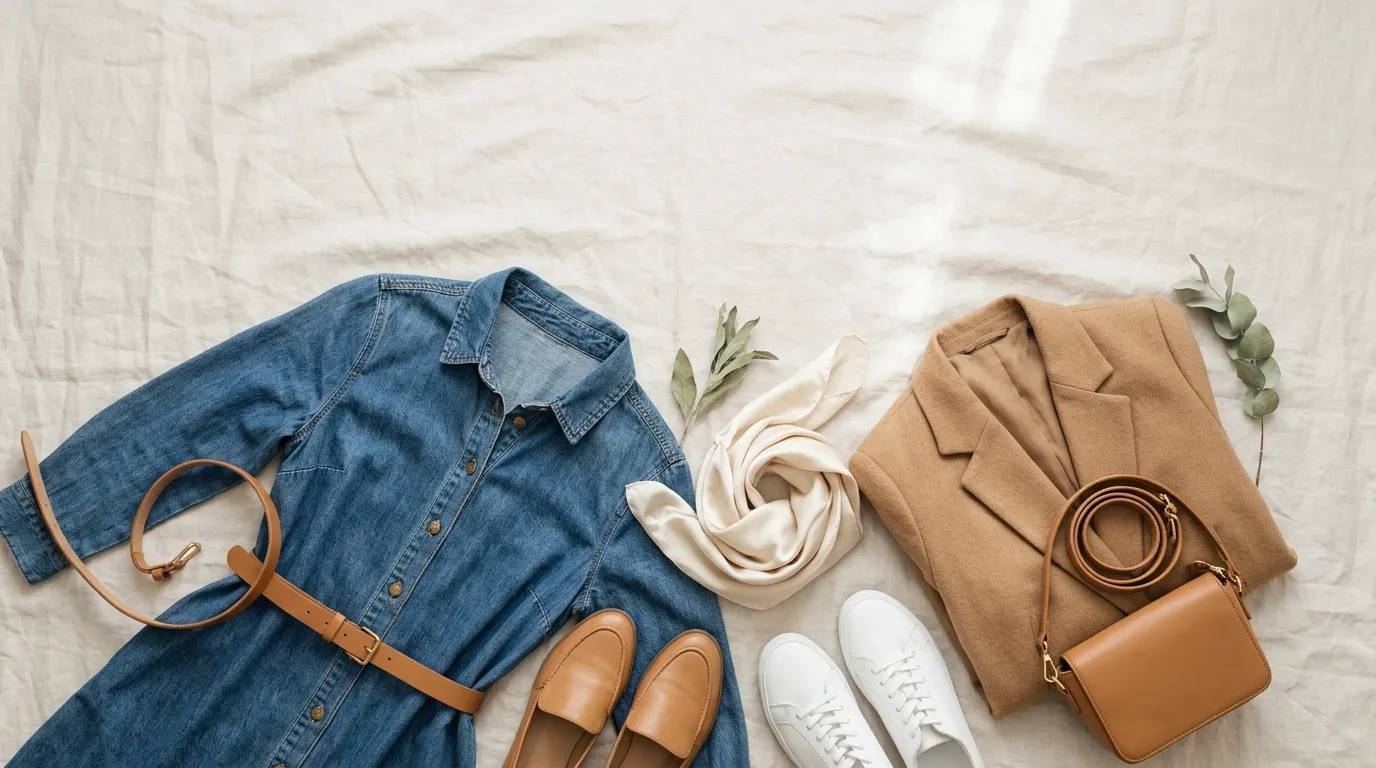
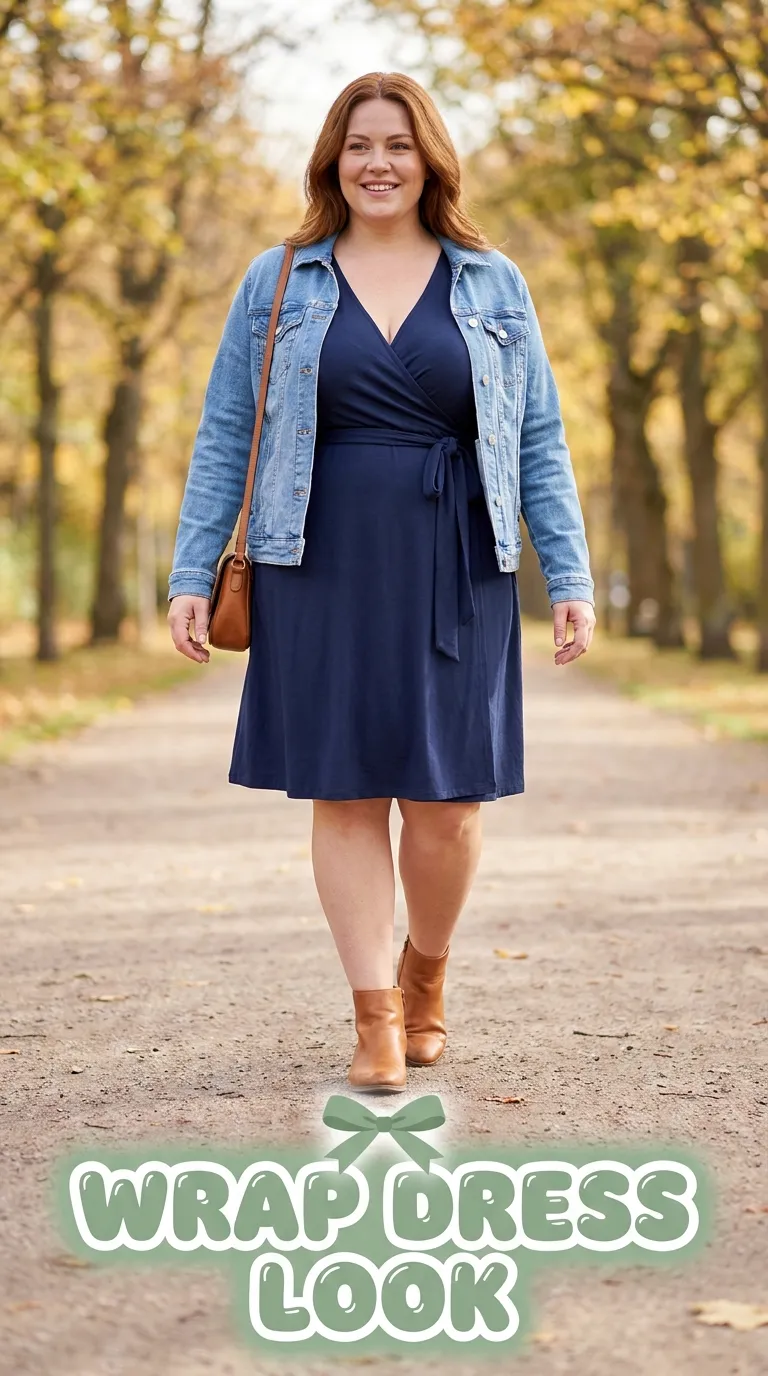
4. Let a Wrap Dress Be the Whole Formula
A wrap dress is a formula in one piece. The top, the waist, and the skirt are already connected, so most of the work is done before you add a layer or shoes.
The tie sits where you choose, and the neckline opens into a V. That makes it one of the most adjustable dresses you can own, and one of the simplest to dress up or down.
How to Do It
- Choose a wrap dress in a fabric with drape, such as jersey or crepe
- Check that the wrap stays closed at the bust when you sit, reach, and walk
- Look for a hem that falls between the knee and mid-calf
- Add a third piece, like a denim jacket, a blazer, or a long open cardigan
- Finish with ankle boots, flats, or low block heels
Why It Works
The wrap tie lets you set the waist where it feels best, and the V-neckline creates a vertical line down the center. Because it's one piece, there are fewer decisions, and the outfit looks intentional even on a busy morning.
The trade-off is security. Wraps can gape or shift, and thin fabric can cling. A camisole underneath adds coverage, and a few small stitches or a hidden snap at the neckline can keep everything in place. Check the care label, because jersey and crepe often prefer gentle washing.
Common Mistakes to Avoid
- Wraps that gape at the bust
- Hems that stop at an awkward point on the leg
- Layers that bunch at the waist tie
Do the sit-and-reach test in the fitting room before you buy. Choose a layer that ends above the tie, like a cropped jacket, or one that hangs open and well below it, like a long cardigan.
Best For
- Work lunches
- Spring and fall events
- Weekend errands
- Travel days
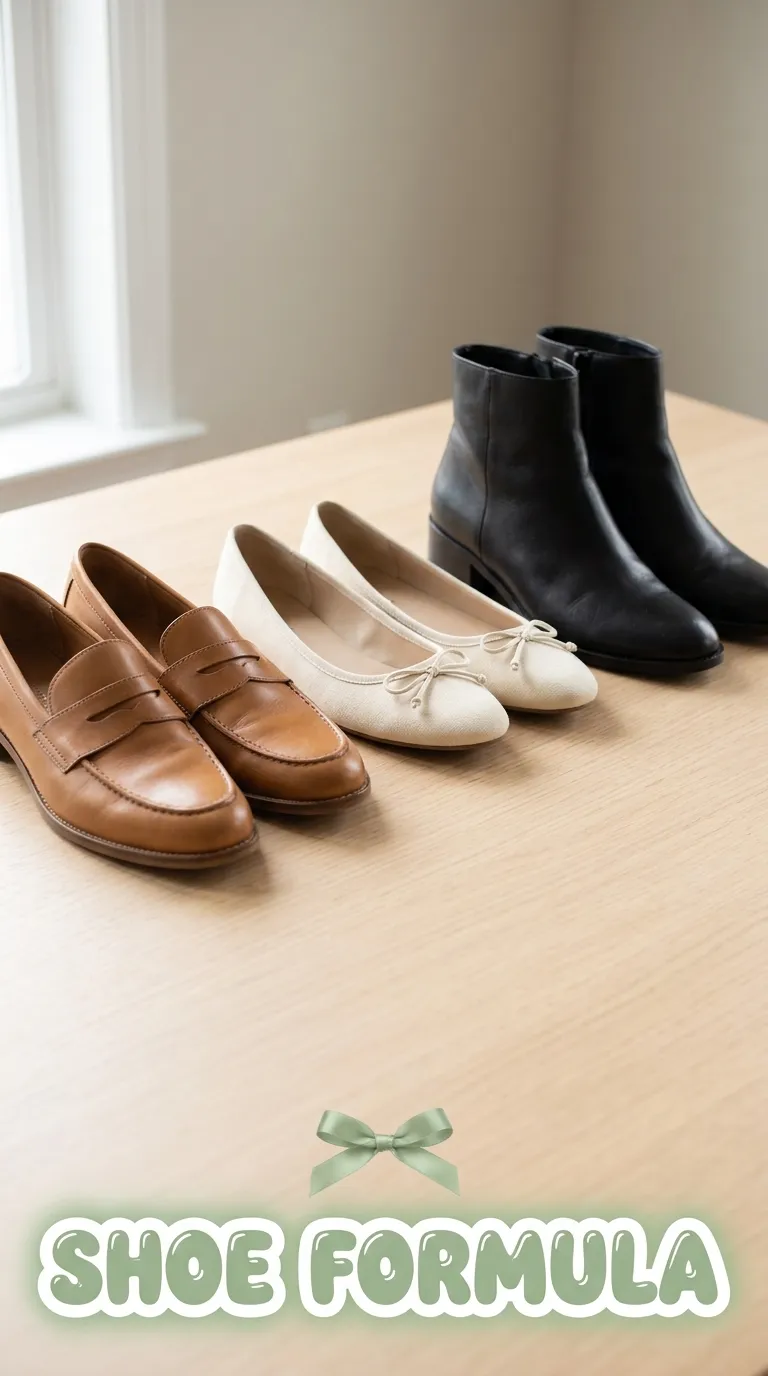
5. Match the Shoe to the Hem
Shoes finish the line of an outfit, and the same pants can look completely different depending on what's underneath. Match the shoe to where the hem ends, and the whole outfit looks planned.
This is the formula people forget, and it's also the one that makes the other five look finished.
How to Do It
- Notice where the hem ends: above the ankle, at the ankle, at the floor, or mid-calf
- Choose a shoe that leaves a clean gap or a clean overlap, not an awkward in-between
- Match the weight of the shoe to the weight of the fabric
- Walk around at home for a few minutes before you commit to a pair
Why It Works
The shoe marks the visual end of the outfit. A clear gap at the ankle or a hem that skims the shoe reads as deliberate, while a hem that stops halfway looks accidental.
Weight matters too. A heavy fabric like denim or ponte looks balanced with a sturdier shoe, while a light dress sits better with a lighter one.
The trade-off is that no single shoe works with every hem, so you may need three pairs to cover your week. For comfort, look for cushioning, a stable heel, and room in the toe box, and check with your doctor or a podiatrist if you have foot pain.
What to Look For
Use this table as a quick guide to pairing.
| Hem or Leg Line | Shoe That Works | Why |
|---|---|---|
| Cropped pants | Loafers or ballet flats | Shows a clean line at the ankle |
| Ankle-length straight leg | Ankle boots or sneakers | Hem meets the shoe neatly |
| Full-length wide leg | Block heel or platform | Keeps the hem off the floor |
| Midi dress or skirt | Ankle boots or low heels | Gives the hem a clear endpoint |
Best For
- Closet planning
- Shopping trips
- Packing lists
- Work-to-dinner changes
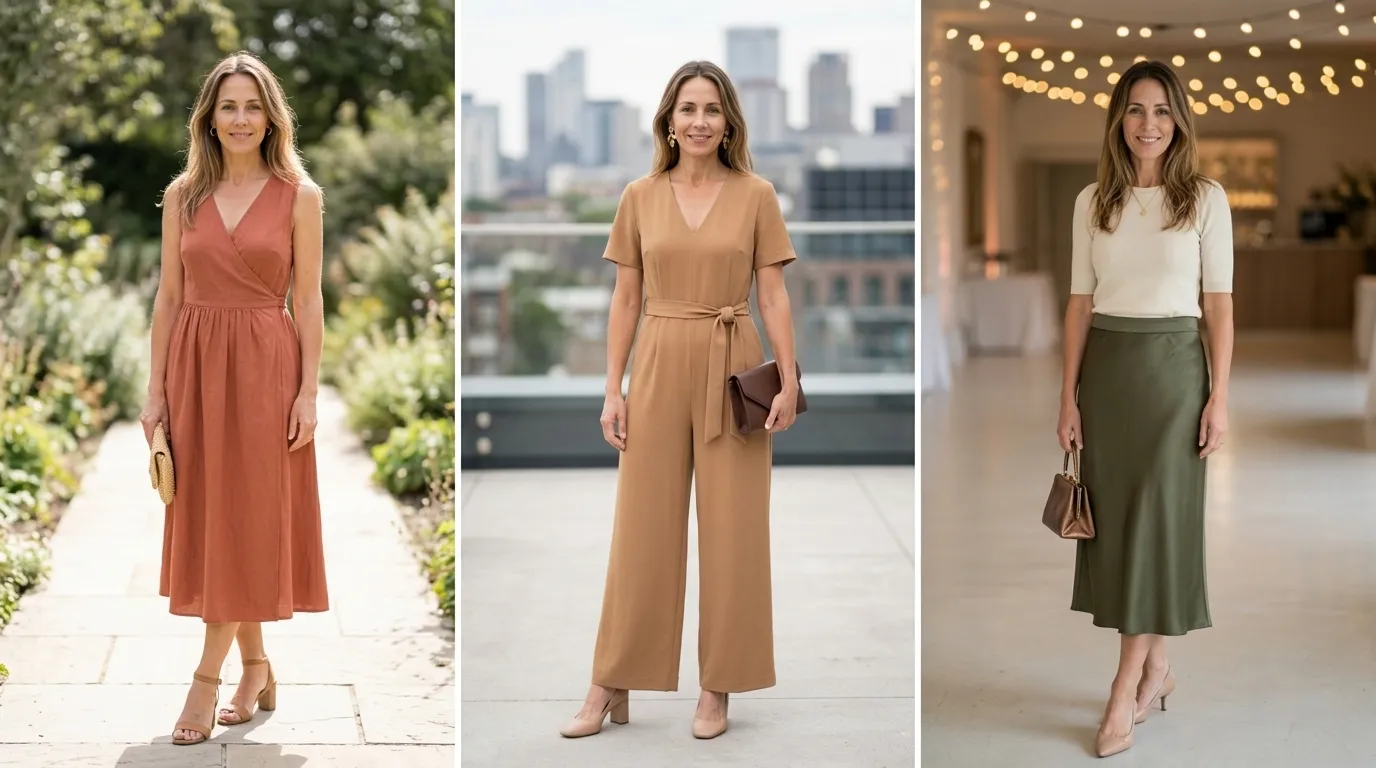
6. Finish With One Accessory That Earns Its Place
The last piece of the formula is one accessory with a purpose: a scarf, a belt, earrings, or a structured bag. The idea is one focal point, with everything else kept quiet.
It's the easiest way to make a repeated outfit feel new. The same top and pants look different with a silk scarf on Monday and a gold chain on Thursday.
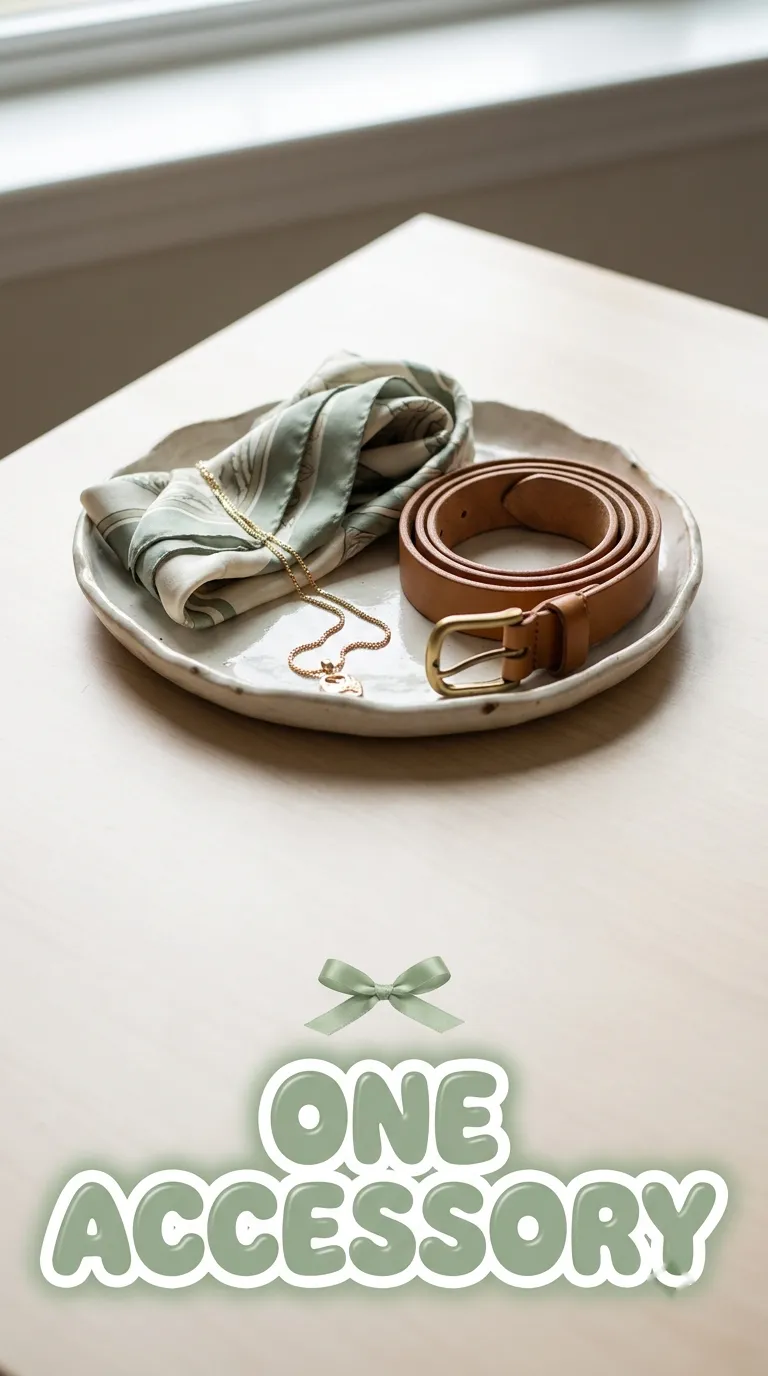
How to Do It
- Look at the outfit and decide where you want the eye to land
- Choose one accessory for that spot: a scarf at the neckline, a belt at the waist, or earrings near the face
- Keep every other accessory small and simple
- Match your metal tones and your leathers
Why It Works
One focal point gives the eye a place to rest. When several accessories compete, none of them gets noticed, and the outfit feels busy instead of finished.
It also adds personality at a very low cost. The trade-off is restraint: it may feel plain at first, but you can always change the accessory instead of the whole outfit.
Common Mistakes to Avoid
- Several statement pieces at once
- Scarves that bunch or slip all day
- Belts that dig in or won't stay put
Choose a scarf in a lightweight fabric that stays where you tie it. Pick belts with a little give, and check how they feel when you sit down.
Best For
- Repeating an outfit in the same week
- Work meetings
- Dinner after work
- Travel outfits that need a refresh
Quick Outfit Formulas Cheat Sheet
| Formula | Key Pieces | Best For |
|---|---|---|
| Four-piece frame | Top, bottom, third piece, shoes | Everyday dressing |
| One color plus long layer | Tonal base, longline cardigan | Office and travel |
| Fitted top, wide-leg pants | Knit top, wide-leg trousers | Brunch and work |
| Wrap dress formula | Wrap dress, jacket, boots | Events and errands |
| Shoe matches hem | Loafers, flats, boots, block heels | Closet planning |
| One accessory | Scarf, belt, earrings, or bag | Repeating outfits |
The Principles Behind These Rules
Fit First, Formula Second
A formula only works when the pieces fit. Check the shoulder seams, the bust, the armholes, and the waistband before you worry about the combination. Buy for the body you have today, and let a tailor handle the rest.
Repeat One Silhouette, Change the Details
Find the shape you reach for most, such as a fitted top with a wide-leg pant, and repeat it. Change the color, the fabric, and the accessory, and the outfit feels new without any new thinking. The trade-off is that you need a little variety in texture and color to keep it from feeling flat.
Fabric Drape and Comfort Matter
Drape does more than any trend. Ponte, crepe, and jersey fall smoothly and move with you, while stiff or clingy fabrics fight the outline. Check the care label, and always run the sit, reach, and walk test before you commit.
Common Mistakes Worth Skipping
Buying for the Size You Think You Should Be
Clothes that pull or gap don't do their job. Choose the size that fits comfortably now, and tailor the waist, hem, or sleeve if you need to.
Skipping Tailoring on Pieces You Love
A quick hem or waist adjustment can turn a good piece into one you reach for all the time. It's often the most budget-friendly upgrade in your closet.
Wearing Every Piece at Full Volume
A wide-leg pant, an oversized top, and a long layer can add up to a lot of fabric at once. Let one piece be the statement, and keep another one closer to the body so the outfit has a clear shape.
Final Tips for Success
Start With Two Outfit Formulas, Not Six
Pick the two that fit your week best. Buy or alter whatever's missing, then wear them for a month before you add another.
Keep a Short List of Wardrobe Basics
- Fitted knit tops in two neutral colors
- Wide-leg or straight pants with a comfortable waistband
- Longline cardigan or open blazer
- Wrap dress in a drapey fabric
- Comfortable loafers or ankle boots
- One scarf or belt you love
Check Comfort Before You Leave the House
Sit down, reach forward, and take a few steps. If anything pulls, slips, or pinches, fix it before you go, because an outfit you can't relax in won't last the day.
Conclusion
Outfit formulas for plus size women over 40 aren't about following rules. They're about deciding the structure once so you have more time to enjoy the details.
Start with the four-piece frame, pick the formula that suits your week, and let fit and comfort lead every choice. Over time, the pieces you wear most will start to feel like a system that works for you.
Save this guide for the next time your closet feels full and nothing feels right.
Comments
✎ Write a commentCommunity Guidelines
We love hearing what you think. Please keep comments about the article itself, stay kind and helpful to other readers, and leave out personal details or links. Every comment is checked before it appears.