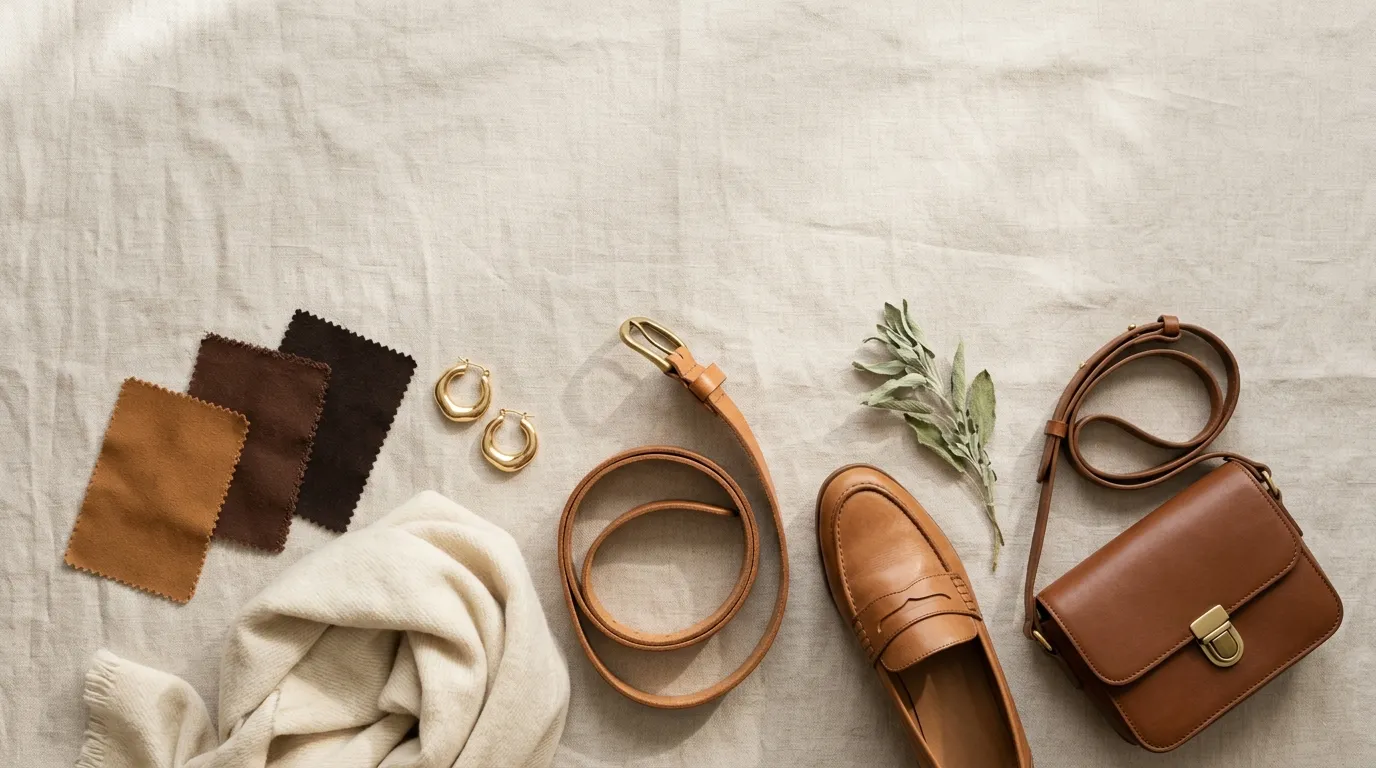

Brown Dress Styling Ideas for Women Over 40 — It's a crisp Thursday morning, and the brown dress you bought a few weeks ago is still hanging by the door. You love the color, but every time you reach for it, you wonder what goes with it and how to keep it from looking flat. If you want brown dress styling ideas that feel polished and easy to repeat, you're in the right place.
What you need isn't a new wardrobe. It's a handful of clear decisions: the right shade, a fit you can move in, colors that sit well beside brown, and shoes, layers, and finishing touches that match your day.
I've organized this guide into six steps you can follow in order or pick from as you need them. Take what suits your closet and leave the rest.
1. Start With the Right Shade of Brown
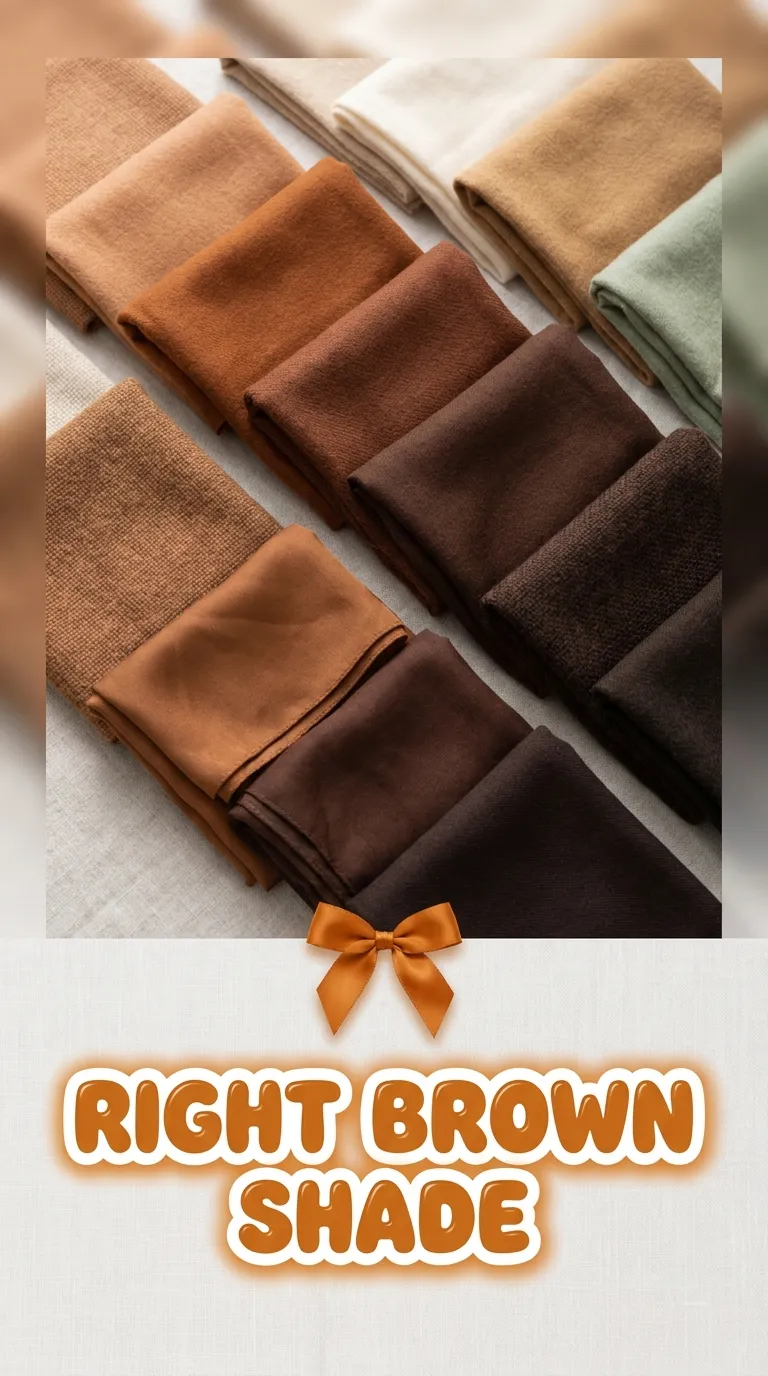
Brown isn't one color. Chocolate, caramel, rust, and espresso each sit differently next to your skin, and the shade is often what makes a dress look rich or look muddy.
If you already own the dress, this step tells you what to wear near your face. If you're still shopping, it helps you choose before you buy.
How to Do It
- Hold the dress, or a swatch of the fabric, near your face in natural daylight.
- Notice whether your skin looks brighter or flatter next to the color.
- Check the neckline area, where the color meets your skin, for a clear contrast.
- Try a scarf or top layer in one of the colors below to see how the shade responds.
Why It Works
The color closest to your face either adds warmth and brightness or takes it away. Store lighting can change how a brown reads, so daylight gives the truest answer.
What to Look For
Use this table as a starting point, not a rule, since undertones overlap and personal taste matters most.
| Undertone | Brown Shades | Colors to Test First |
|---|---|---|
| Warm | Caramel, cinnamon, rust | Cream, olive, mustard |
| Cool | Espresso, mocha, taupe-brown | Ivory, navy, dusty rose |
| Neutral | Chocolate, walnut, chestnut | Camel, soft white, forest green |
If you can't tell your undertone, test two shades side by side and keep the one that feels more comfortable. Very dark browns can read close to black, so look for texture, like a knit or satin sheen, to keep them from going flat.
2. Choose a Silhouette and Hem That Feel Comfortable
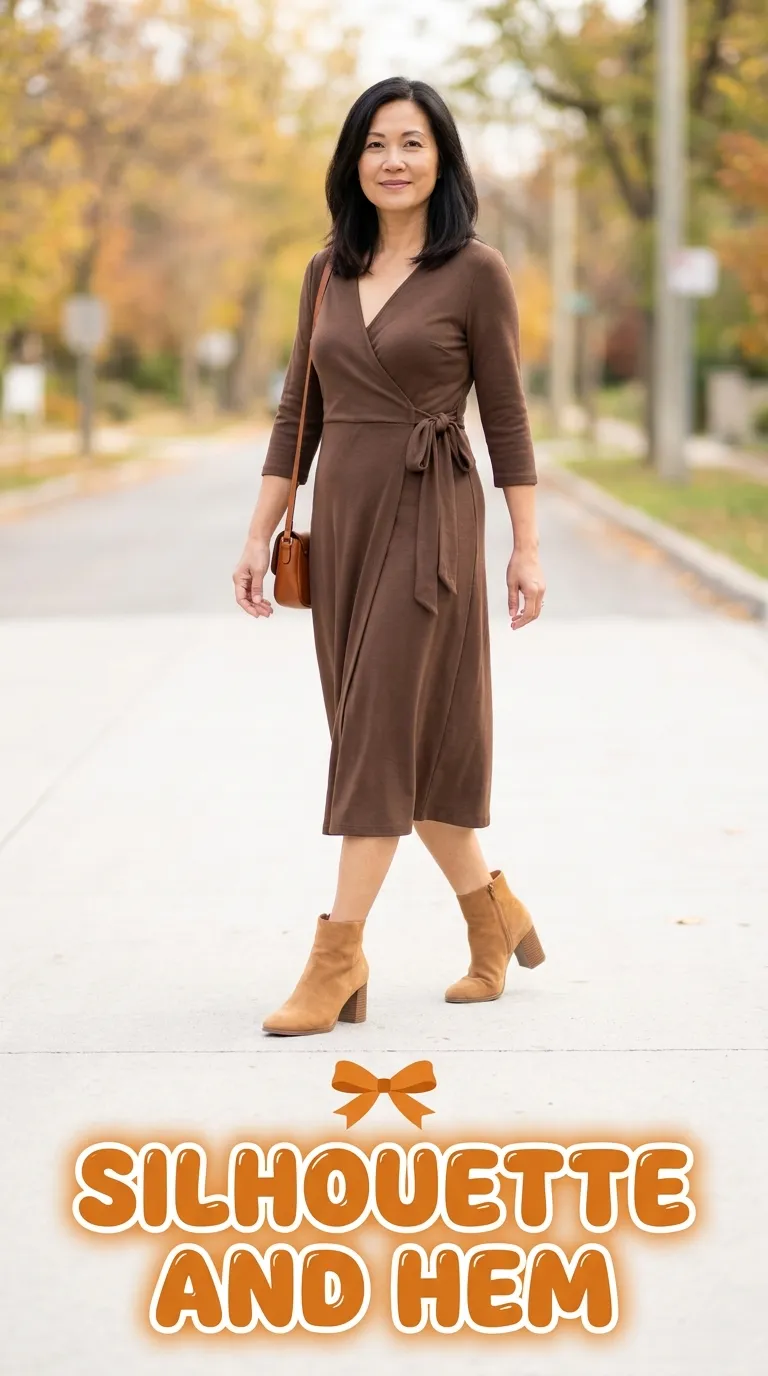
The best brown dress is the one you forget you're wearing. Wrap, A-line, shirtdress, sheath, and tiered cuts each move differently, and the hem length decides which shoes and layers will work.
Because brown is a quiet color, the cut does a lot of the talking. A clear shape is what makes a simple dress look intentional.
How to Do It
- Try the dress on and sit, reach, and walk before you decide.
- Choose the waist you prefer: defined (wrap or belted) or relaxed (shirtdress or shift).
- Pick a hem you can pair with the shoes you wear most, such as mid-calf for boots and flats or just below the knee for heels.
- Check the sleeves for ease when you lift your arms.
Why It Works
A defined waist creates a clear line through the middle, while a relaxed cut gives you room to move. A hem that ends at one clean point, either just below the knee or at mid-calf, keeps the whole outfit looking balanced.
What to Look For
This table matches common cuts to the days they suit best.
| Style | Best For | Hem Notes |
|---|---|---|
| Wrap | Defined waist, easy movement | Midi, ends mid-calf |
| Shirtdress | Casual days, work | Knee to midi |
| A-line | Movement, boots | Just below the knee |
| Sheath | Polished events | At or below the knee |
| Tiered | Relaxed weekends | Midi to maxi |
Common Mistakes to Avoid
- A hem that ends right at the top of a boot shaft
- Fabric that clings or rides up when you sit
- Sleeves that pull across the back when you reach
- Skipping the sit-and-walk test in the fitting room
3. Pair Brown With Colors That Make It Look Rich
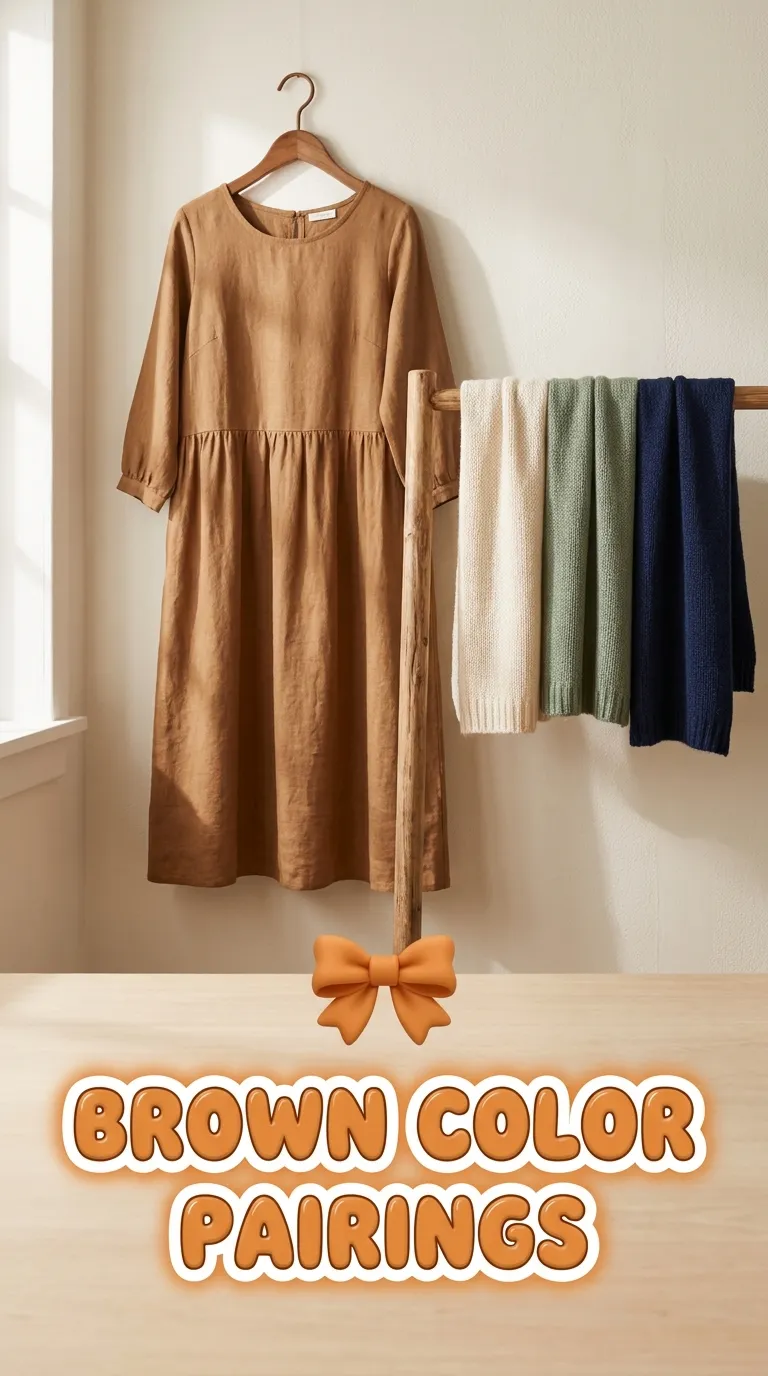
Brown is a neutral, so it pairs with more colors than most people expect. The trick is contrast and repetition: one lighter color to lift it, and one accent that shows up twice.
When a scarf and a pair of earrings echo the same color, the outfit looks planned rather than pieced together.
How to Do It
- Choose a light base neutral, such as cream, ivory, or soft white, for a layer or accessory.
- Pick one accent color: olive, navy, rust, dusty rose, or mustard.
- Repeat that accent once in a smaller piece, like earrings, a scarf, or a bag.
- Keep your metals and bag in one family so the palette stays calm.
Why It Works
A light neutral separates the brown from the rest of the outfit, so it doesn't blend into one dark block. Repeating a single accent gives the eye a path to follow, and a limited palette reads as intentional.
Best For
- Weekday work looks with a cream blazer
- Weekend errands with an olive jacket
- Dinners out with a dusty rose scarf
- Fall photos with a rust or mustard accent
Black can work with brown, but next to a dark shade it often looks heavy, so test it in daylight before committing.
4. Match Your Shoes to the Occasion
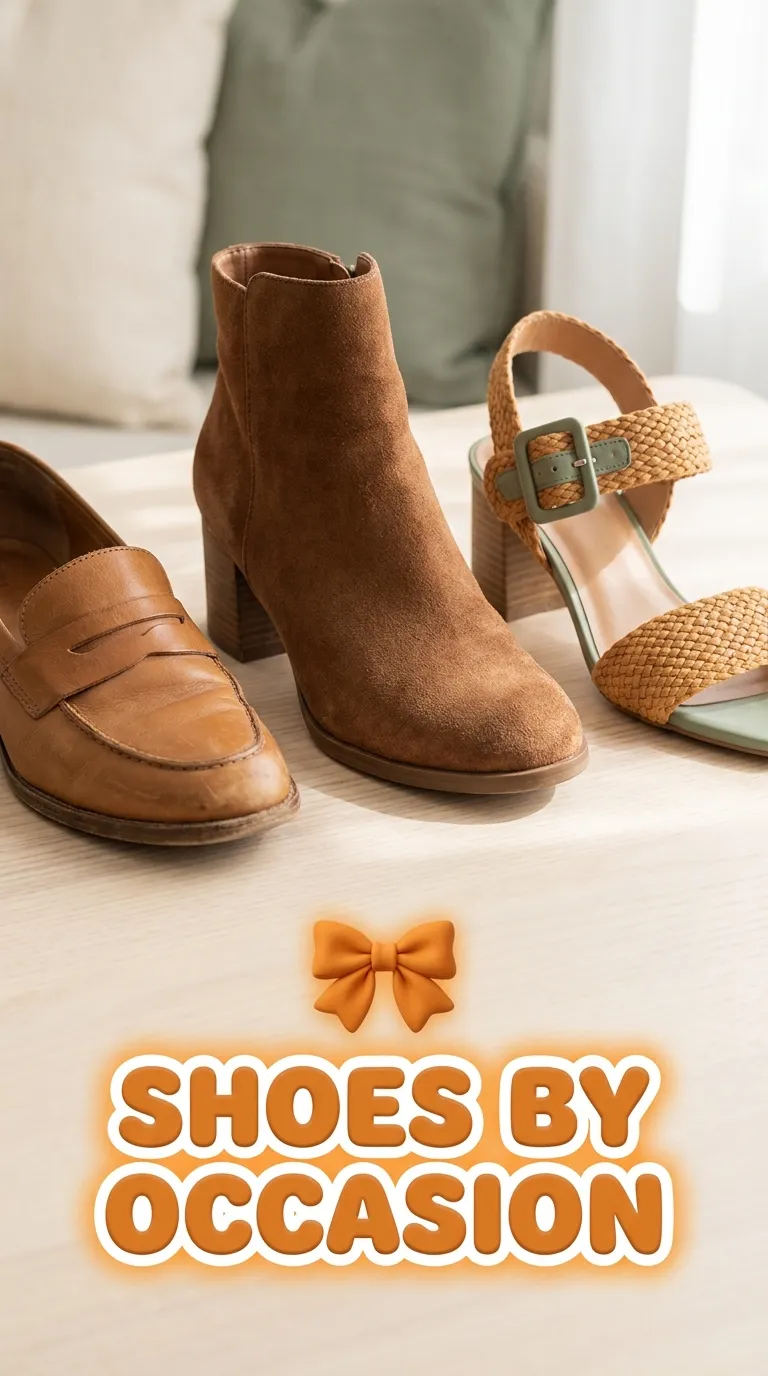
Shoes decide the mood of a brown dress more than any other piece. The same dress can read relaxed with loafers, polished with a block heel, or cozy with an ankle boot.
Start with where you're going and how long you'll be on your feet, then choose the shoe that fits that day.
How to Do It
- Decide how much walking the day involves.
- Choose a shoe color: tan, cream, or a deeper brown for a soft look, or black for more contrast.
- Match the shoe's weight to the dress, so a flowing skirt gets a sleeker shoe and a structured dress can handle a chunkier one.
- Add tights or socks only when the weather calls for them, and keep them close to the shoe or dress color.
Why It Works
A shoe in a lighter or similar tone keeps the leg line continuous, while a contrasting shoe draws attention to the hem. Either can look good when the shoe suits the dress's weight and the setting.
What to Look For
This table matches common shoes to the occasions where they work best.
| Shoe | Best For | Heel or Sole Notes |
|---|---|---|
| Loafer | Work, errands | Flat, cushioned sole |
| Ankle boot | Cooler days, travel | Stable block heel |
| Block-heel sandal | Dinners, warm weather | 2 to 3 inch heel |
| Ballet flat | Casual days | Look for arch support |
| Knee-high boot | Fall and winter | Pair with a midi hem |
For everyday comfort, look for cushioning, a stable heel, and room in the toe box. If you have foot pain, check with your doctor or a podiatrist before choosing a heel height. Which shoes feel right also depends on your climate, since sandals and boots suit different seasons across the US.
Best For
- Loafers for office days and city walking
- Ankle boots for fall errands and travel days
- Block-heel sandals for dinners and warm evenings
- Knee-high boots for cold weather outings
5. Layer With Jackets, Cardigans, and Coats
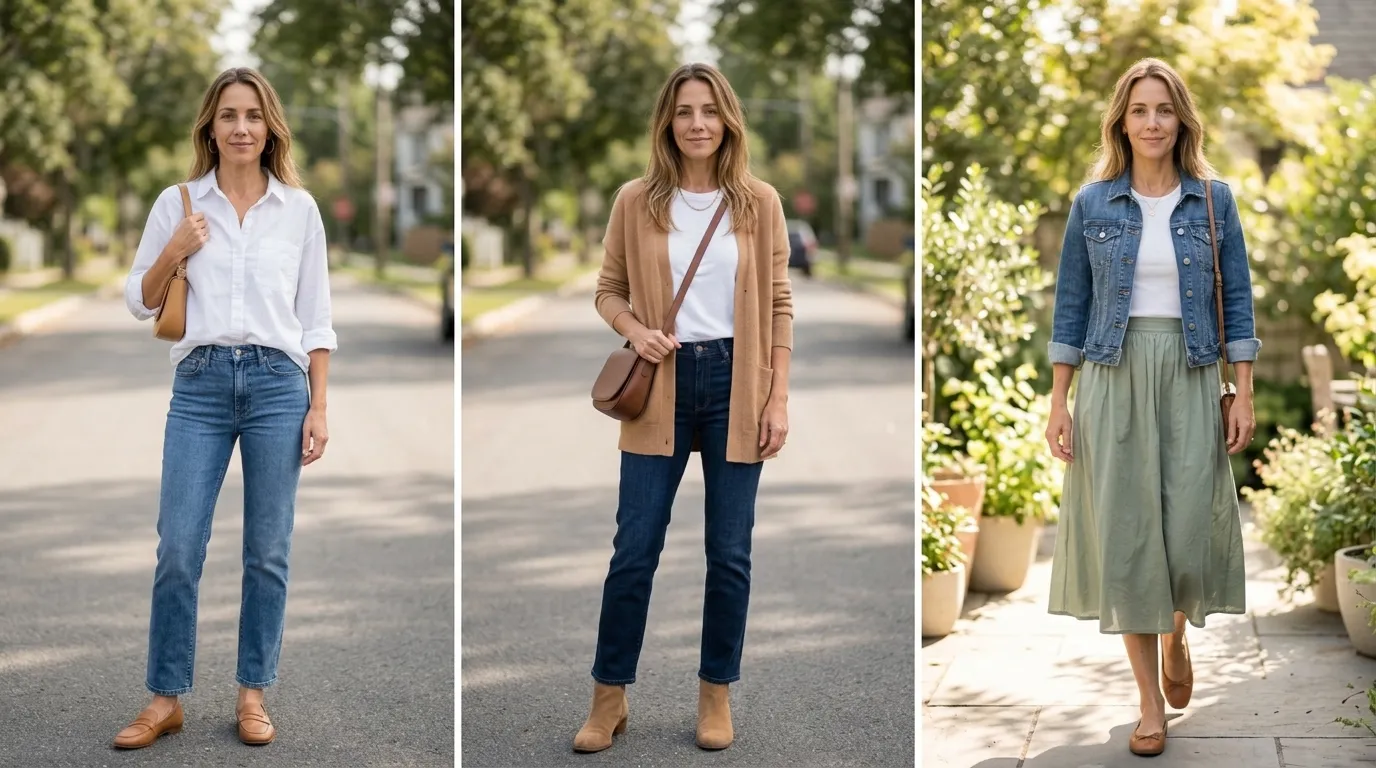
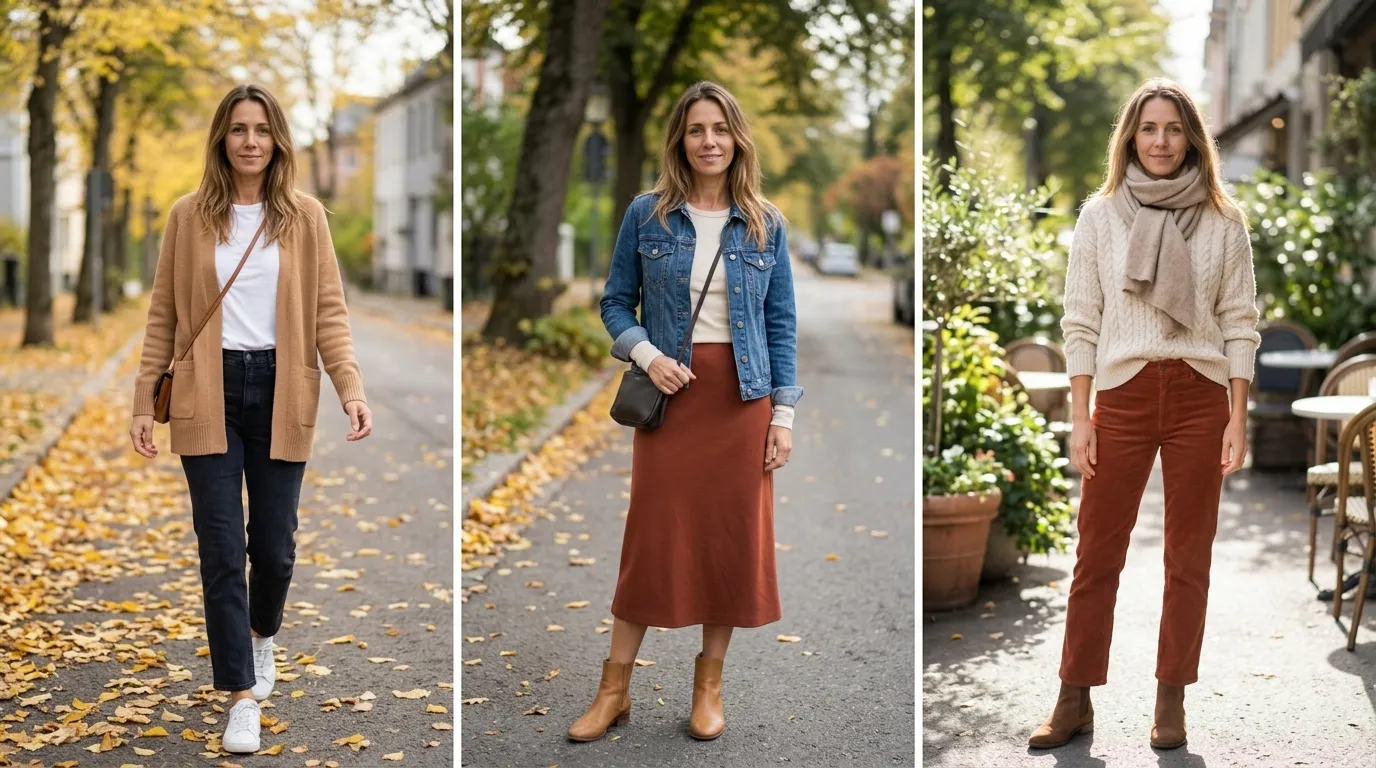
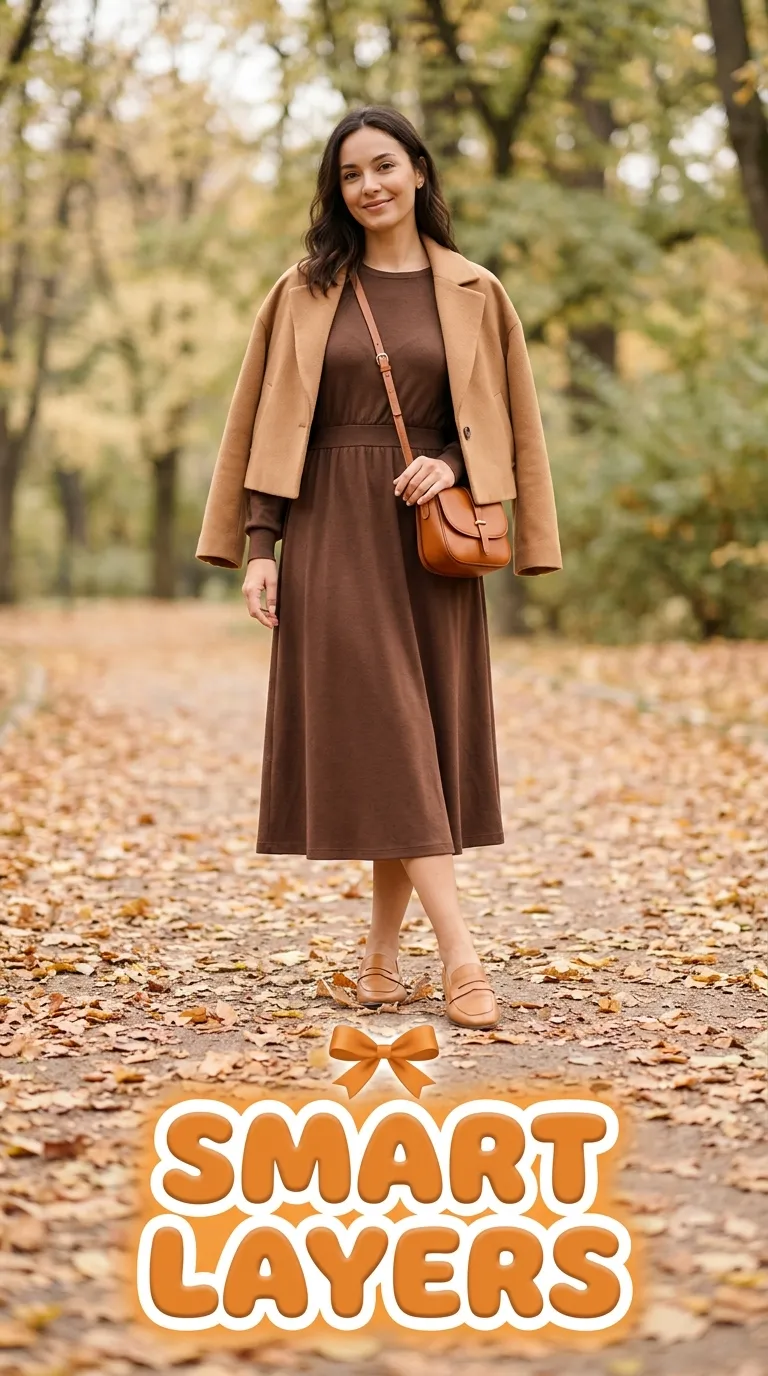
A brown dress is a good base for layering, and the right layer changes both the look and how many seasons you can wear it. A cropped jacket adds structure, a long cardigan adds softness, and a coat finishes the outfit on cold days.
Pick the layer based on your hem length and the weather, and keep the proportions in mind.
How to Do It
- Choose a layer in a lighter or contrasting tone, such as camel, cream, or olive.
- Match the layer's length to the dress: a cropped jacket works over most hems, while a long cardigan suits a midi or maxi.
- Wear the layer open to keep the dress visible, and button it only when you need extra warmth.
- For coats, choose a length that clears the dress hem by a couple of inches, or covers it entirely, so no hem peeks out unevenly.
Why It Works
A layer in a different tone breaks up the brown and adds dimension. Matching the length to the hem keeps the proportions clean, which makes the outfit look pulled together.
Common Mistakes to Avoid
- A layer in the exact same brown as the dress
- A coat hem that peeks out unevenly below the coat
- A bulky cardigan over a dress with a full skirt
- Sleeves that bunch under the jacket
A Simple Rule to Remember
Let the layer be a shade lighter, or contrast, and keep its length either clearly shorter or clearly longer than the dress.
6. Finish With Jewelry, Belts, and Bags
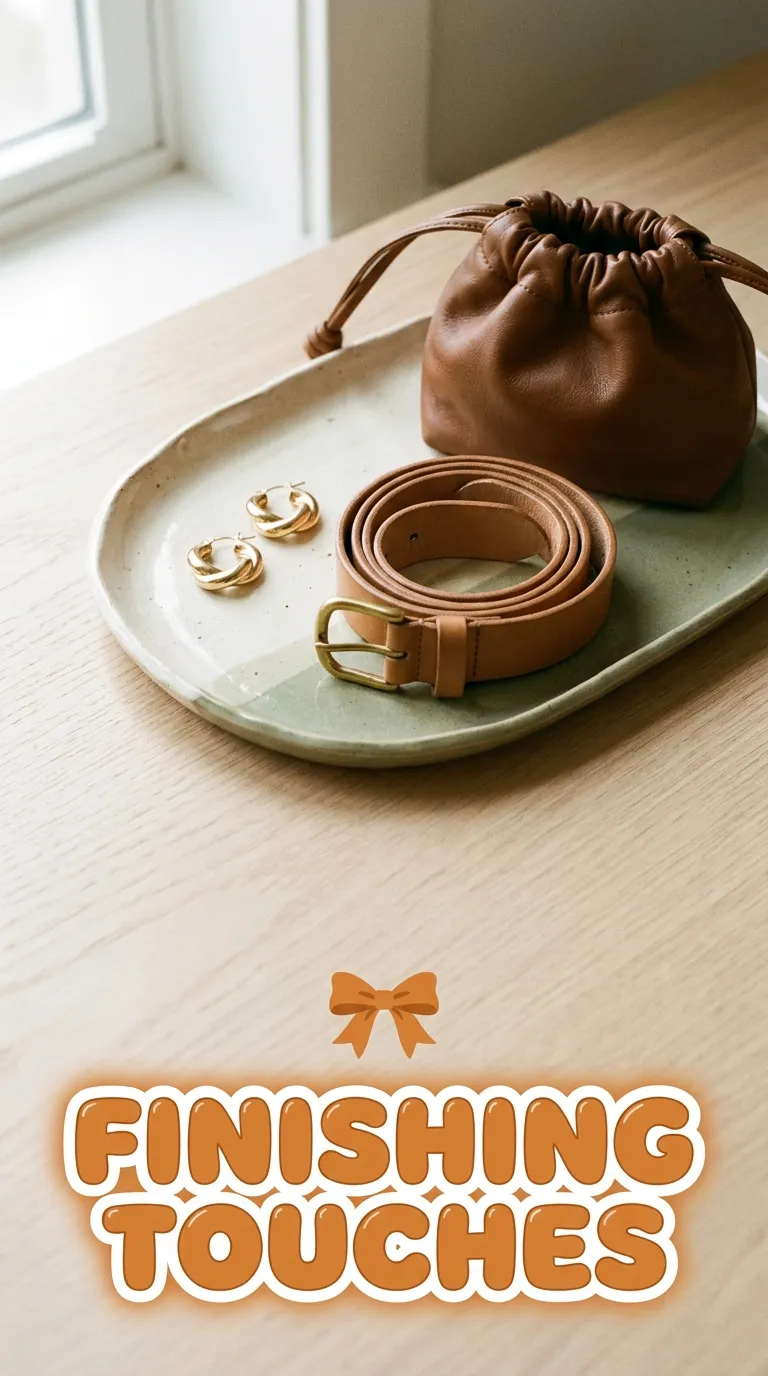
Small details turn a brown dress from nice to finished. A belt, a pair of earrings, or a structured bag gives the outfit a focal point without changing the dress.
Choose one or two details rather than adding everything at once.
How to Do It
- Pick one metal family, such as warm gold or soft silver, and repeat it in earrings, a necklace, or a watch.
- Add a belt if you want a defined waist, in a color that echoes your shoes or bag.
- Choose a bag in tan, cream, or a deeper brown, and keep its size in proportion to the outfit.
- Stop when the outfit has one clear focal point, such as the earrings or the belt.
Why It Works
Repeating a metal or a leather tone ties the outfit together, and limiting the details keeps the dress as the star. A belt gives a clear waistline to a relaxed cut without changing the dress itself.
What to Look For
- Warm gold, brass, or copper tones that sit well with brown
- Soft silver for a cooler, quieter contrast
- Leather or suede in tan, cognac, or cream
- A bag with a sturdy strap that suits your day
Best For
- Work days with a structured bag and a simple earring
- Dinners with statement earrings and a small clutch
- Weekends with a crossbody bag and a thin belt
Quick Brown Dress Cheat Sheet
Screenshot this table for the next time you reach for the dress.
| Rule | Why It Works | Quick Fix |
|---|---|---|
| Test the shade in daylight | Color near your face changes your look | Hold a swatch up by a window |
| Choose a cut you can move in | Comfort shows in how you carry it | Sit, reach, and walk first |
| Pair brown with a light neutral | Contrast keeps brown from blending | Add a cream or ivory layer |
| Match shoes to the occasion | Shoes set the mood of the dress | Swap loafers for a block heel |
| Layer in a lighter tone | A new tone adds dimension | Try a camel jacket or cardigan |
| Stop at one focal point | Fewer details look more intentional | Choose earrings or a belt, not both |
The Principles Behind These Rules
Once you see why these ideas work, you can adjust them to your own closet and skip the guesswork.
Contrast Keeps Brown From Looking Flat
Brown is a low-contrast color on its own, so it needs something lighter or brighter beside it. A cream layer, a pale scarf, or a lighter shoe gives the outfit edges and keeps it from blending into one block.
Texture Adds Depth
A brown knit, a satin sheen, or a suede bag catches light differently than flat cotton. Mixing two textures in one outfit adds interest without adding another color.
Proportion Beats Trend
A layer, hem, and shoe that work together will always look more polished than a trendy piece that fights the dress. Check the hem against the layer length and the shoe height before you leave the house.
Comfort Decides How Often You Wear It
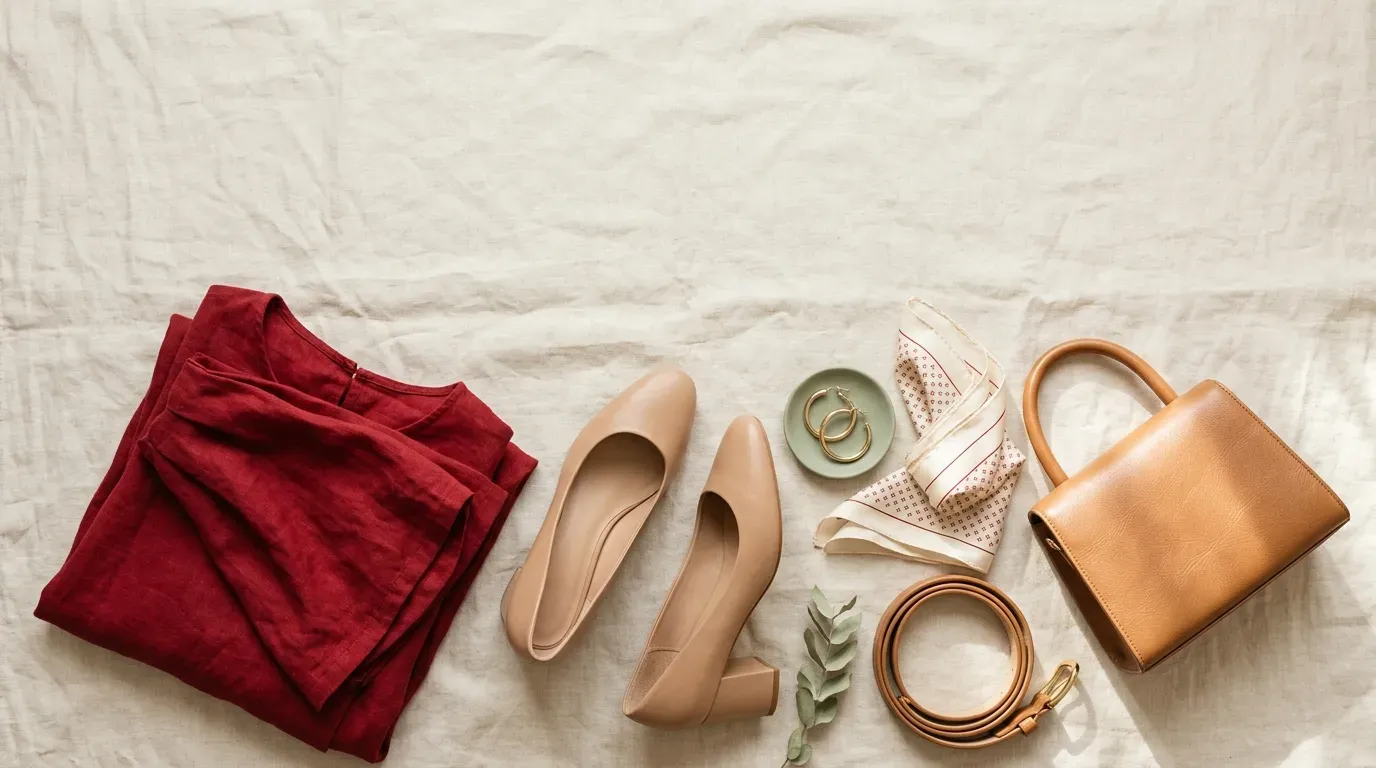
A dress that pulls, rides up, or needs constant adjusting stays in the closet. Choose the cut, shoes, and layers you can wear all day, and check the care label so the fabric stays looking good.
Common Mistakes Worth Skipping
Matching Every Piece to the Dress
A brown dress with brown shoes, a brown bag, and a brown jacket in the same shade can look flat. Vary the tones, using lighter and darker browns plus one neutral, so each piece stays visible.
Choosing a Shade Without Trying It Near Your Face
A shade that looks beautiful on the hanger can feel quiet once it's on. Try it in daylight with a mirror before you buy, or before you build an outfit around it.
Skipping the Care Label
Brown knits, satin, and suede each need different care, and a dress that wrinkles or pills quickly is harder to style. Check the care label before you buy, and think about whether you'll keep up with ironing, steaming, or dry cleaning.
Final Tips for Success
Try the Dress Before You Style It
Wear the dress around the house first. If it needs adjusting or feels off, fix the fit before you add layers and accessories.
Build Around One Strong Piece
Choose one star for each outfit, such as a statement earring, a camel jacket, or a bold shoe, and keep the rest simple. One clear focal point looks more intentional than several competing ones.
Keep a Few Neutral Basics Ready
These pieces make a brown dress easy to style on short notice:
- Cream or ivory cardigan
- Camel or tan jacket
- Tan or cognac loafers
- Neutral ankle boots
- Small leather crossbody bag
- Simple gold or silver earrings
- Thin leather belt
Save Your Favorite Brown Dress Styling Ideas
When an outfit works, take a quick photo and note the shoes and layer you used. A small folder of favorites saves time on busy mornings.
Conclusion
A brown dress doesn't need much to look finished. The right shade, a cut you feel good in, and a few thoughtful pairings do most of the work.
Start with one change from this guide, like adding a cream layer or swapping your shoes, and see how the outfit shifts. Small adjustments often make the biggest difference.
The best brown dress styling ideas are the ones you can repeat without effort, so choose the combinations that feel like you. Save this guide for the next time you pull that dress out of the closet and wonder what to wear with it.
Comments
✎ Write a commentCommunity Guidelines
We love hearing what you think. Please keep comments about the article itself, stay kind and helpful to other readers, and leave out personal details or links. Every comment is checked before it appears.