

What to Wear to a Concert for Women Over 40 — The tickets have been sitting in your email for weeks, the show is Friday, and nothing in your closet feels right. Figuring out what to wear to a concert over 40 is less about chasing a look and more about solving a few practical problems: hours on your feet, a venue that swings from chilly to packed and warm, and a bag that may not make it past security.
What you need is an outfit that moves with you, handles the temperature, and still feels like you. That is very doable with pieces you probably already own.
I've organized this guide into seven simple steps, starting with the venue and ending with a quick test you can do at home. Use the ones that fit your night and skip the rest.
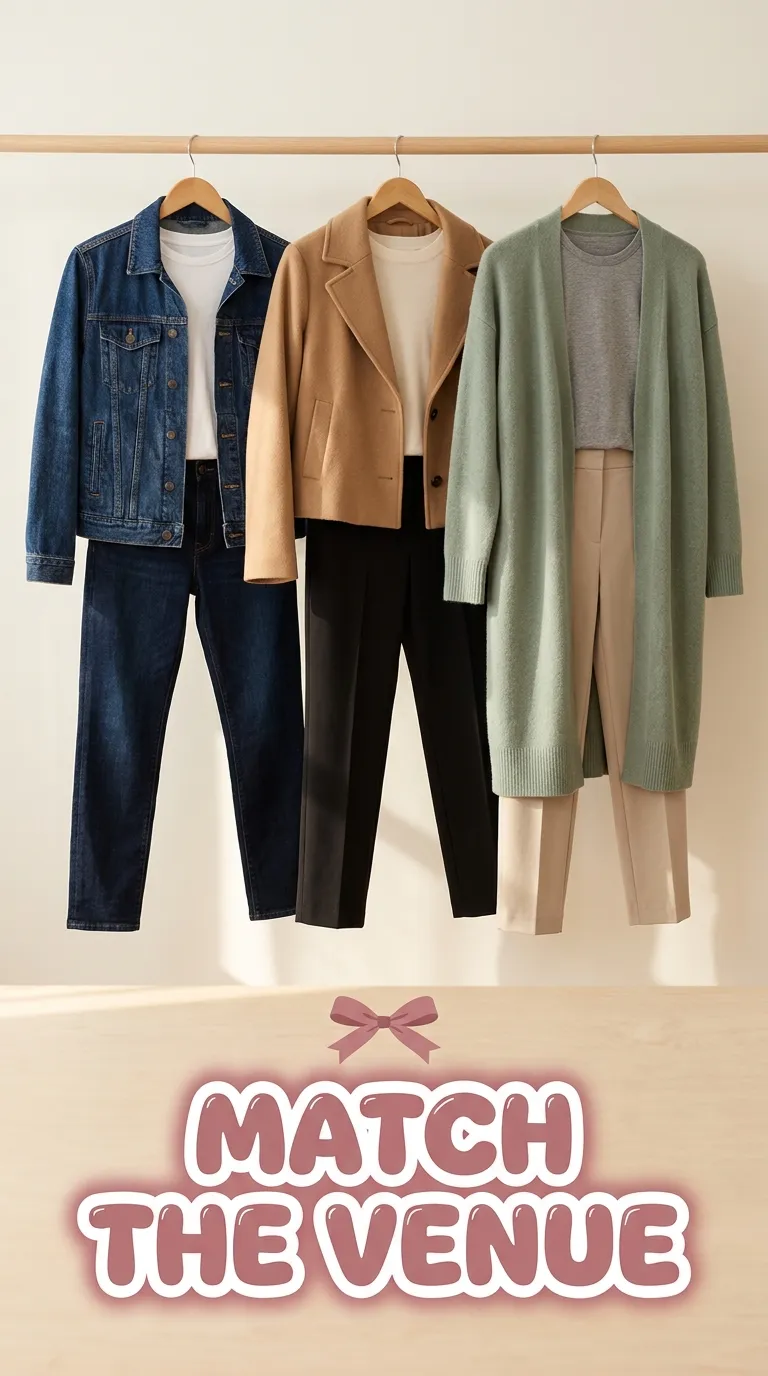
1. Match the Look to the Venue
The same outfit can feel perfect at a seated theater and miserable in a packed standing section. Before you choose a single piece, work out where you'll be and how long you'll be on your feet.
Think of the venue as your brief. It tells you what to prioritize, and every other choice in this guide gets easier once that is settled.
How to Do It
- Check whether your ticket is seated, standing, or general admission
- Note whether the venue is indoors, outdoors, or both
- Estimate your time on your feet, including lines and the walk back to the car
- Pick one outfit direction from the table below
- Add or remove one layer based on the forecast
Why It Works
Starting with the venue turns a vague question into a short checklist. You stop choosing by mood and start choosing by what the night will actually ask of you, which is how comfortable outfits end up looking confident too.
What to Look For
Use this quick comparison to match your priorities to the kind of show you're attending.
| Venue | What to Prioritize | Easy Add |
|---|---|---|
| Arena | Warm layers, stable shoes | Cropped jacket |
| Outdoor amphitheater | Weather flexibility, grippy soles | Packable rain layer |
| Club or standing room | Easy movement, closed-toe shoes | Small crossbody bag |
| Seated theater | Polished comfort, easy sitting | Soft scarf or wrap |
Outdoor shows depend heavily on where you live, so check the forecast for the evening hours, not just the afternoon.
Best For
- Arena and stadium concerts
- Outdoor amphitheaters and festivals
- Club and standing-room shows
- Seated theater performances
2. Choose Shoes You Can Stand In for Hours
Shoes decide how the night goes. Most people stand and walk far more than they expect, between the line outside, the merch table, and the crowd shuffle at the end.
The trade-off is simple: the cutest option and the most comfortable option are not always the same, so aim for the pair that wins on both once you've worn it around.

How to Do It
- Choose a closed-toe shoe with a stable, flat or low base
- Look for cushioning under the ball of the foot and a roomy toe box
- Keep any heel low and wide, around 1½ inches or less for standing venues
- Walk around the house or around the block in them before the show
Why It Works
A wide, stable base spreads your weight and keeps you steady when the crowd moves. A roomy toe box gives your feet space as the night goes on, so you're thinking about the music instead of your shoes.
What to Look For
This table compares the shoe types that work best for most concert nights.
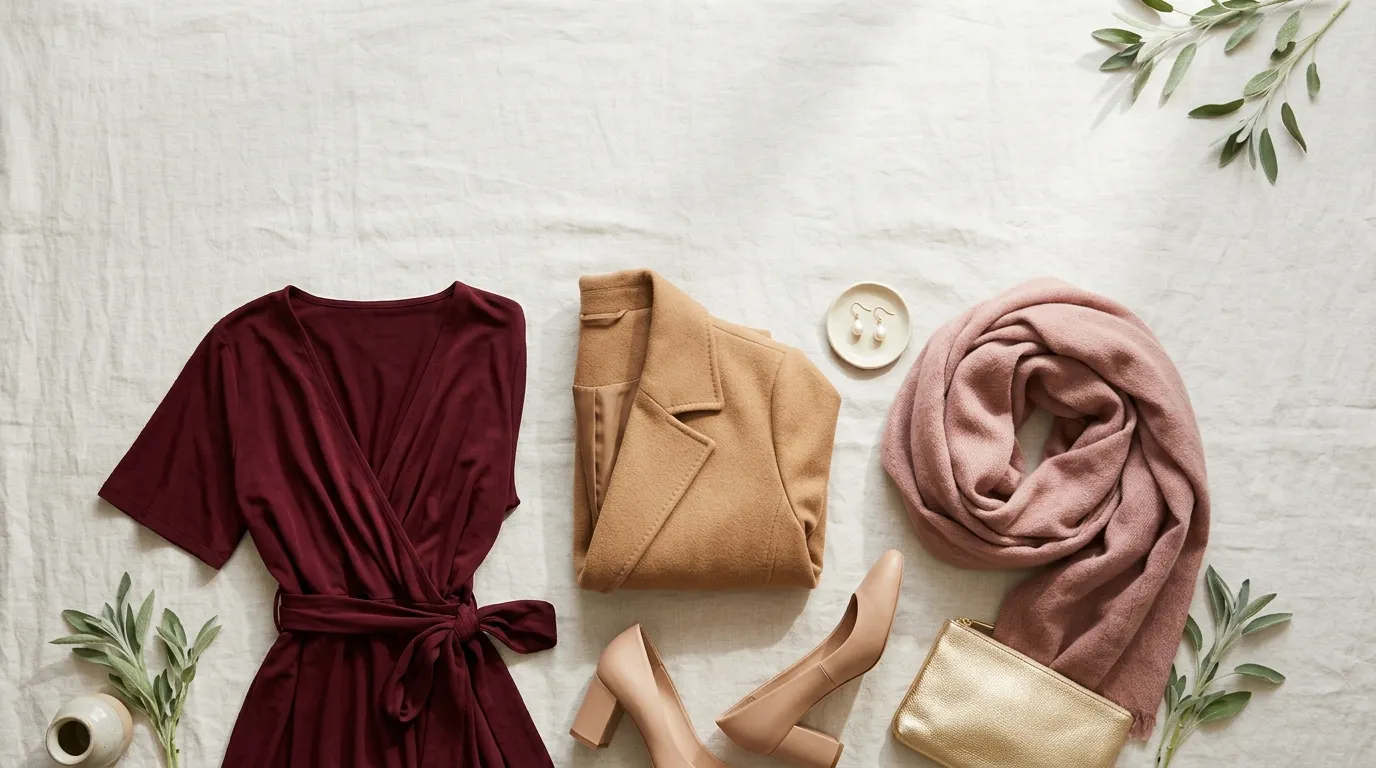
| Shoe | Best For | Heel or Sole Notes |
|---|---|---|
| Leather sneaker | Standing arenas, long lines | Cushioned, grippy rubber sole |
| Ankle boot | Fall shows, outdoor venues | Block heel, 1½ inches or less |
| Loafer or ballet flat | Seated theaters | Cushioned insole, secure heel |
| Platform sneaker | Club nights | Wide, lightweight sole |
Common Mistakes to Avoid
- Wearing brand-new shoes for the first time on show night
- Choosing thin stiletto heels that sink into grass or catch in grates
- Going open-toe in a crowd, where feet get stepped on
If you have foot pain, check with your doctor or a podiatrist about what kind of support suits you best.
3. Carry a Bag That Fits the Venue Rules
Many venues limit bag size or require clear bags, and the rules vary from place to place. Check the venue's bag policy before you pack, because being turned away at the door is the fastest way to ruin a good outfit.
Even without strict rules, a big bag is a burden in a crowd. Smaller and closer to your body is almost always better.

How to Do It
- Read the bag policy on the venue's website a day or two ahead
- Choose a bag with a zip or snap closure
- Wear it crossbody so your hands stay free for clapping, photos, and drinks
- Pack only the essentials: phone, ID, a card, lip balm, and a small tissue pack
Why It Works
A closed, crossbody bag stays put when you dance and stays with you when you're squeezing past strangers. You also avoid setting it on a sticky floor or keeping one hand on it all night.
What to Look For
- Zip or snap closure
- Strap long enough to wear across the body
- Size within the venue's limit
- Smooth exterior that won't snag on a crowd or a jacket
Best For
- Stadium shows with clear-bag rules
- General admission and standing sections
- Festivals with long days outdoors
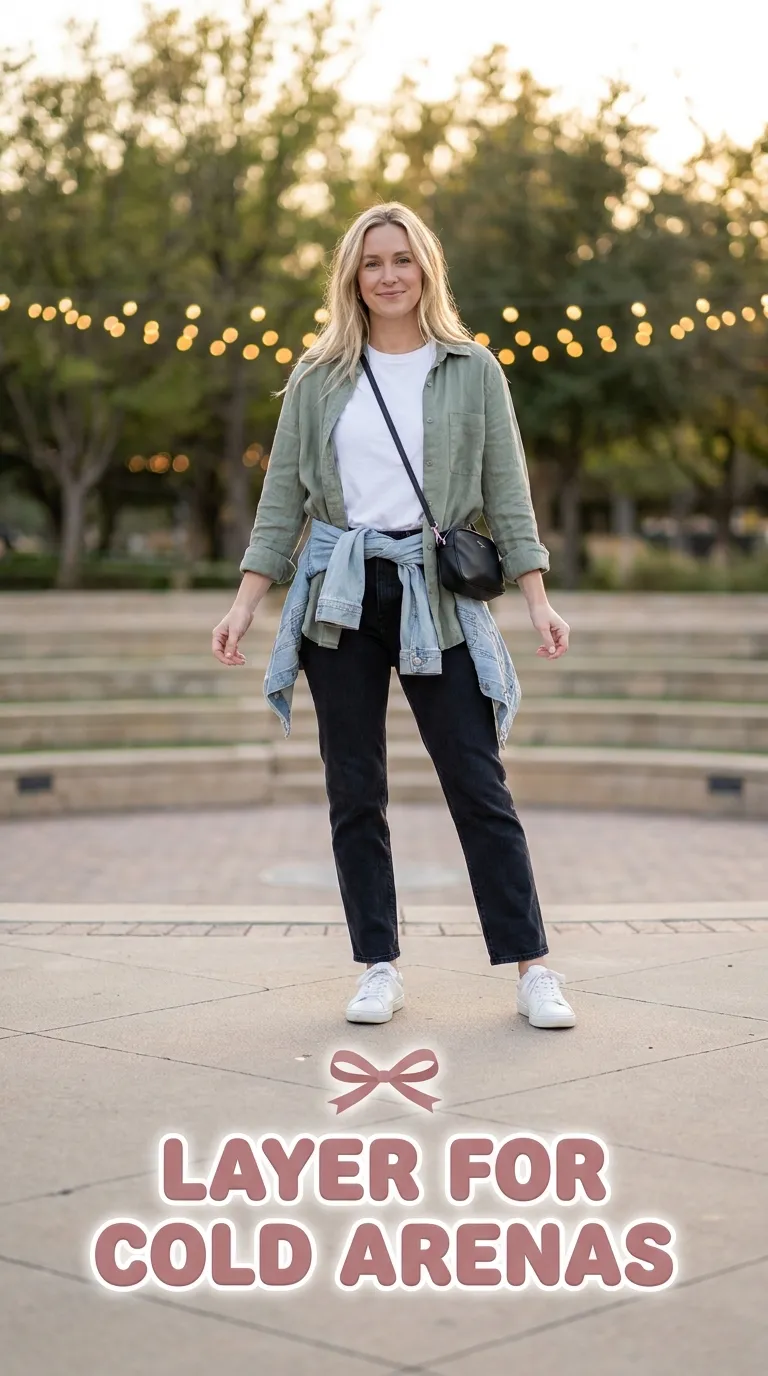
4. Layer for Cold Arenas and Warm Crowds
Concert venues rarely hold one steady temperature. An arena can feel chilly while the air conditioning runs, then turn warm once the crowd packs in, and outdoor shows can drop quickly after sunset.
Layers let you adjust without losing your spot. The trade-off is that whatever you take off has to go somewhere, so keep every layer thin and easy to carry.
How to Do It
- Start with a breathable base, such as a cotton or modal tee
- Add a mid layer you can open or remove, like an overshirt or lightweight cardigan
- Finish with a jacket light enough to tie at your waist or fold on your lap
- Keep all three layers in one color family so any combination looks intentional
Why It Works
Opening or removing a single layer changes your temperature in seconds, with no trip to the coat check. A shared color family means the outfit still looks finished whether you're wearing all three layers or only one.
Common Mistakes to Avoid
- Carrying a bulky winter coat for hours in a warm venue
- Choosing layers that restrict your arms when you clap or reach
- Wearing a long, loose scarf that catches in a crowd
Best For
- Indoor arenas with strong air conditioning
- Fall and spring outdoor shows
- Venues with a long walk from parking
A Simple Rule to Remember
Three thin layers beat one thick one.
5. Pick Fabrics That Move With You
A concert asks you to stand, sit, dance, and squeeze past people, often in one evening. Fabric matters as much as cut, because a stiff or clingy piece gets uncomfortable long before the encore.
The trade-off is that the stretchiest option isn't always the best one. A little structure helps a look hold its shape, so aim for fabric with give and some body.

How to Do It
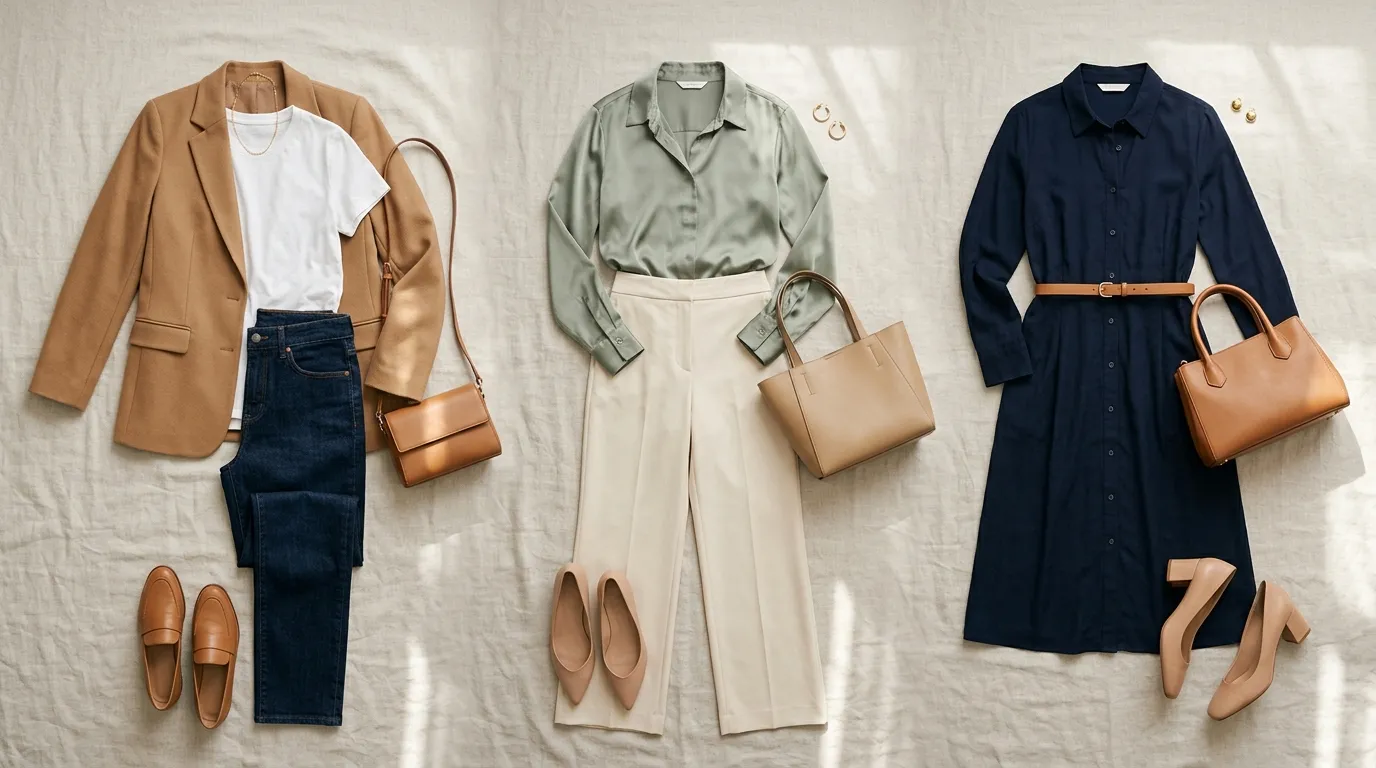
- Choose stretch denim, soft jersey, or ponte for pants and skirts
- Pick breathable tops in cotton, modal, or a lightweight knit
- Add structure on top with a denim or twill jacket that holds its shape in a crowd
- Check the care label so a spilled drink doesn't mean a ruined piece
Why It Works
Fabric with a little give moves when you do, so nothing pulls, rides up, or digs in. Breathable weaves keep you comfortable in a warm crowd, and fabrics that recover from wrinkles still look fresh after hours of sitting and standing.
What to Look For
- Stretch that bounces back
- Breathable weave or knit
- Wrinkle recovery after sitting
- Mid-weight fabric that doesn't cling
- Easy-care label
Common Mistakes to Avoid
- Rigid fabrics that restrict sitting and dancing
- Very thin or clingy knits that crease and show every fold
- Delicate fabrics like silk near spilled drinks
6. Add One Statement Accessory
A concert outfit can stay simple, and one accessory is often enough to give it personality. Think of it as the detail people notice from across the room.
The trade-off is that accessories get tugged, bumped, and caught in a crowd, so choose one standout piece that is light and secure, and keep everything else quiet.

How to Do It
- Pick one spot for the focus: ears, neck, waist, or head
- Keep the rest of the outfit in your base colors
- Choose a piece that stays secure when you dance
- Try it on with the full outfit and move around before you decide
Why It Works
A single focal point reads as intentional, and it keeps a simple outfit of denim, knits, and boots from looking flat. Because everything else stays practical, you get personality without giving up comfort.
What to Look For
This table matches common accessories to the shows where they work best.
| Accessory | Best For | How to Wear It |
|---|---|---|
| Drop earrings | Seated shows, club nights | Light, with secure backs |
| Silk or cotton scarf | Cool arenas | Loop at neck or tie on bag |
| Wide belt | Outfits with open layers | Over an open shirt or long cardigan |
| Hat | Outdoor daytime shows | Soft brim, worn back |
| Sunglasses | Daytime outdoor shows | Tuck away after dusk |
Best For
- Seated and club shows where jewelry stays visible
- Sunny outdoor shows, with a hat or sunglasses
- Cool arenas, where a scarf does double duty
7. Do a Dance-and-Sit Test Before You Go
A mirror shows how an outfit looks standing still, but a concert is mostly movement. Ten minutes at home will tell you more than any fitting-room glance, and it is the easiest way to catch a problem while you can still fix it.
The only cost is a little time and a slightly silly kitchen dance, which is a fair price for a comfortable night.
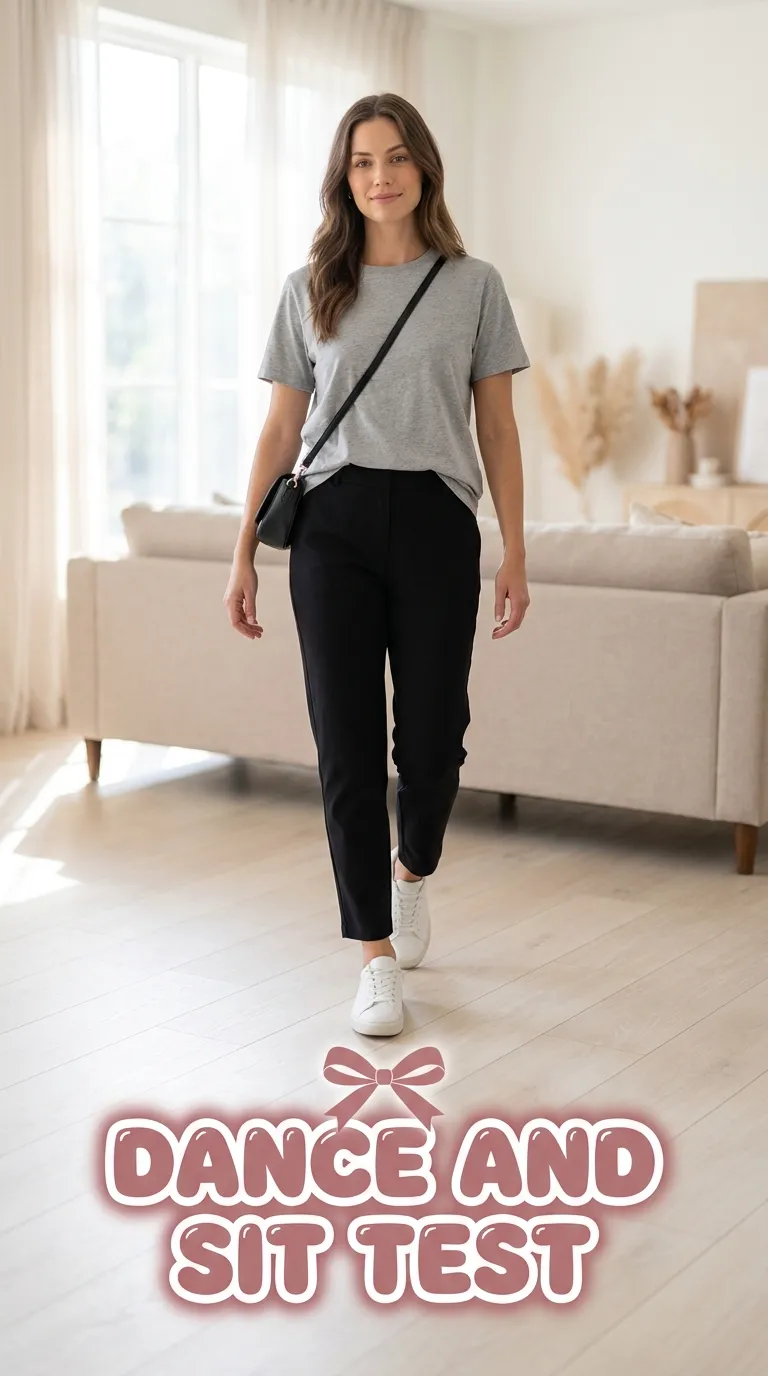
How to Do It
- Put on the full outfit, including the shoes and the bag you plan to carry
- Sit down and stand up a few times
- Bend your knees, reach overhead, and take a few big steps
- Dance to one full song
- Swap out anything that pulls, slides, pinches, or needs constant adjusting
Why It Works
Most outfit problems show up in motion, not in the mirror. A waistband that rolls, a strap that slips, or a hem that drags is easy to replace at home and very hard to ignore once the lights go down.
Common Mistakes to Avoid
- Testing the outfit only in front of a mirror
- Leaving out the shoes and the bag, which change how everything moves
- Ignoring a small annoyance, since it grows over several hours
A Simple Rule to Remember
If it bothers you for five minutes at home, it will bother you for five hours at the show.
Quick Concert Outfit Cheat Sheet
| Rule | Why It Works | Quick Fix |
|---|---|---|
| Match the venue | Venue sets your comfort priorities | Check seating and indoor or outdoor |
| Wear stand-ready shoes | Stable base, roomy toe box | Break them in first |
| Carry a venue-ready bag | Avoids turn-aways, frees your hands | Read bag policy, go crossbody |
| Layer thin | Adjusts to temperature swings | Tie a light jacket at your waist |
| Choose moving fabrics | Give and breathability | Pick stretch, check the care label |
| Add one accessory | One focal point, less fuss | Choose a light, secure piece |
| Do the dance-and-sit test | Catches problems at home | Sit, reach, dance, then swap |
The Principles Behind These Rules
What to Wear to a Concert Over 40 Starts With Comfort
Every rule above comes back to one idea: the outfit should support the night, not compete with it. When your feet, layers, and bag are sorted, you can relax and enjoy the music, and the style takes care of itself.
Dress for the Longest Part of the Night
You'll spend a few minutes posing outside and several hours standing, sitting, and moving. Choose for the long stretch, then let one accessory or one great jacket handle the first impression.

Build Around One Neutral Base
Dark denim, black, navy, or camel make a reliable base because they show fewer marks from spilled drinks and pair with almost everything. Then add your color or personality in a single piece, such as a scarf or earrings.
Plan for the Walk In and the Walk Out
The evening starts and ends outside the venue, often in a different temperature than the show itself. A light layer and sturdy shoes make the parking-lot walk as easy as the concert.
Common Mistakes Worth Skipping
Wearing Brand-New Shoes on Show Night
Shoes that feel fine in the store can rub after a few hours. Wear them on two or three short outings first, and keep a backup pair in mind if they still feel stiff.
Bringing More Than You Can Hold
Big bags, bulky coats, and extra layers all become things you carry. If you can't wear it or fit it in a small bag, leave it at home.
Forgetting the Weather Outside the Venue
An outfit built only for the warm inside can leave you cold in line or on the way back. Check the forecast for the whole evening, and add one light layer to cover the gap.
Final Tips for Success
Pack a Small Comfort Kit
A few small items go a long way: a hair tie, lip balm, a tissue pack, a few bandages, and a slim phone charger if the venue allows it. Keep them in your crossbody bag so they're always within reach.
Arrive Early and Dress for the Line
Lines, security checks, and the walk to your seat all happen before the first song. Wear what keeps you comfortable from the moment you leave home, not just once you're inside.
Keep Your Look Easy to Repeat
When an outfit works, save it. Take a quick photo and note the shoes and layers, so you're not starting from zero before the next show.
Wardrobe Basics Worth Owning
- Dark straight-leg or stretch jeans
- A soft black or white tee
- A light denim or twill jacket
- Cushioned sneakers or low block-heel ankle boots
- A small crossbody bag with a zip
- A lightweight scarf
Conclusion
The best concert outfit is the one you stop thinking about after you walk in. If your shoes are steady, your layers adjust, and your bag fits the rules, you've already done the hard part.
Knowing what to wear to a concert over 40 isn't about dressing down or dressing up. It's about choosing pieces that move with you, then adding one detail that feels like you.
Take the dance-and-sit test, pack your small comfort kit, and enjoy the show. Save this guide for the next time tickets land in your inbox, and you'll have your outfit sorted in minutes.

Comments
✎ Write a commentCommunity Guidelines
We love hearing what you think. Please keep comments about the article itself, stay kind and helpful to other readers, and leave out personal details or links. Every comment is checked before it appears.